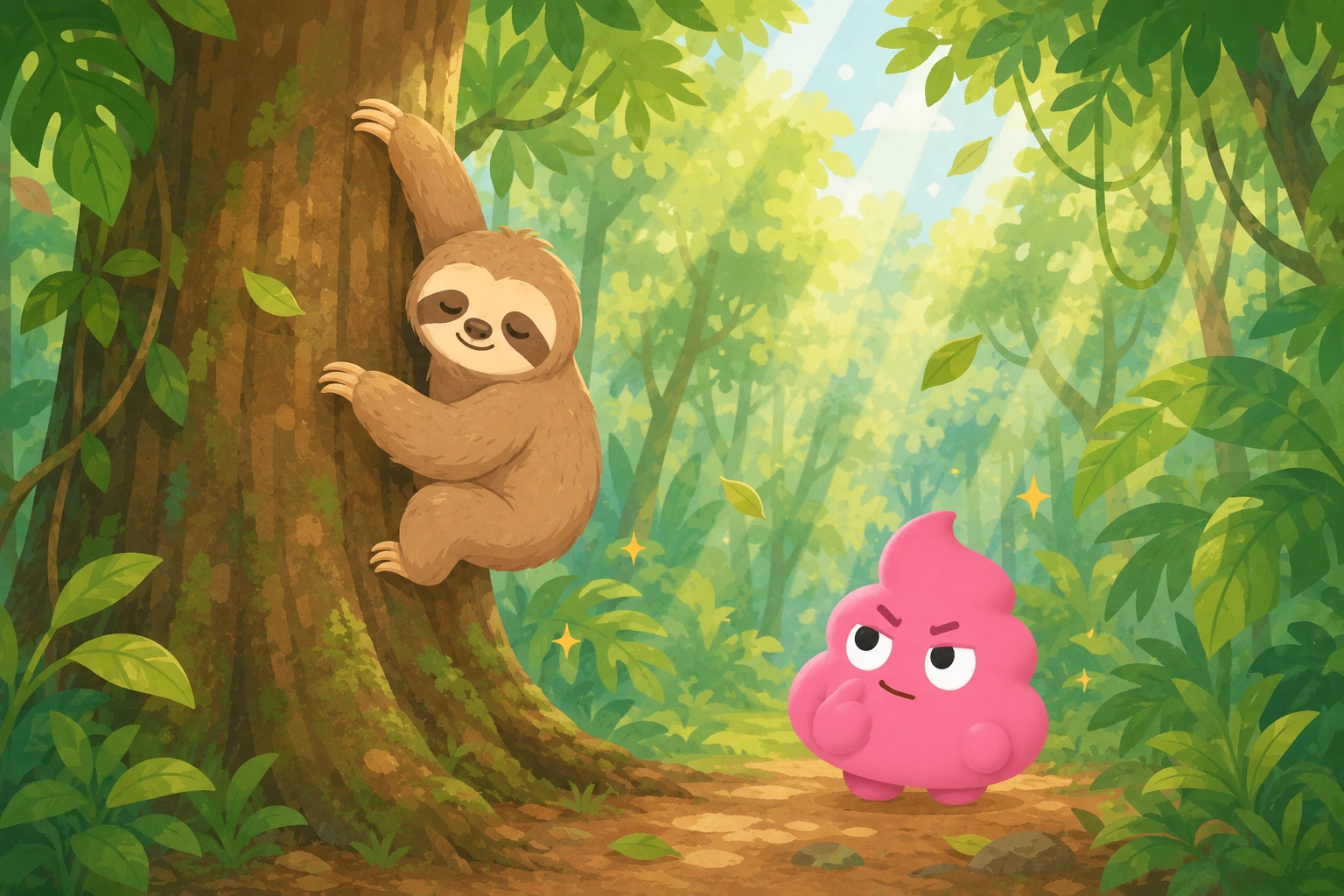
In the rainforest canopy, sloths do almost everything without ever leaving their tree. They eat, sleep, mate, and even give birth all up there. But to poop, they climb all the way down to the ground — at real risk of being killed. Today, let me walk you through the strange and beautiful three-way symbiosis hiding inside that one ritual.
The Origin of This Quote
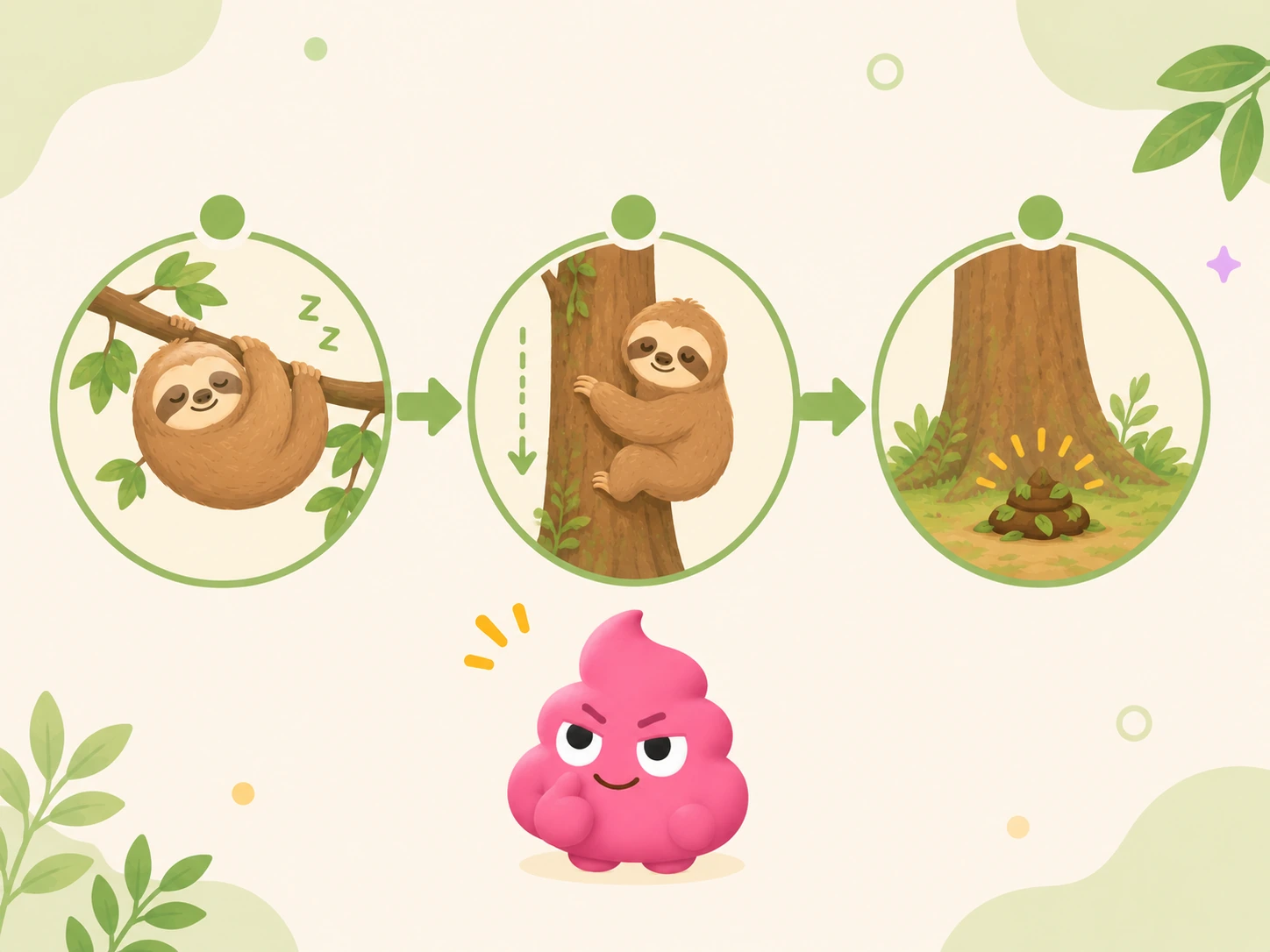
A sloth descends to the ground roughly once a week, sometimes once every ten days. And the descent is not casual. It moves down the trunk for many minutes, digs a small hole at the base, drops me into it, gently covers me with leaves, and then takes another few hours to climb back to its perch. One bowel movement can occupy nearly half a day, performed with that level of care.
Why so cautious? Because the ground is a sloth’s single most dangerous place to be. In the canopy, jaguars and harpy eagles cannot easily reach them. Down on the forest floor, a sloth becomes nearly defenseless. Some studies estimate that roughly half of all sloth deaths happen on the ground, and a striking number of those happen during this exact descent for poop.
So why not just drop me from the canopy? Their metabolism is slow enough that, on paper, releasing me from above would seem fine. And yet they go down. Every week. Without exception. In 2014, ecologist Jonathan Pauli and colleagues published a paper that pulled together what was really going on, and biologists around the world were quietly stunned.
The answer is a three-way symbiosis between the sloth, the sloth moth, and algae — three living things, supported by one quiet weekly ritual centered on me.
Unchikun’s Take
Here is how it works. A sloth’s fur hosts dozens of small sloth moths, living tucked between the hairs. When a sloth descends to defecate, female moths leave the fur and lay their eggs directly into me on the ground. The eggs hatch, the larvae feed on me as they grow, and the new adult moths fly back into the canopy to find a sloth and settle into its fur.
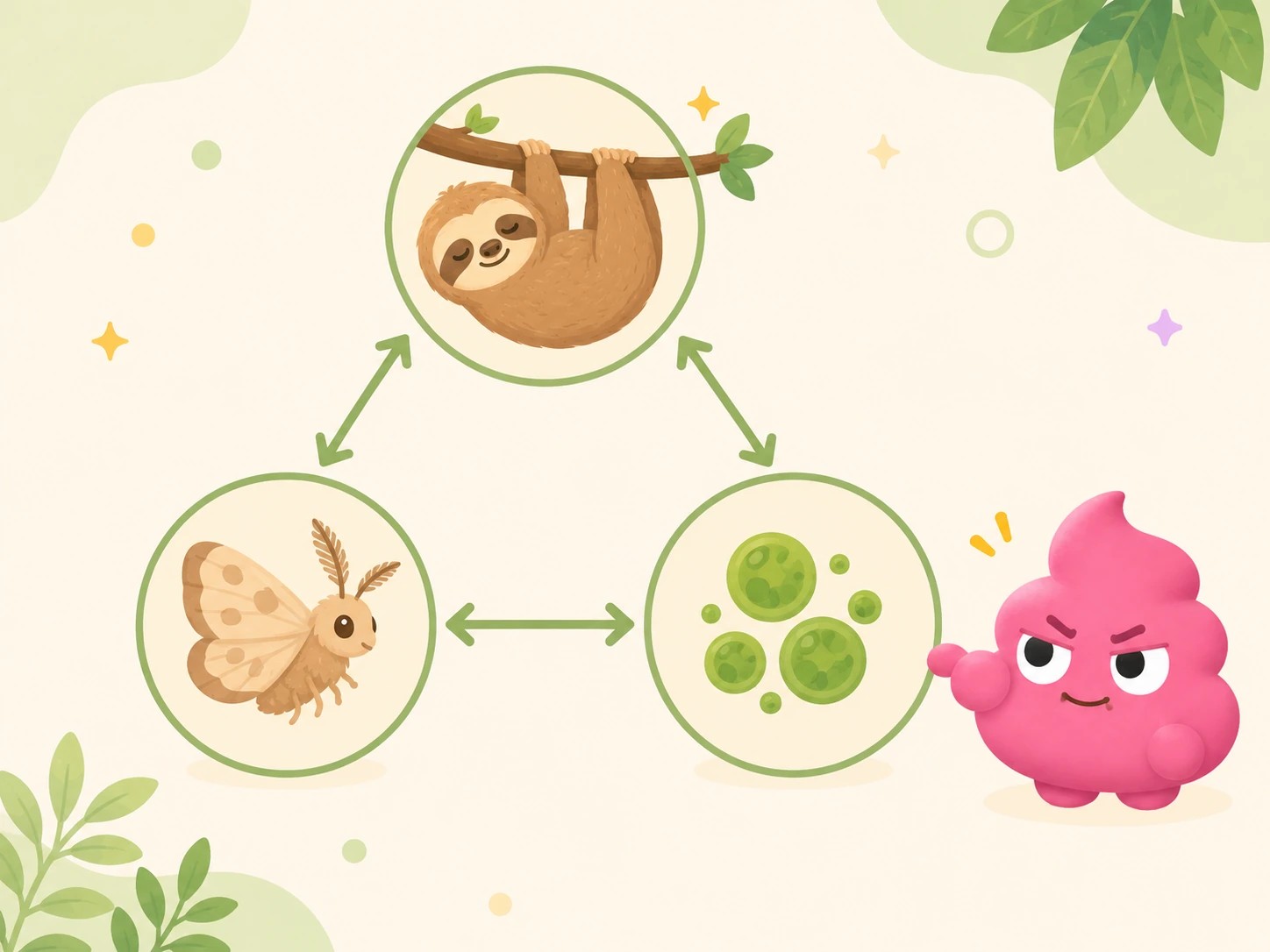
Now the heart of it. When those moths eventually die in the fur, their bodies break down and become nutrients for algae that grow between the same hairs. The algae photosynthesize and steadily turn the sloth’s fur subtly green — perfect rainforest camouflage. And on top of that, sloths actively groom that algae and eat some of it, supplementing the leaves with extra nutrition that leaves alone cannot provide. Their fur is, in effect, a tiny living vegetable garden.
So leaving me on the ground is not a chore. It maintains the entire ecosystem the sloth lives in — its forest, its disguise, and its garden. What looks like the laziest, riskiest behavior in the rainforest is actually one of the most precisely calibrated decisions evolution has ever produced. The sloth is not lazy. The sloth is keeping a quiet system running, week after week, with absolute consistency.
One Thing You Can Do Today
Hold onto the sloth’s story for a moment, and show me just a little more respect today.
When the urge comes in the morning, having a toilet inside your house is a quiet miracle. No jaguars, no harpy eagles, no hours-long climb, no leaves to bury anything. And yet, plenty of people hold it in anyway — too busy, too far from a familiar bathroom, too self-conscious. The same rhythm sloths protect with their lives, we let go of without thinking.
Logging your daily moments in the unchikun app makes the difference visible — the days you went when the urge came, versus the days you held it in. After a couple of weeks of honest tracking, the pattern becomes hard to ignore: the days you honored the urge tend to feel quietly easier, and the days you suppressed it tend to compound into longer bathroom struggles later in the week. You do not need a sloth’s level of risk. But the level of respect — that part is genuinely worth borrowing. Honor tomorrow’s urge with even a fraction of a sloth’s seriousness, and your gut will quietly thank you for the rest of the day.
Summary
When a sloth risks its life to descend, it is keeping forest, fur, moth, and algae all running through me. Pooping is the opposite of laziness — it is one of the most serious acts in nature. Tomorrow, when the urge comes, take it as seriously as a sloth would. That single small habit, repeated quietly each day, is more than enough.