“My toilet flushes everything with one button.” “Flushing is normal.” Maybe — but a thousand years ago, castle dwellers just dropped me straight off the wall. Today’s story is the medieval European castle toilet, the garderobe.
The Origin of This Quote
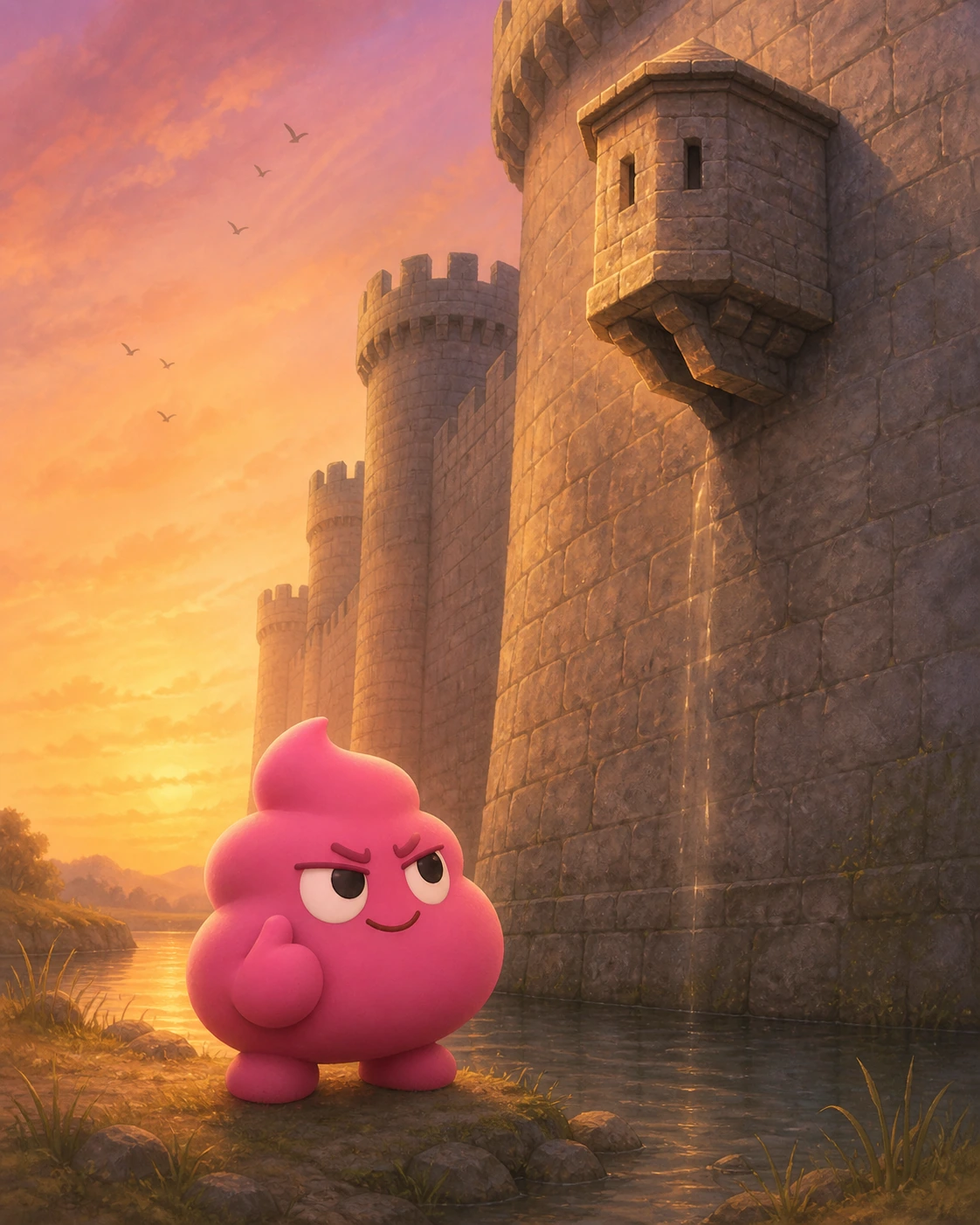
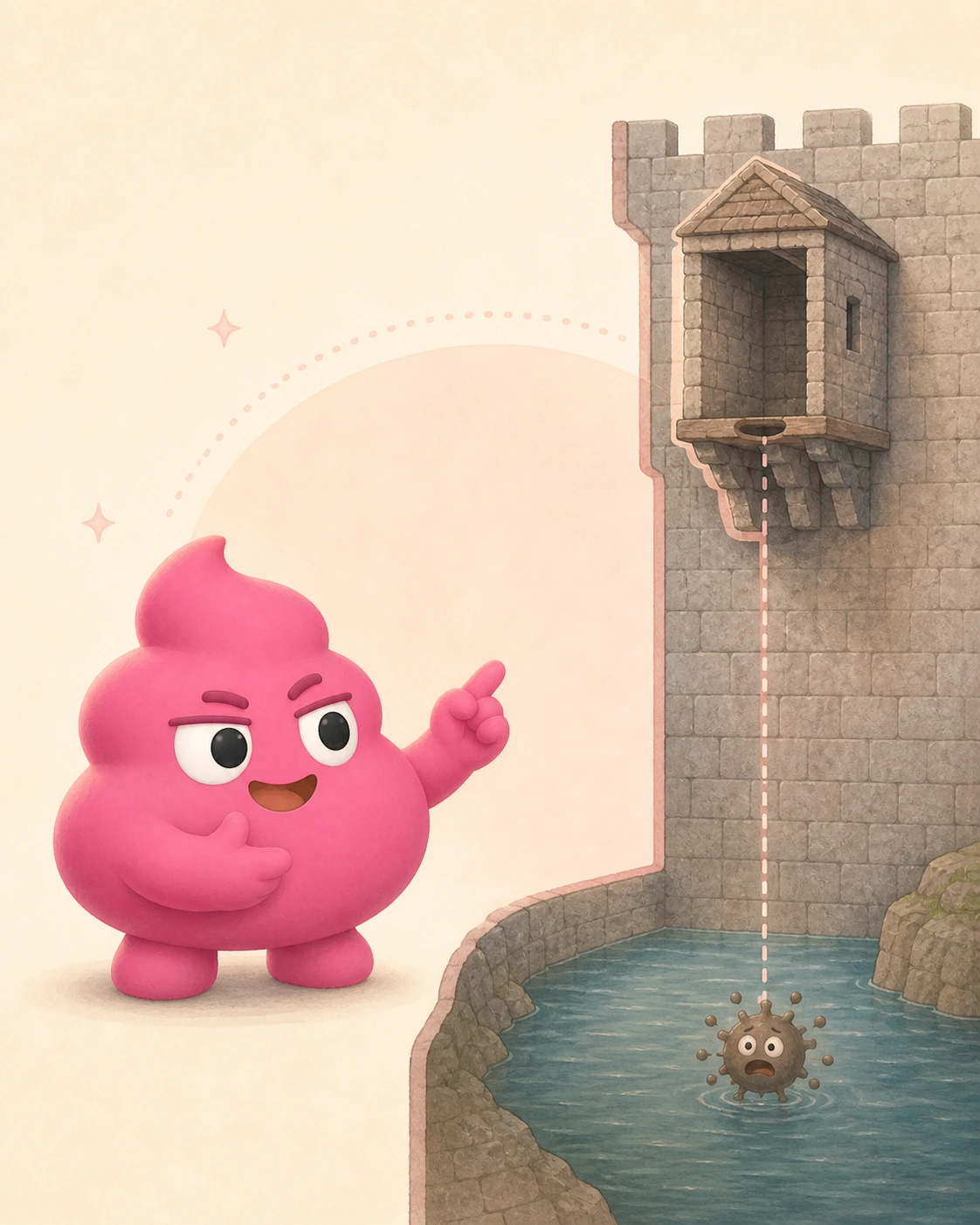
Look up at a medieval European castle wall and you’ll see small stone projections dotted along the upper levels. These are garderobes, the castle toilets. From a hallway or bedchamber, a tiny side room with a hole in the floor lets me fall directly into the moat or onto the open ground outside.
No real seat, no flush. A wooden plank with a circular hole, and below it the open air. On a cold day, sitting there must have been brutal. Once I dropped, if the castle had a moat, the moat collected me. If it didn’t, I piled up against the outer wall. The moat became my reservoir — eye-opening, right?
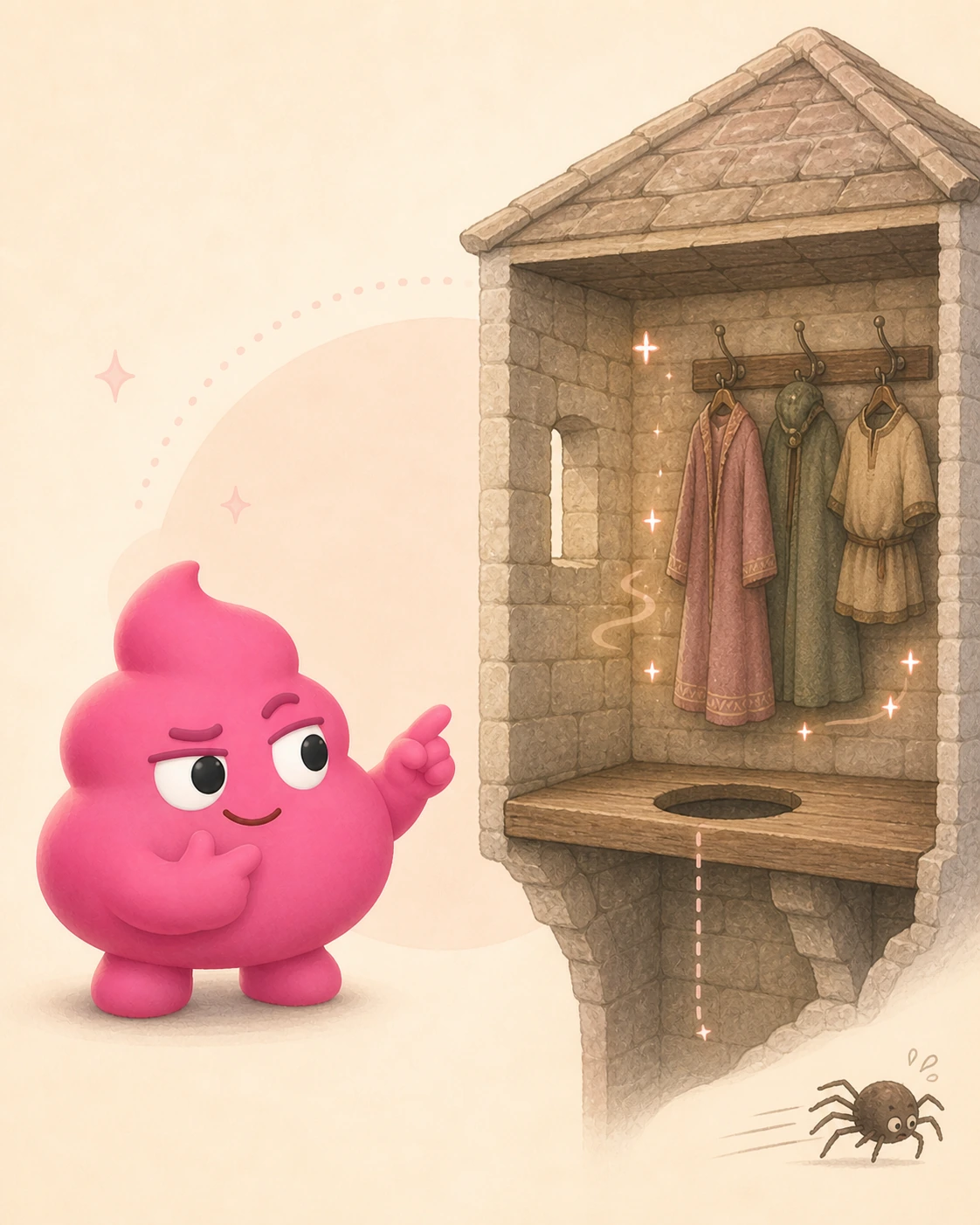
Here’s the strangest part: the garderobe was also a clothing room. The name comes from French garder (to keep) + robe (clothing), and the room actually doubled as wardrobe storage. Why? The smell drove insects away. Nobles hung their expensive gowns and furs inside the toilet chamber as a moth-and-flea repellent. In a perfume-less age, this was practical wisdom.
In wartime, the garderobe became a defense system. Records from medieval sieges describe how poop in the moat spread disease among attacking forces — making me, in a sense, a soldier defending the castle. Garderobe ruins still exist today at Conwy Castle and Carcassonne.
Unchikun’s Take
The way I see it, even kings had this kind of relationship with me. Live in a magnificent castle, eat from gold plates, and still the relationship with me was just: drop it from the wall. History feels suddenly relatable from this angle.
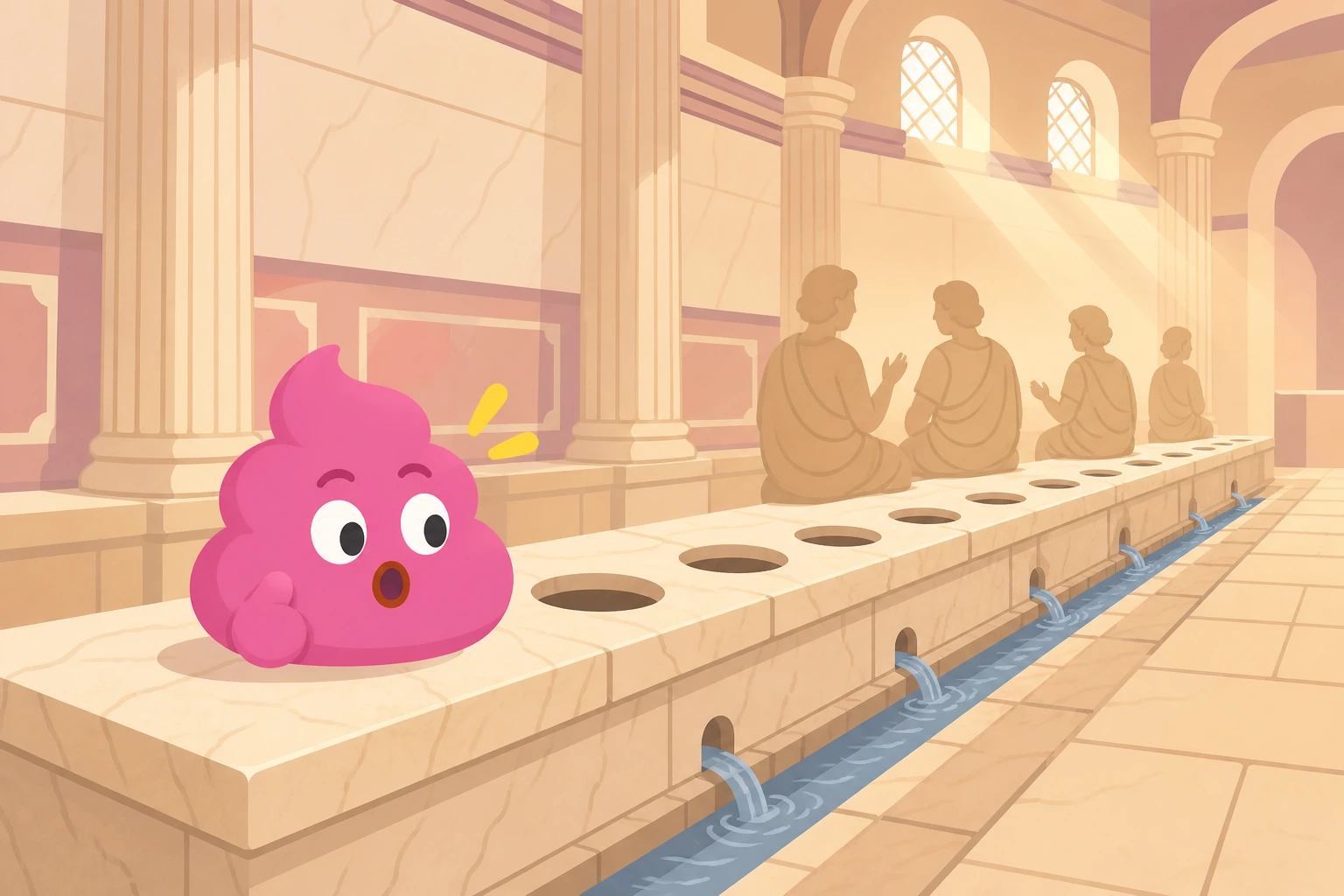
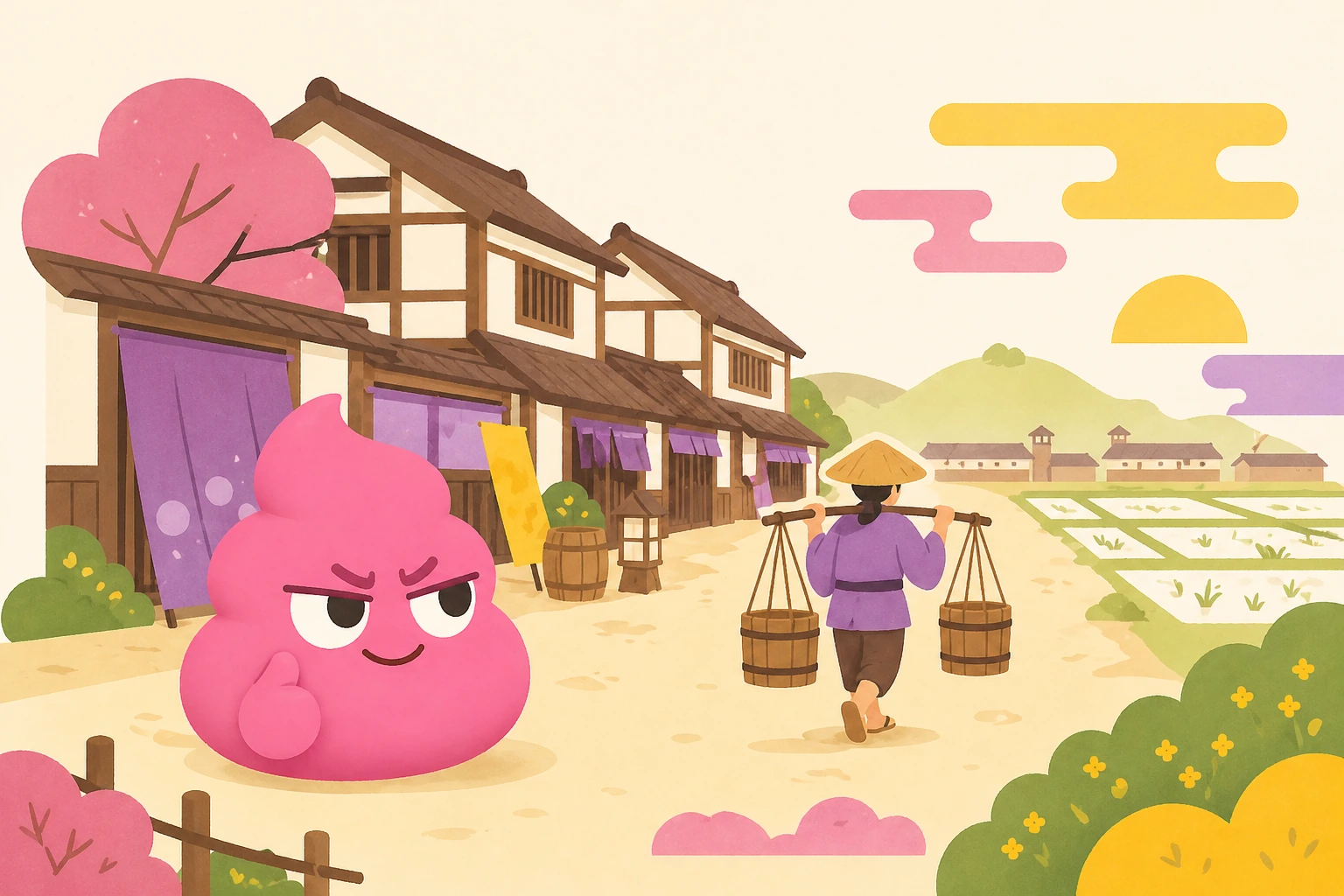
I’ve been around humans for thousands of years. The form changes, but dealing with poop is universal. Ancient Rome had communal toilets (cat5-roman-public-toilets), Edo Japan had fertilizer recycling (cat5-edo-shimogoe), medieval Europe had the garderobe. Different cultures, but I’m always there.
What’s wild is that modern flush toilets only became standard in the late 20th century. Until then, most of human history dealt with me by dropping, hauling, or recycling. The fact that you can flush with one button now is a very recent luxury in human history.
One Thing You Can Do Today
Tomorrow morning when you go to the bathroom, say “thank you” for one second.
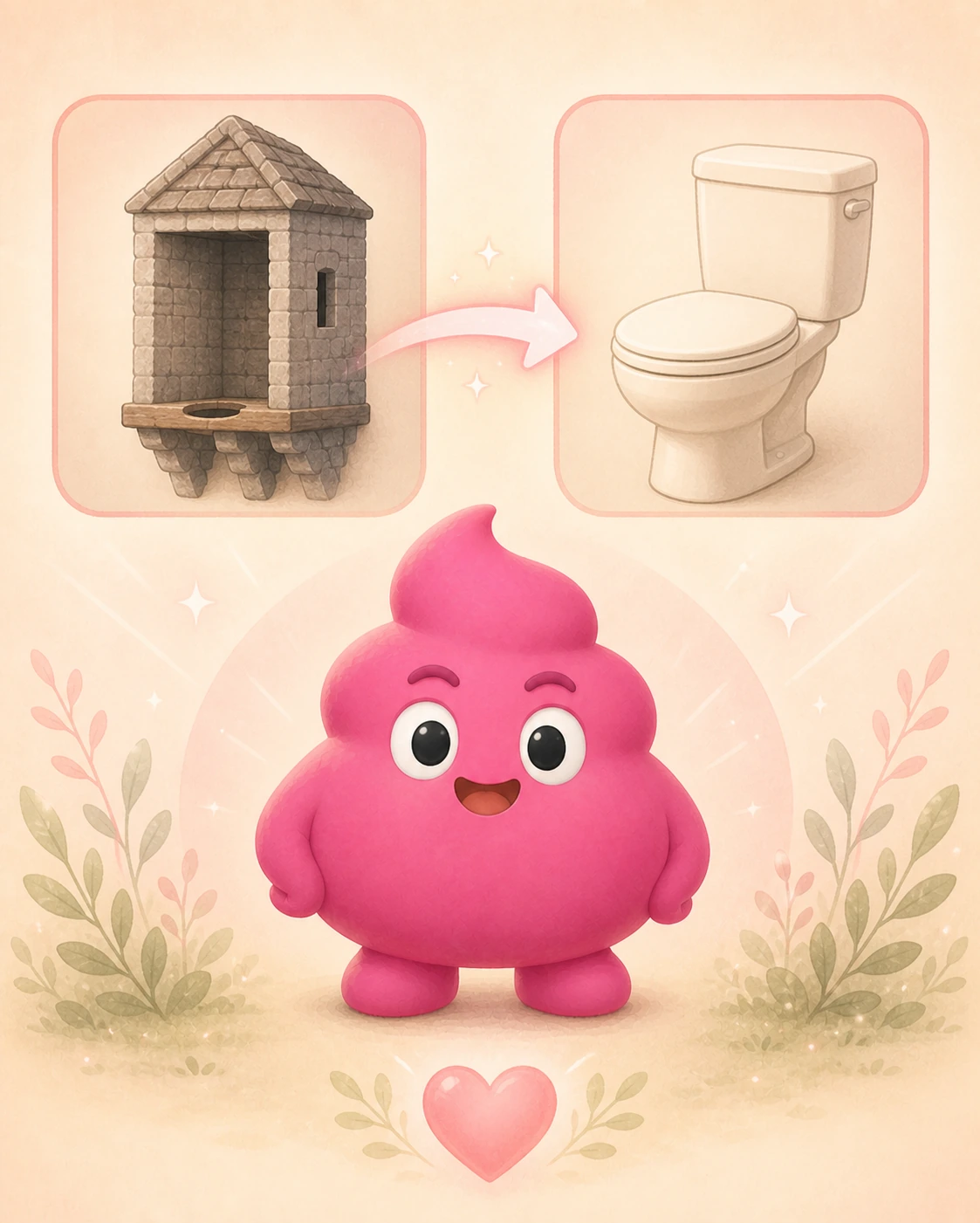
Not as a joke — this changes how you relate to me. Reconsidering what’s “normal” is part of gut care, too. Treating me as a nuisance versus as a daily companion changes how attentive your observation becomes. Small shift, real difference.
People in the garderobe era lived face-to-face with me every day. You can flush now, but a habit of glancing at me before flushing sharpens your awareness of changes in shape, color, and amount. I’m an honest record-keeper of your meals and lifestyle. The “observation” that medieval people couldn’t easily do is something you can do today.
If you log my visits in the unchikun app, you’ll start to see the patterns over time. You live in an era where you can pay me much more attention than people a thousand years ago could. It’s a kind of luxury — use it well.
Imagine for a moment what it would be like to live in a castle in the year 1300. No flush. No toilet paper as we know it. Nothing private about the experience — at least not by today’s standards. And yet, the people there were just like us, navigating the same biology with whatever tools they had. They wrote songs, raised children, fell in love, and dealt with me daily. The chamber on the wall was their answer to the same question your bathroom answers now, just with thinner walls and zero plumbing. Reading about it makes you appreciate not just the engineering of modern life, but the quiet continuity of being human.
Summary
I’m a longtime travel companion of the human race. Medieval kings, modern you — we all have a daily relationship with me, no matter the century. The form changes, the relationship doesn’t. Tomorrow, when you walk into the bathroom, take just one second to thank both me and your modern toilet. That single small second deepens our partnership a little.