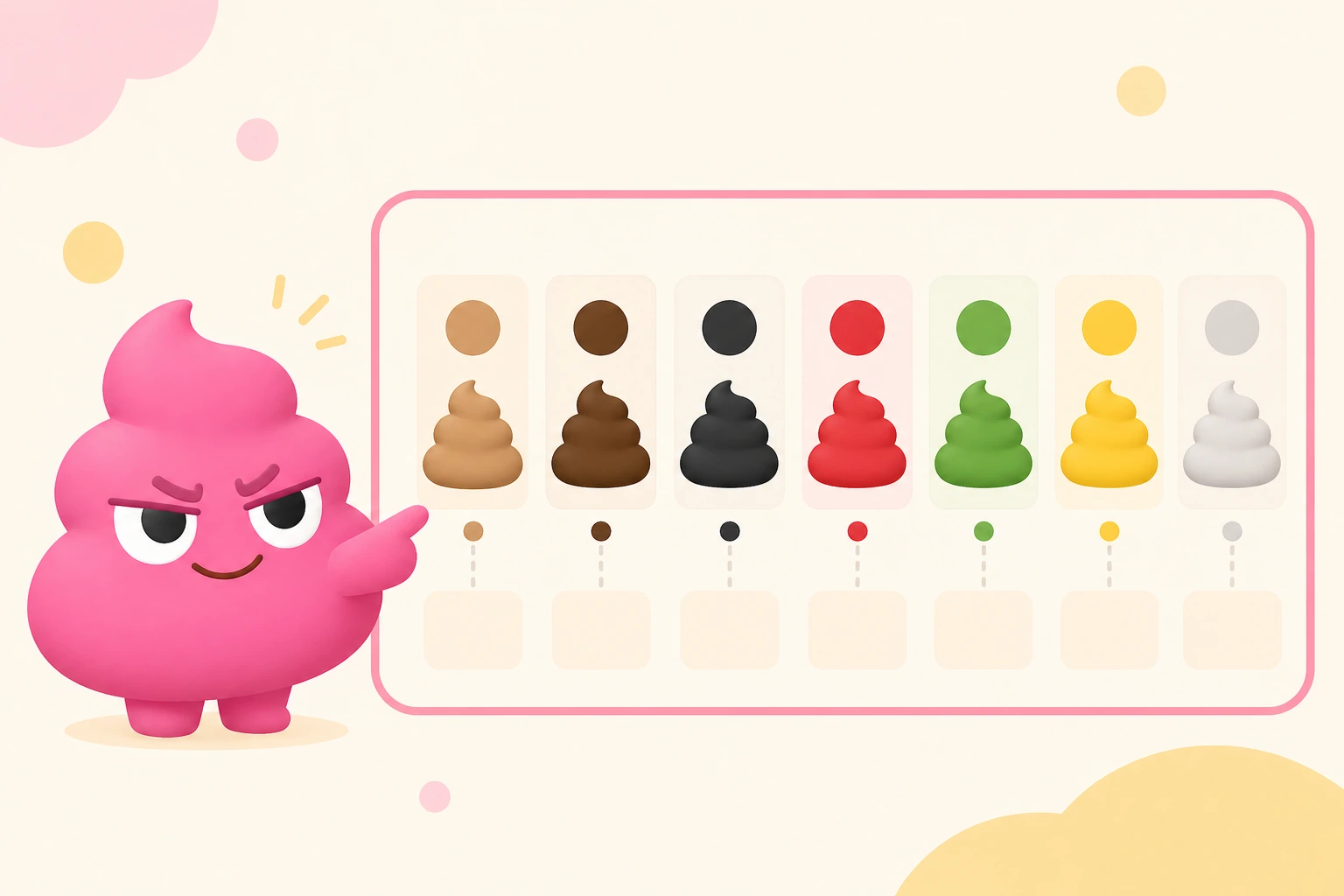
Have you ever looked into the toilet bowl in the morning and thought, “Wait, the color is different from yesterday”? The color of your poop is, honestly, a little daily letter your body writes to you for free. Today, let me walk you through the six most common colors and how to read what each one tends to be saying about your gut.
How to Observe
The three things that decide my color are bile, transit time, and what you ate. Bile is the digestive fluid your liver makes; it starts out yellow-green and then gets broken down by bacteria as it moves through your colon, eventually giving me my trademark brown. So in a real sense, my color is a snapshot of how that whole chemistry game went today.
If transit time is too short, bile does not get fully broken down, and I come out greenish or yellowish. If it is too long, the breakdown goes too far, and I come out a deep dark brown or even nearly black. Just by glancing at my color, you can roughly tell how fast or slow your gut has been moving lately, without any test or app required at all.
The other big factor is food carrying its color directly through. A glass of carrot juice can push me toward orange. Beets, dragon fruit, and red food dyes can push me toward red. Heavy leafy greens like spinach can push me toward green. So when the color shifts, the first thing to ask is not “is something wrong” — it is “what did I actually eat yesterday?”
The most important rule is this: do not judge a single bowel movement. Instead, watch for the gap between today’s color and your usual color. One or two off-color days are almost always explained by food or water intake. But three to five days in a row of the same off-color pattern is harder to explain by diet alone, and that is when the signal is worth taking more seriously.
The Common Patterns
Here are the patterns I run into most often, organized by color.
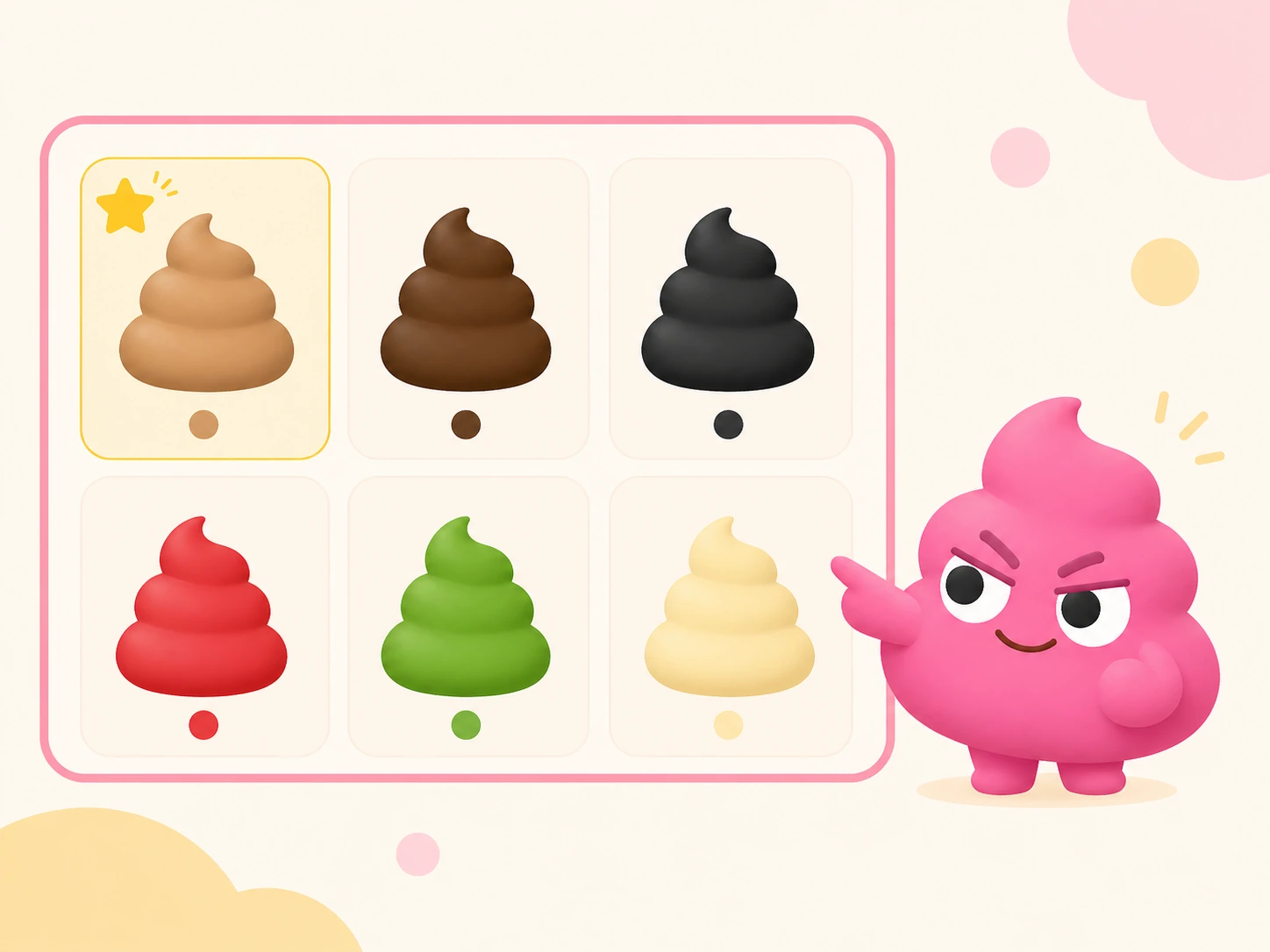
Light brown (your healthy baseline): Bile breakdown and transit time are nicely balanced. The color of a typical convenience-store banana is the standard reference point most guides describe as ideal.
Dark brown to nearly-black brown: Long transit time, with extra water absorbed in the colon. This is what you tend to see when constipation is creeping in. Heavy red meat or red wine the day before can also nudge me into this range.
Jet black (tar-like): Iron supplements often produce this color, so if that explains it, no concern. Red meat alone usually does not get me this dark. If a jet-black color appears unexpectedly and lasts more than a couple of days, it is worth checking in with a healthcare provider.
Red or red-brown: Beets, tomatoes, dragon fruit, and red food dyes can all push me into red the day after. If diet explains it, no concern at all. If a red color you cannot account for from food keeps appearing, ask a healthcare provider for a closer look.
Green: Heavy spinach, kale, or broccoli the day before will easily push me green. So can transit time that is too fast for bile to fully break down. If green is paired with loose stools and continues for several days in a row, the simplest first response is to give your gut some real rest.
Yellow or oily-looking: Often shows up after a high-fat meal. Sometimes oil even visibly floats. One occurrence is nothing to worry about. If it persists for several days, it tends to be a quiet sign to look at how much fat is in your overall diet.
Pale or grayish-white: This color tends to appear when very little bile is reaching the gut. Diet alone usually does not explain it well, so if pale-color stools persist, it is a good idea to bring it up with a healthcare provider sooner rather than later.
Observation Tips for Today
Tomorrow morning, before you flush, take just three seconds to glance at my color. That is the entire habit. No analysis, no spreadsheet, no app required for the basic version.
When you look, just decide one thing in your head: is this my usual color, or not? If not, try to remember what you ate yesterday and the day before. If “oh right, I had a big spinach salad” comes to mind, mystery solved. If nothing comes to mind, just file the moment away with a mental note: “if this keeps up for three days, I will pay attention.” That is the entire decision tree.
Logging the daily shape and color in the unchikun app turns this loose habit into actual data. Within a week or two, you start to see the natural range of “your usual color,” and once that range is clear in your head, picking up on real changes becomes almost automatic. That is what it really means to become a translator for your own body.
You absolutely do not have to aim for perfect light brown every single day. Even very healthy people see daily fluctuations driven by meals, stress, and sleep. The goal is not to hit one specific shade — it is to know your own baseline well enough that genuine, sustained changes do not slip past you unnoticed.
Summary
Your poop’s color is a small letter your body writes you, every single day, completely free of charge. Reading it does not take medical knowledge — it just takes a three-second daily glance, repeated. Tomorrow morning, before you flush, take a quick look and start learning what your usual is. Within a week, you will be having a quietly more interesting conversation with your own body than you would have ever expected.