
Have you ever woken up, eaten breakfast, and noticed that gentle pull saying “I think I need to go”? That is not random timing or coincidence — it is the single most cooperative moment between you and me in the entire day. Today, let me walk you through why your morning gut is so eager to talk to you, and how to actually take advantage of it without forcing anything.
The Origin of This Quote
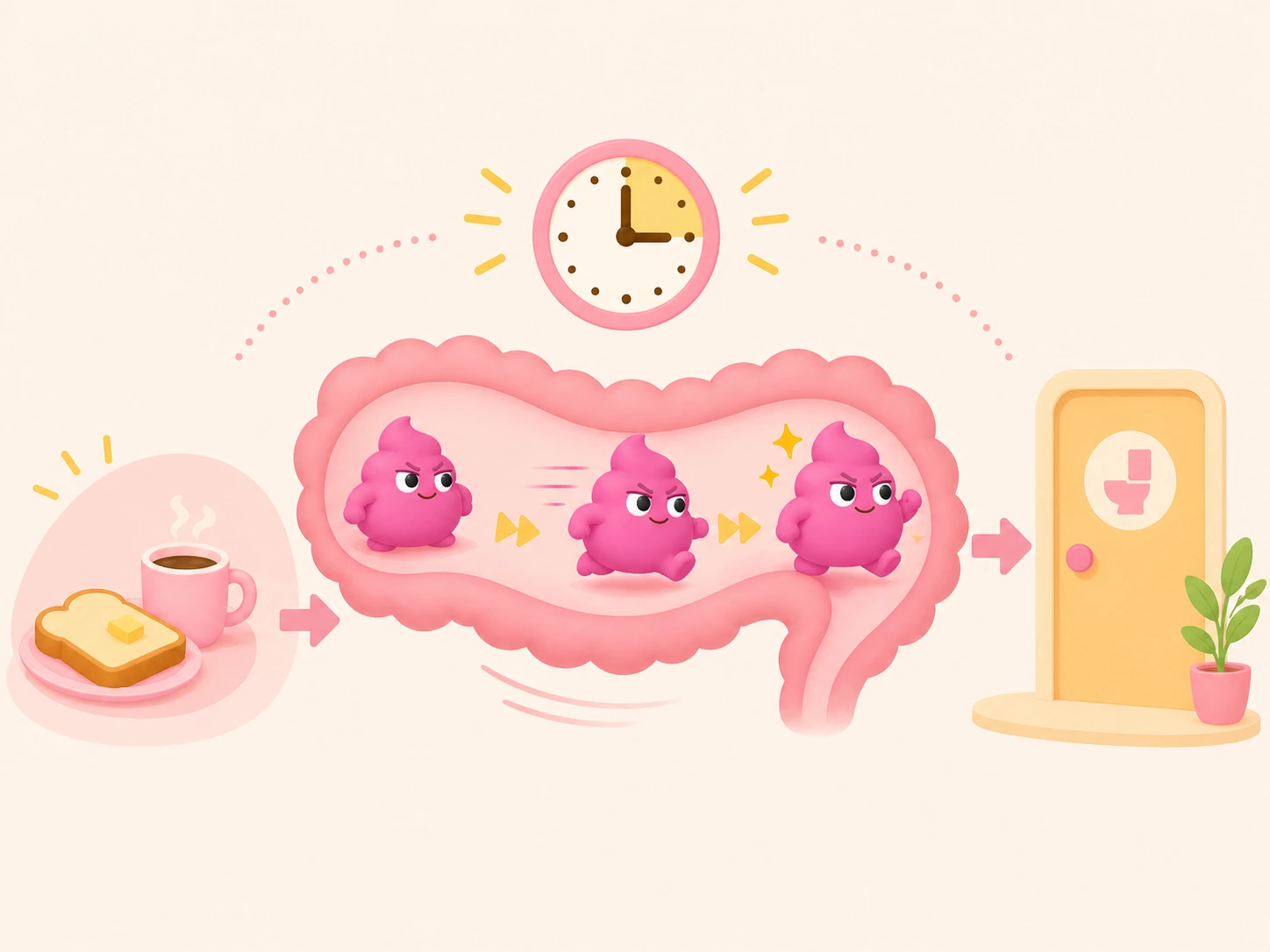
The reason your body wants to go right after breakfast comes down to a reflex with a clinical name — the gastrocolic reflex. When food enters the stomach, the stretch of the stomach wall sends signals through the autonomic nervous system to the colon, telling it to start moving. The colon responds with what gastroenterologists call a “mass movement,” a coordinated wave that pushes everything along, often nudging me close enough to the rectum to trigger the urge to go. None of this is conscious. Your nervous system handles all the choreography in the background, every single morning, completely without your permission or attention.
Mornings amplify this effect. After a long stretch of overnight rest, the gut is fresh and especially responsive to incoming signals. Most digestive medicine references describe a window of about thirty minutes to an hour after the first meal of the day as the most reliable “go window.” It is not a guarantee for every single person — there is genuine individual variation — but it is one of the few biological rhythms that show up across most healthy people, regardless of culture or what they actually eat.
The reflex still fires after lunch and after dinner, just much more quietly. The morning version is the strongest of the day because the gut has just emerged from its longest resting period, and the contrast between resting and eating is the largest. That sharp contrast is exactly what makes mornings the easiest time of day to actually feel the signal clearly.
Unchikun’s Take
From my point of view, mornings are when our timing is most in sync. While you sleep, I rest too. The moment you start eating breakfast, I start moving — almost like an automatic alarm system that you never have to set, never have to remember. The brain does not need to issue a command. The stomach speaks, the colon answers, and I get into position. By the time you have finished your toast and a couple of sips of coffee, I am often already at the door, waiting.
What this means for you is simple, but easy to miss: you do not have to try in the morning. People who struggle with regularity often push and strain, but in the morning, simply sitting on the toilet quietly for fifteen to thirty minutes after breakfast is often enough on its own. You are not generating the urge from scratch. You are just making space for the urge that is already on its way to the surface. Less effort, more attention — that is the entire morning gut philosophy in one phrase.
The catch is that this gift only arrives if you actually eat breakfast. Skip it, and the gastrocolic reflex never fires, and the morning go-window quietly closes for the day. Day after day of skipping breakfast means day after day of throwing away your easiest, most natural elimination opportunity, often without even noticing. From my side, honestly, that is a little sad — it is like preparing a letter every morning that no one is ever home to receive.
One Thing You Can Do Today
Tomorrow morning, try setting aside fifteen to thirty minutes after breakfast as quiet bathroom time. The trick is not “wait for the urge, then sprint.” It is “be in the right place at the right time, and let the body do the rest of the work.”
What you eat matters too. Warm drinks — hot water, miso soup, coffee — gently warm the stomach and tend to amplify the reflex. A breakfast that pairs something easy to digest, like a banana or yogurt, with a bit of fiber, like oatmeal or whole-grain bread, tends to work especially well in practice. A massive cold glass of milk on an empty stomach can chill the gut, which is the opposite of what you usually want first thing in the morning, so be a little careful with that one if you notice it does not agree with you.
Do not panic if nothing happens for the first few days. The gut takes real time to learn a new rhythm — usually anywhere from a few days to a few weeks of consistent practice. Eating at the same time, sitting on the toilet at the same time, every single morning, is what gradually re-anchors your internal body clock. Logging your morning bathroom moments in the unchikun app makes that slow re-anchoring visible as actual numbers, which can be surprisingly motivating when the change is too gradual to feel day to day from inside your own body.
Summary
The morning urge is not something you have to manufacture from willpower — it is a quiet gift your body is already preparing for you while you sleep. Whether you receive it depends on two simple things: did you eat breakfast, and did you sit down long enough to listen? Tomorrow morning, give yourself five extra minutes to meet your own rhythm halfway. You may be surprised by how much it has been quietly waiting to show up, every single morning.