“Paris is the city of perfume and fashion.” That’s the image, right? But until about 150 years ago, the streets of Paris were full of me — tossed from windows and running across the cobblestones. Today’s story is the poop history of Paris.
The Origin of This Quote
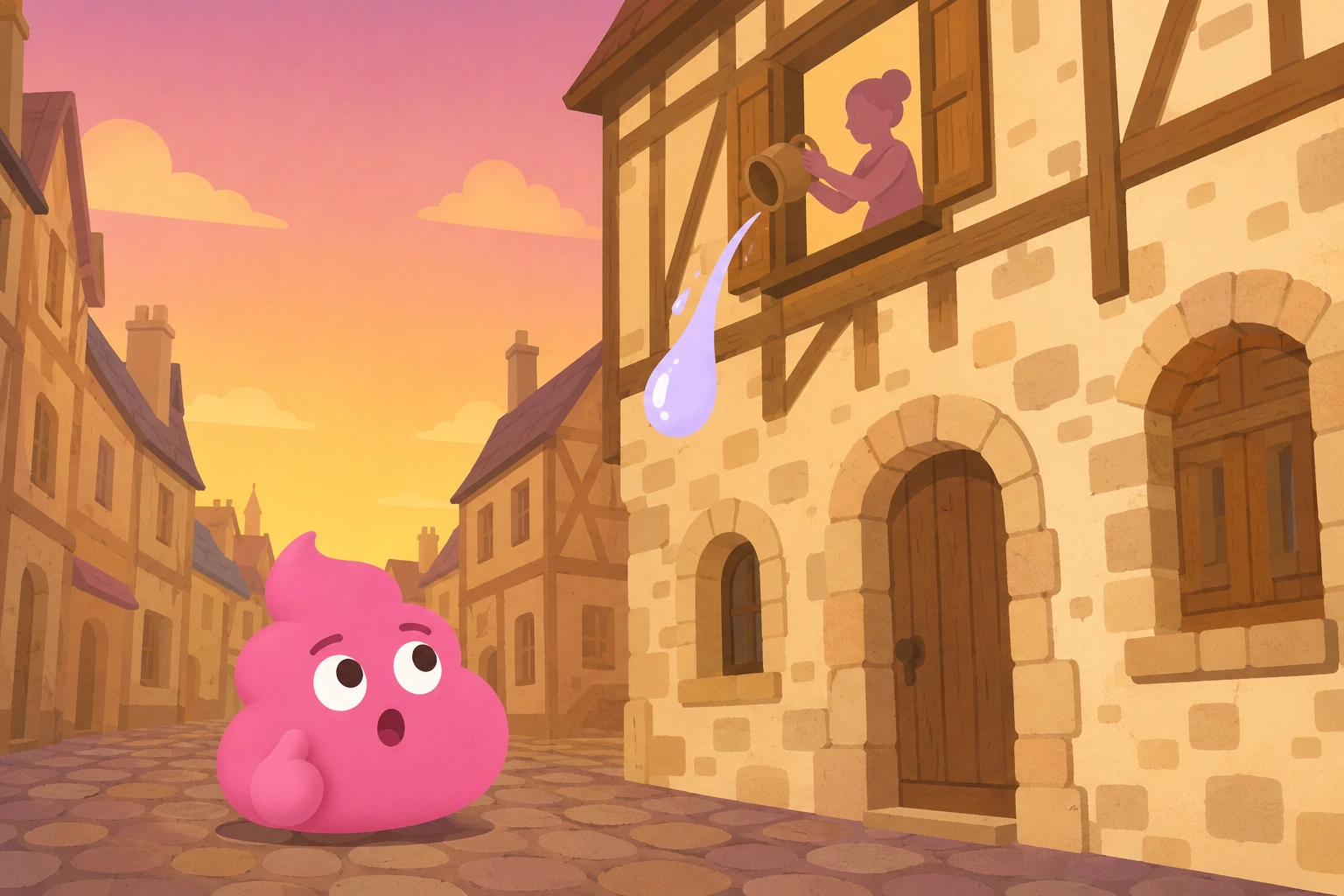
From medieval times to the 19th century, almost no Paris home had a real toilet. People used a chamber pot (pot de chambre), and in the morning they simply threw the contents out the window into the street. Before tossing, residents would shout a warning from above:
“Gardez l’eau!” — “Watch out for the water!”
The “water,” of course, was rarely just water. It was the night’s accumulation, me very much included. There’s even a theory that this French cry is the origin of the English word “loo” for toilet.
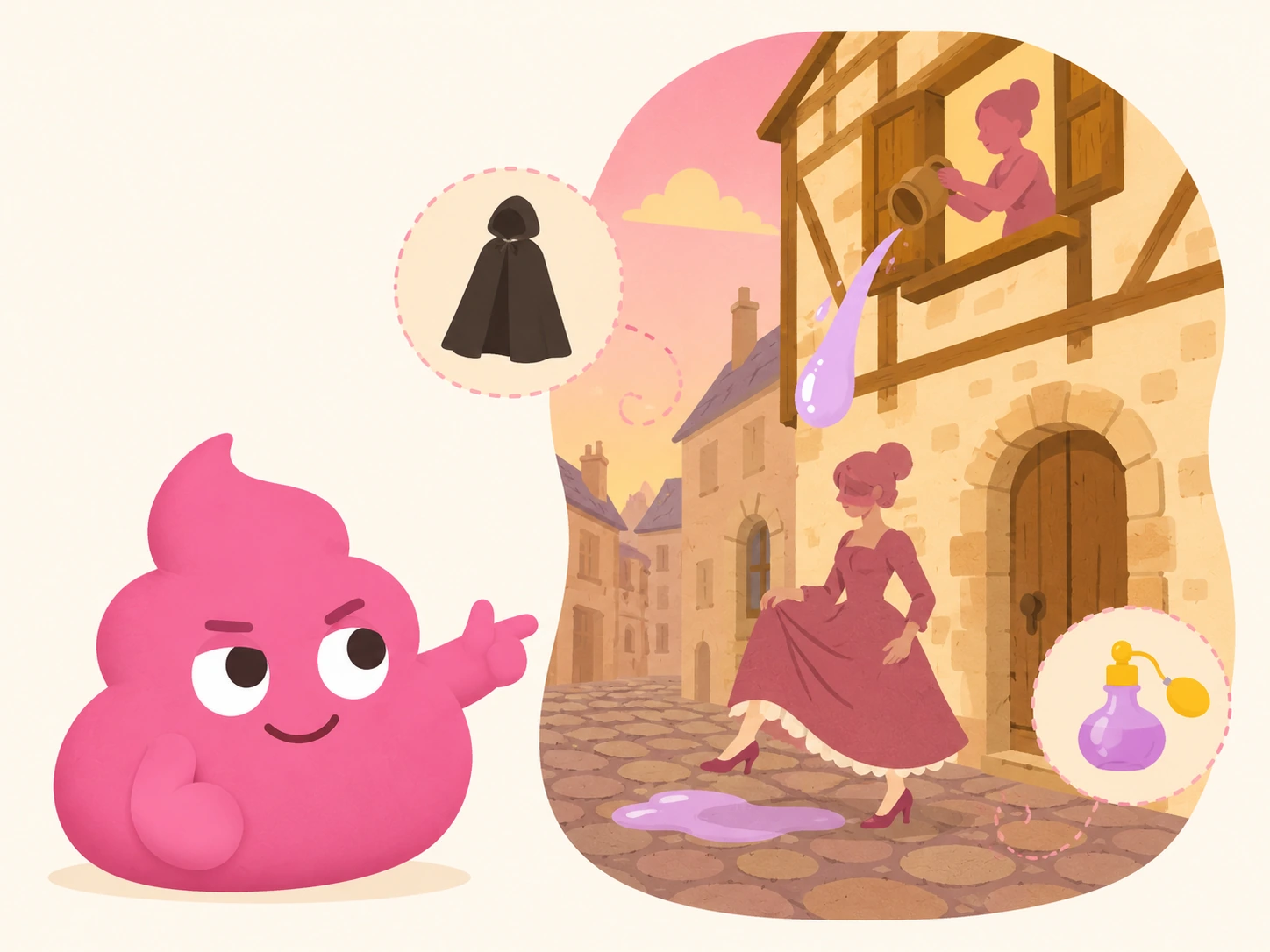
The streets were a mess. So noble women started wearing high heels — raised soles to keep their hems above the filth. Men draped their long capes (cloaks) over an arm to keep them off the ground. Perfume culture exploded in this same era too. The point wasn’t really to mask the smell — it was to overwrite it with something stronger. High heels, perfume, capes — me at the origin of all three.
The Royal Court Wasn’t Any Better
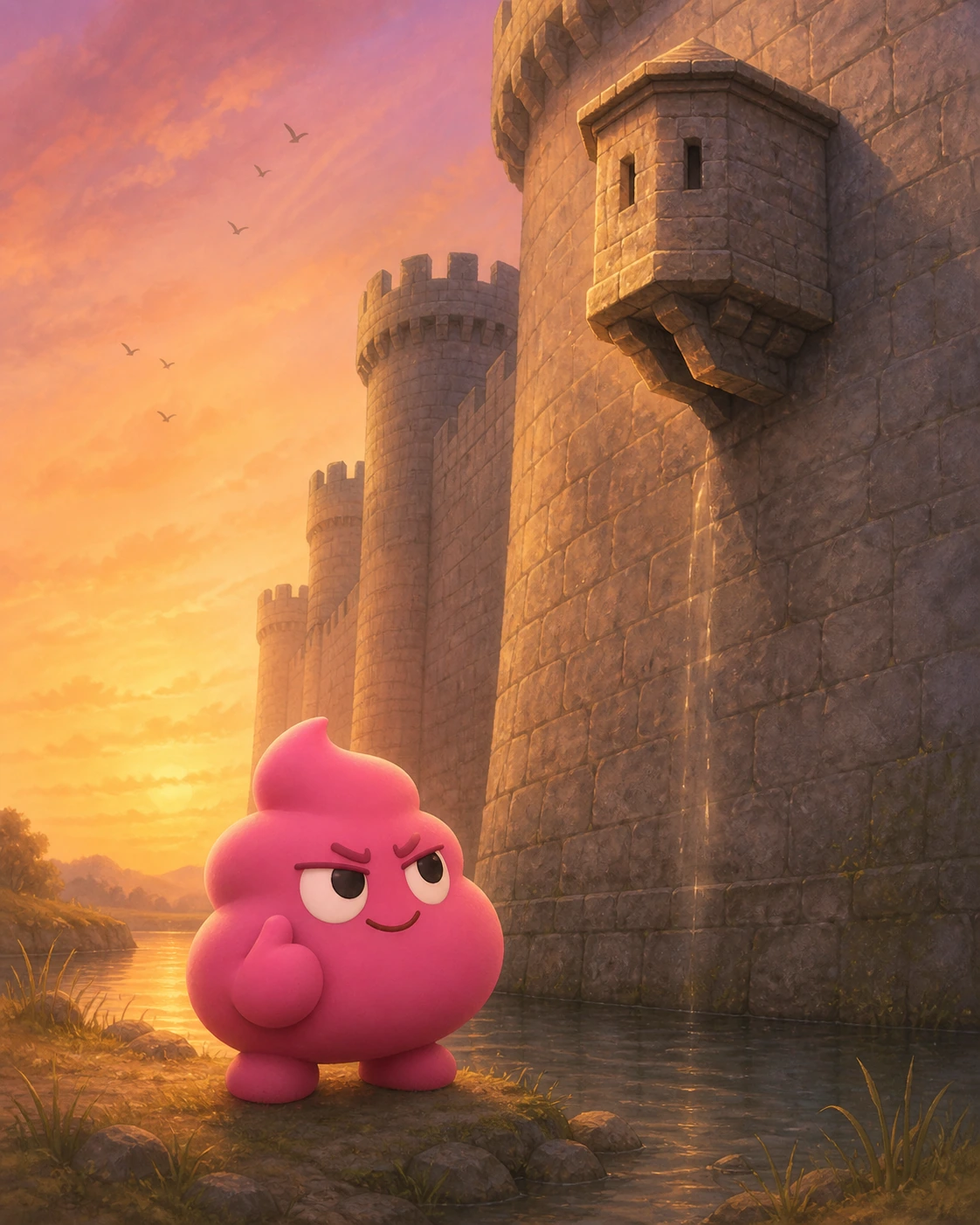
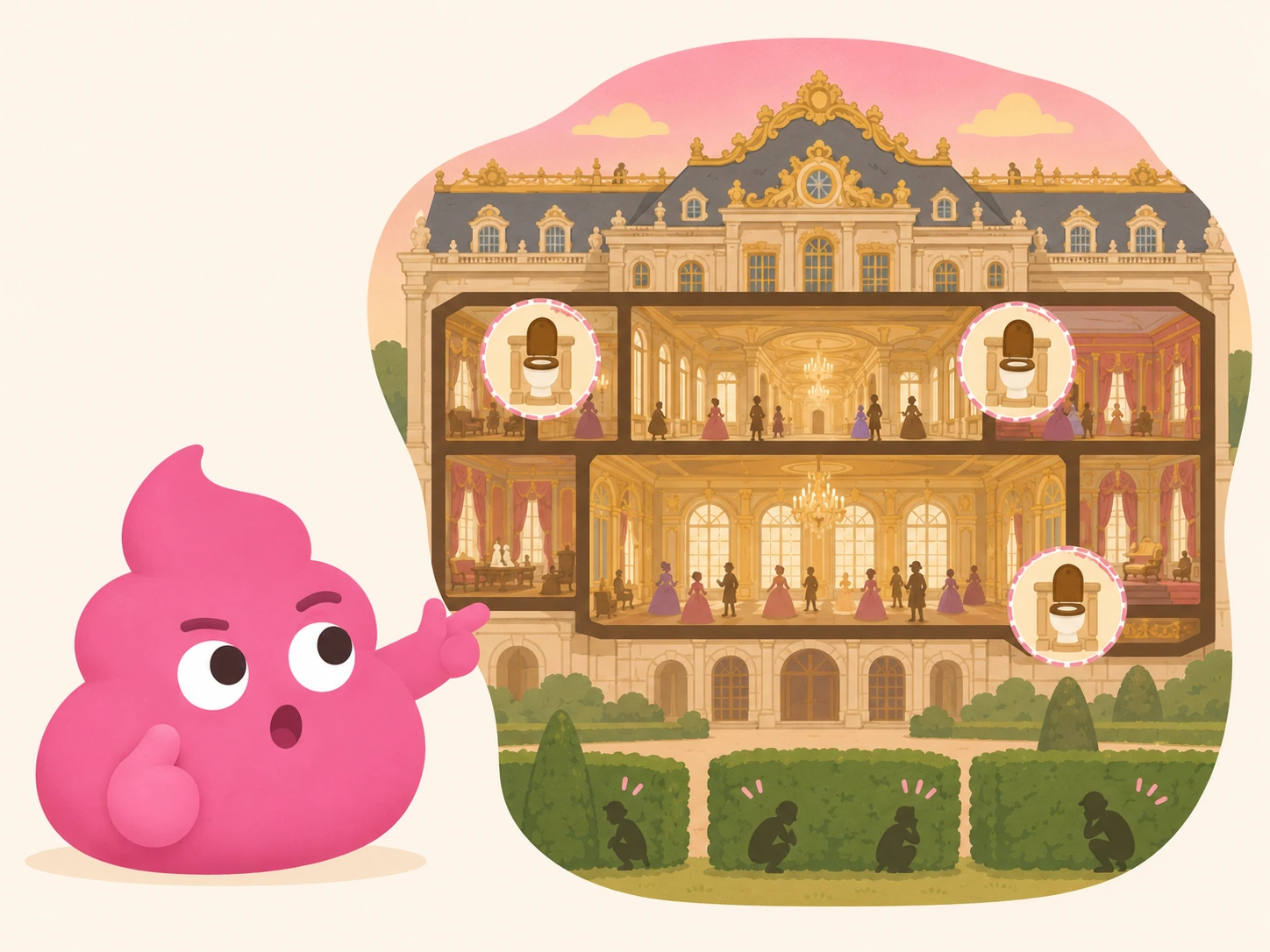
You’d think the palace was different. Actually, the Palace of Versailles (17th–18th century) wasn’t much better. Up to 10,000 people circulated in and around it, but there were only a handful of actual toilets.
So nobles relieved themselves in hallway corners, behind staircases, in the garden hedges. Records describe how “the morning hallways were so covered with poop you didn’t know where to put your shoes.” Some nobles even carried a chamber pot hidden in their voluminous skirts. Eat from gold plates one moment, squat behind a hedge the next. That was the king’s life.
The Great Transformation
Up to the mid-19th century, Paris was a city wrapped in my smell. The Seine was, in effect, an enormous open sewer. The cholera epidemics of 1832 and 1854 killed tens of thousands, and finally people decided: this can’t continue.
Enter Baron Haussmann. Under Napoleon III, the great “Renovation of Paris” began in 1853. Narrow medieval lanes were demolished and replaced by wide boulevards, and beneath them was built a 600-kilometer underground sewer network. In 1894 a law called tout-à-l’égout made connection to the sewer mandatory for every building, and Paris finally escaped being “the city where I flowed through the streets.”
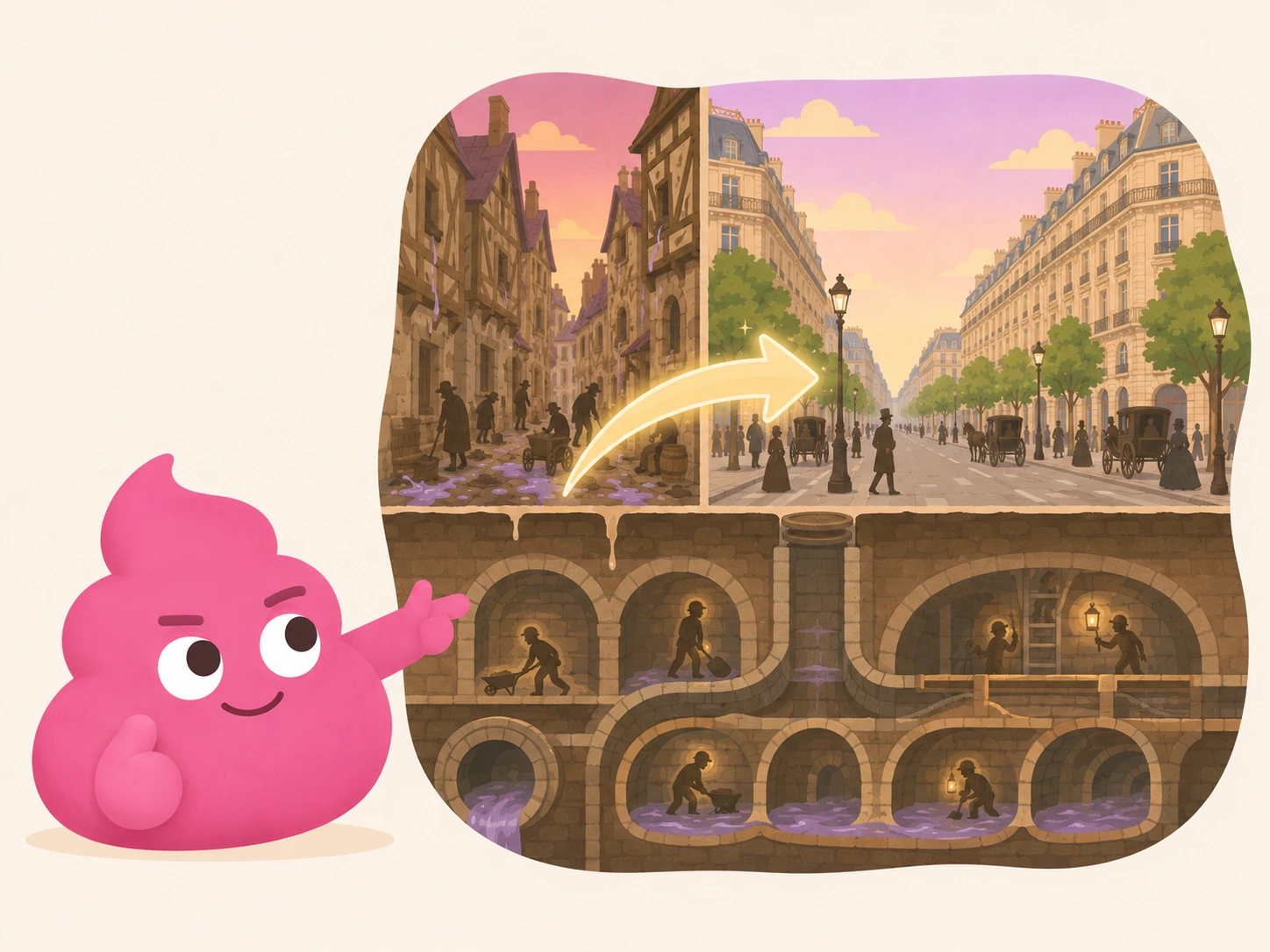
In other words, today’s elegant-Paris image is barely 150 years old. Before that, it was a city that lived with me — not over me.
Unchikun’s Take
The way I see it, perfume and high heels are basically my children. The desperate need to mask my smell and avoid my mess gave birth to the most fashionable city in the world. History gets weirdly relatable from that angle.
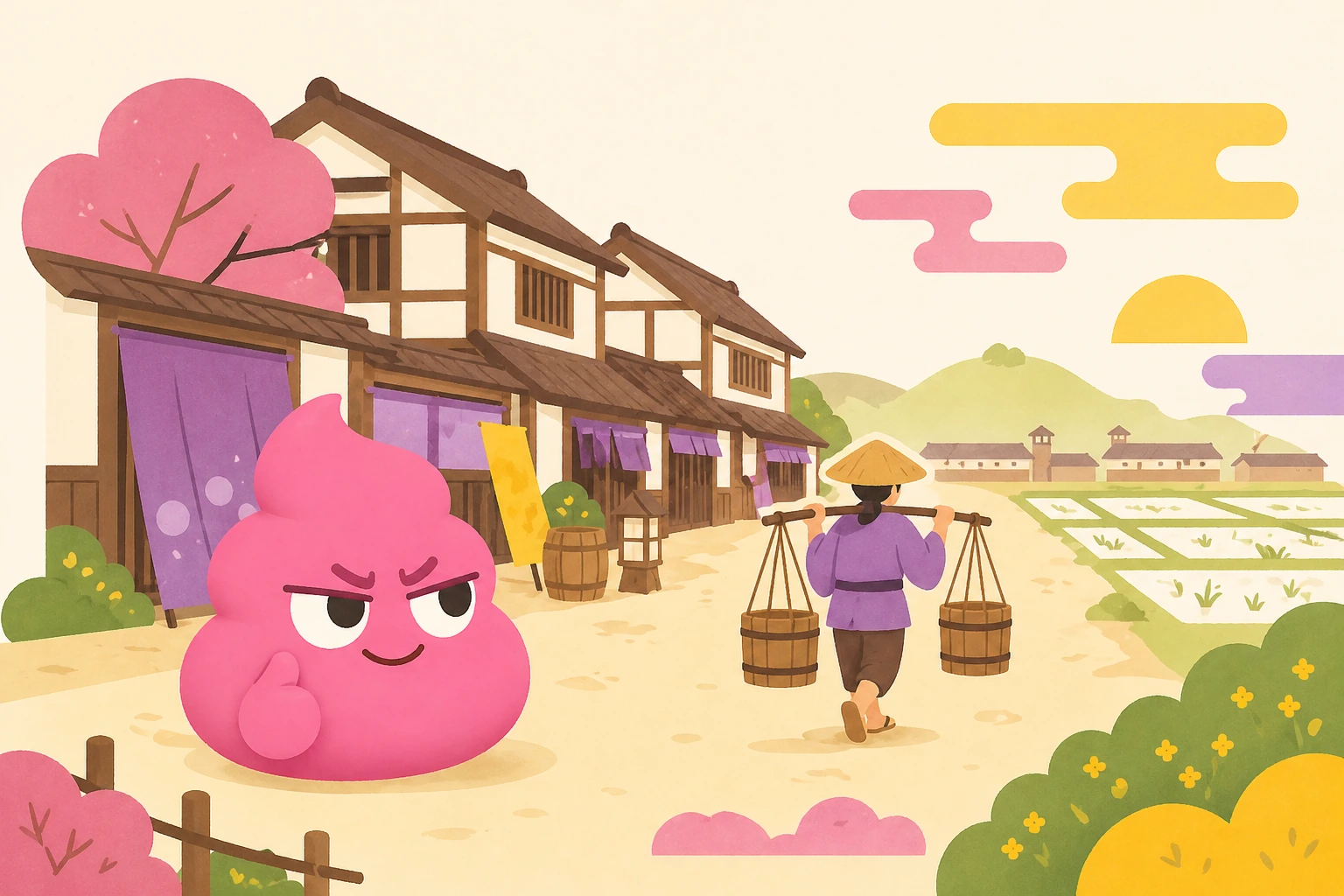
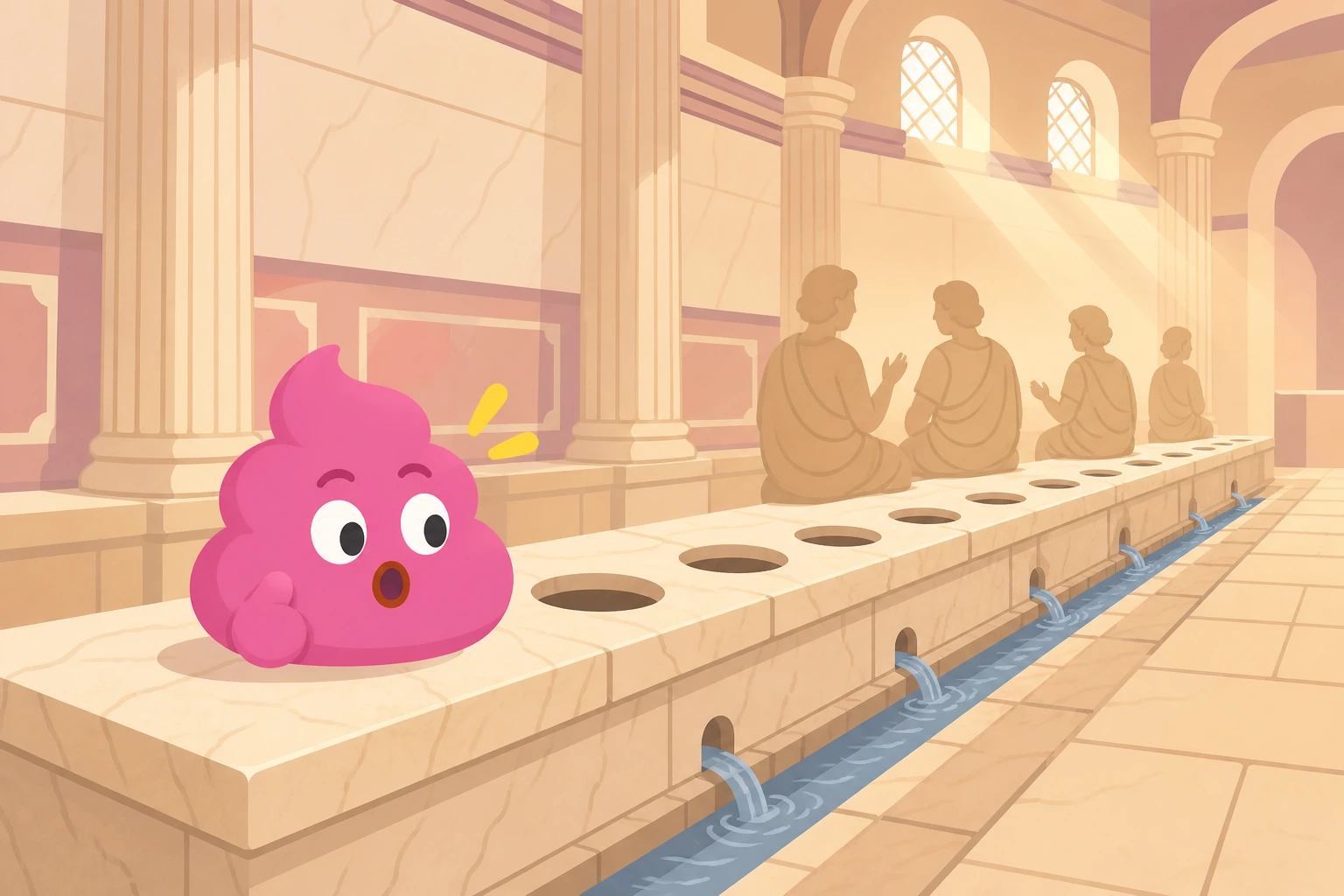
I’ve been with the public toilets of ancient Rome (cat5-roman-public-toilets), the fertilizer recycling of Edo Japan (cat5-edo-shimogoe), the wall-mounted garderobes of medieval Europe (cat5-medieval-garderobe), and the streets of Paris. In every era, I was right next to humans. The form changes, the relationship endures.
What’s wild is that modern flush toilets only became standard in the late 20th century. Until then, most of human history dealt with me by tossing, hauling, or recycling. The fact that you can flush with one button now is a very recent luxury in human history.
One Thing You Can Do Today
Tomorrow morning when you walk into the bathroom, say “thank you” for one second.
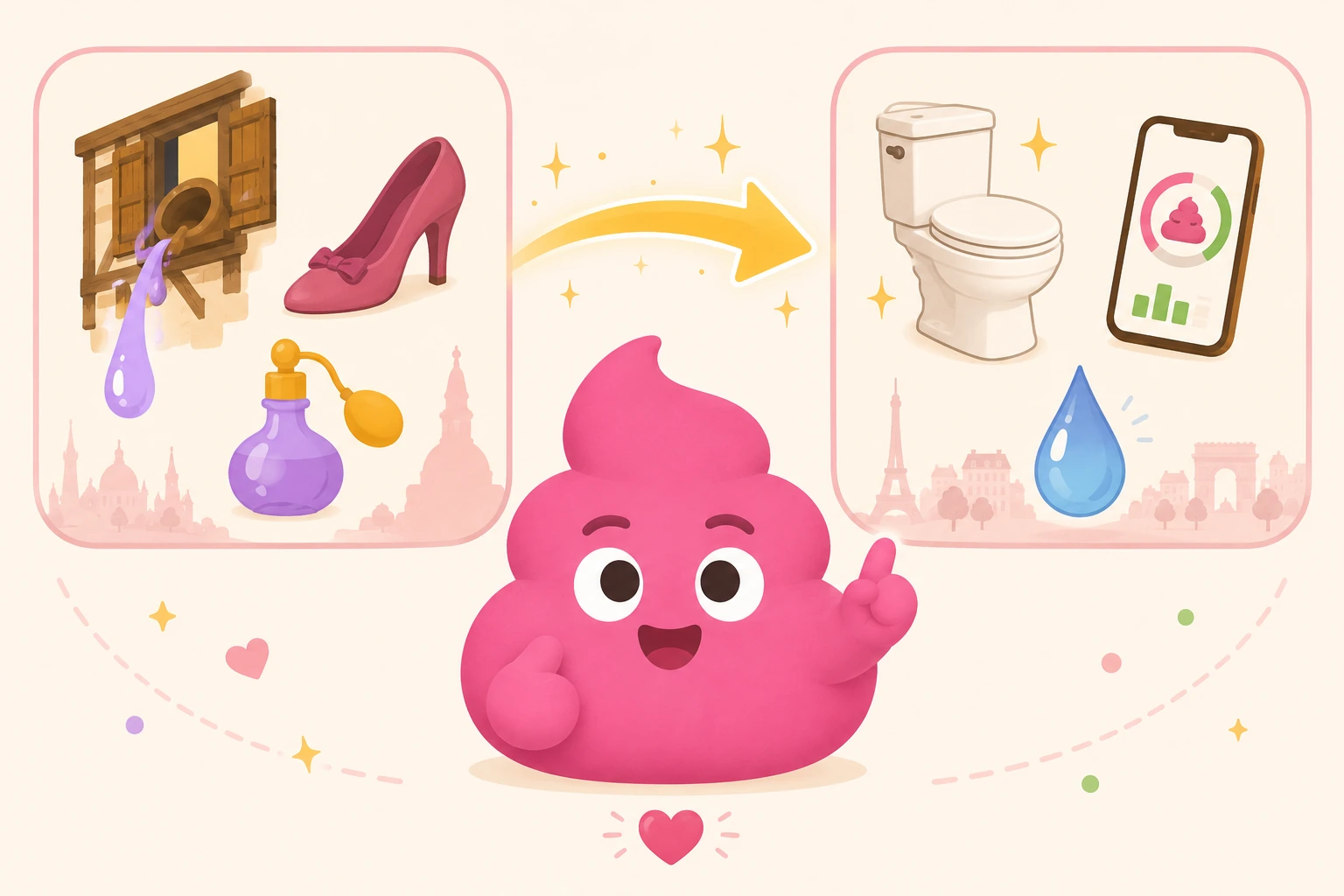
Not as a joke — this actually changes the relationship. Reconsidering what’s “normal” ties directly into gut awareness. Whether you see me as a nuisance or as a daily companion changes how attentive your observation becomes. A small mindset shift, a real difference.
People in old Paris had to mask my smell with perfume because they had no other option. You, on the other hand, live in an age where you can actually look at me and record what you see. A quick glance at the shape, color, and amount before flushing makes you far more aware of how your meals and lifestyle are landing. It’s the era of facing me, not hiding from me.
If you log my visits in the unchikun app, the patterns appear over time. You can pay me far more attention than any 17th-century Parisian could. That’s a luxury worth using.
Summary
I’m a longtime travel companion of the human race. The kings of Paris, modern you — we all have a daily relationship with me, no matter the century. Perfume and high heels were, in a roundabout way, my doing. Tomorrow, take a single second to thank both me and your flush toilet. That tiny moment deepens our partnership a little.