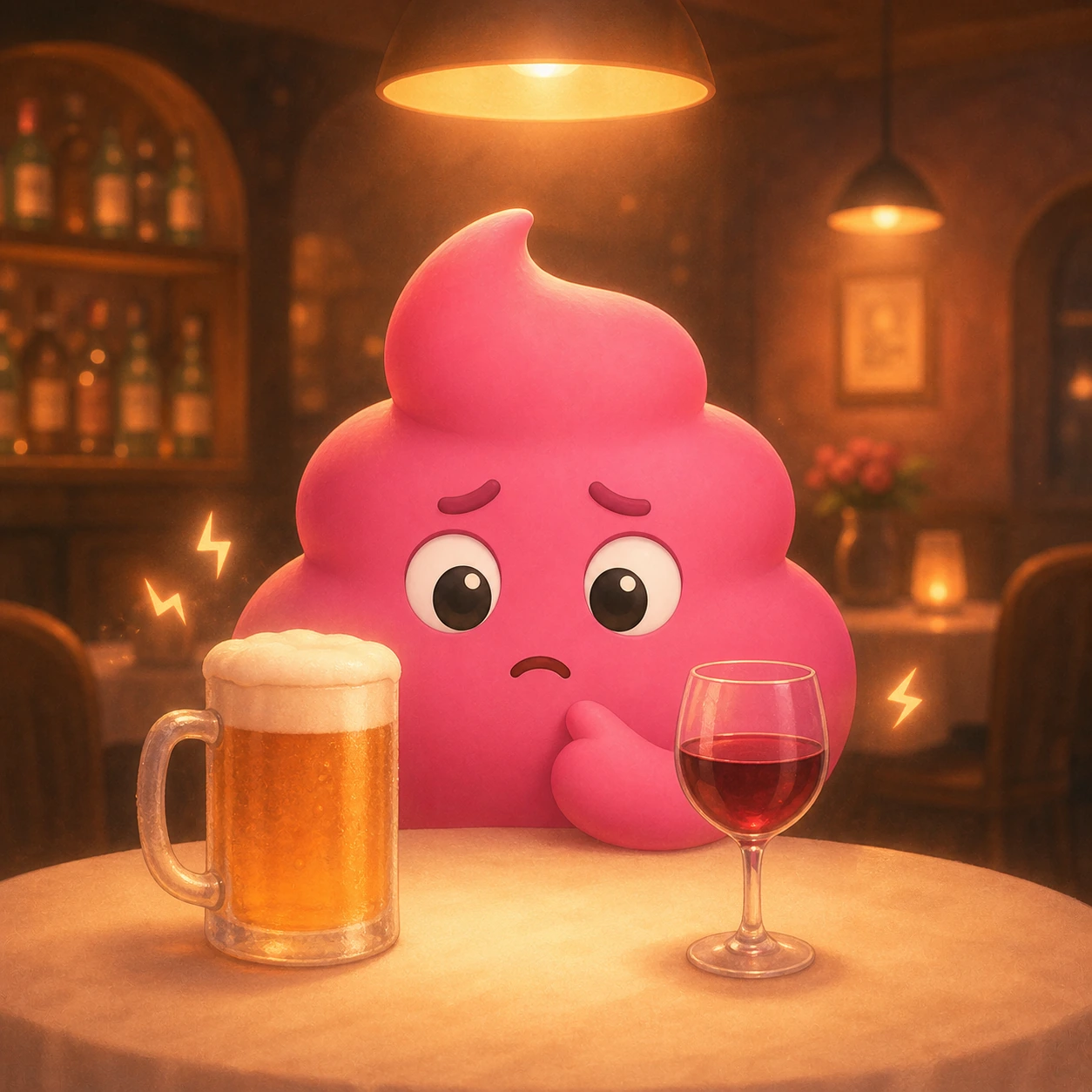
“Diarrhea after drinking.” “Bathroom runs the morning after.” “Lately my whole bathroom rhythm is off.” Those are signals that I’m broadcasting a quiet emergency. Alcohol is a fun friend, but in your gut, it shows up as a slightly difficult guest. Today’s story is about balance, not banning.
The Origin of This Quote
Alcohol enters through the mouth, then gets absorbed mostly through the stomach and small intestine. Before it reaches my world, it leaves a trail of side effects. There are two patterns to know: acute (same-day) and chronic (long-running).
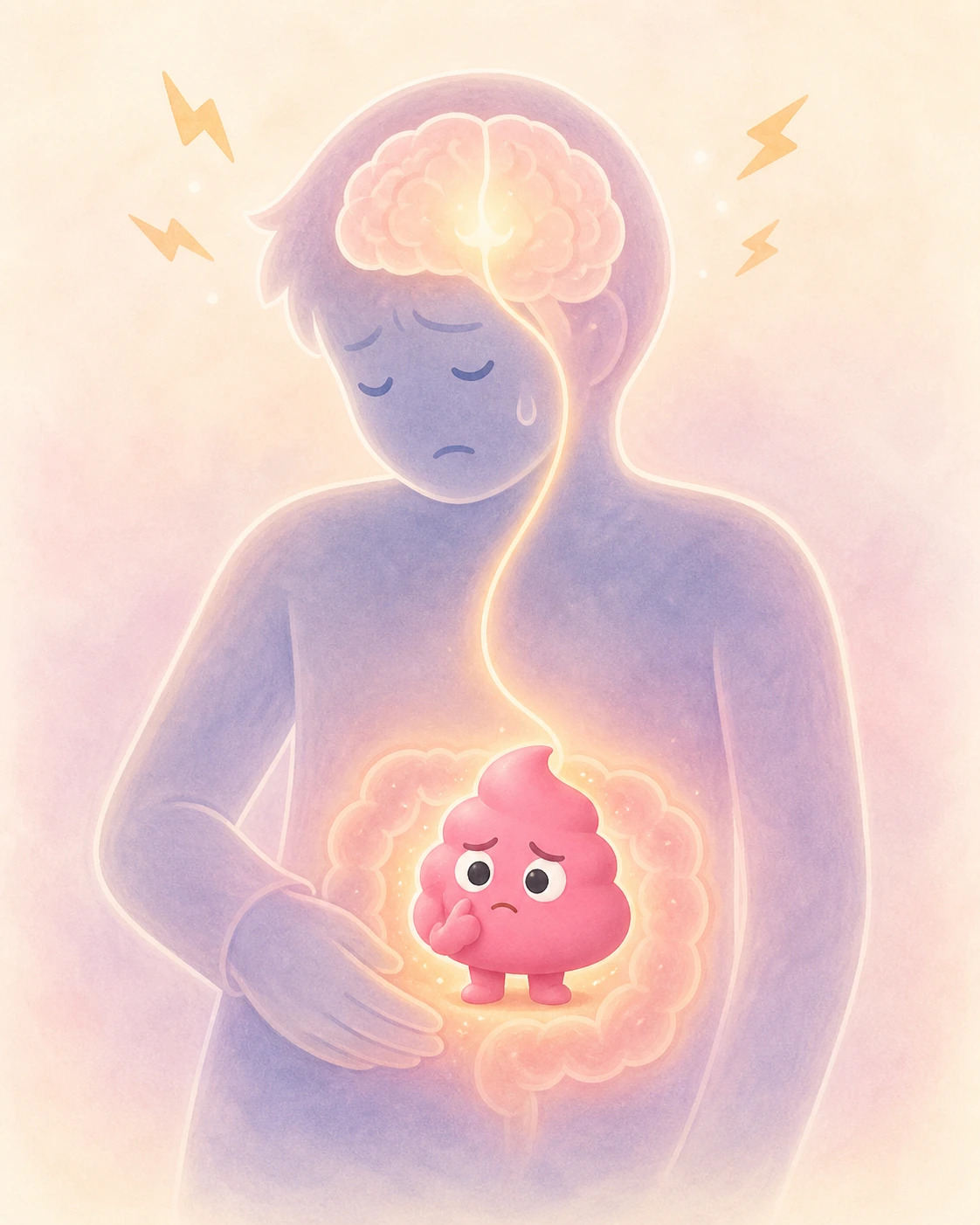
The acute pattern hits the day you drink and the next morning. Alcohol irritates the stomach and intestines and disrupts peristalsis. Some people end up with diarrhea, others with constipation — both come from the sympathetic nervous system flaring up and throwing my rhythm off. Alcohol is also a diuretic. As your body loses water, I get either hard and stuck, or overstimulated and rushing through, depending on how you respond.
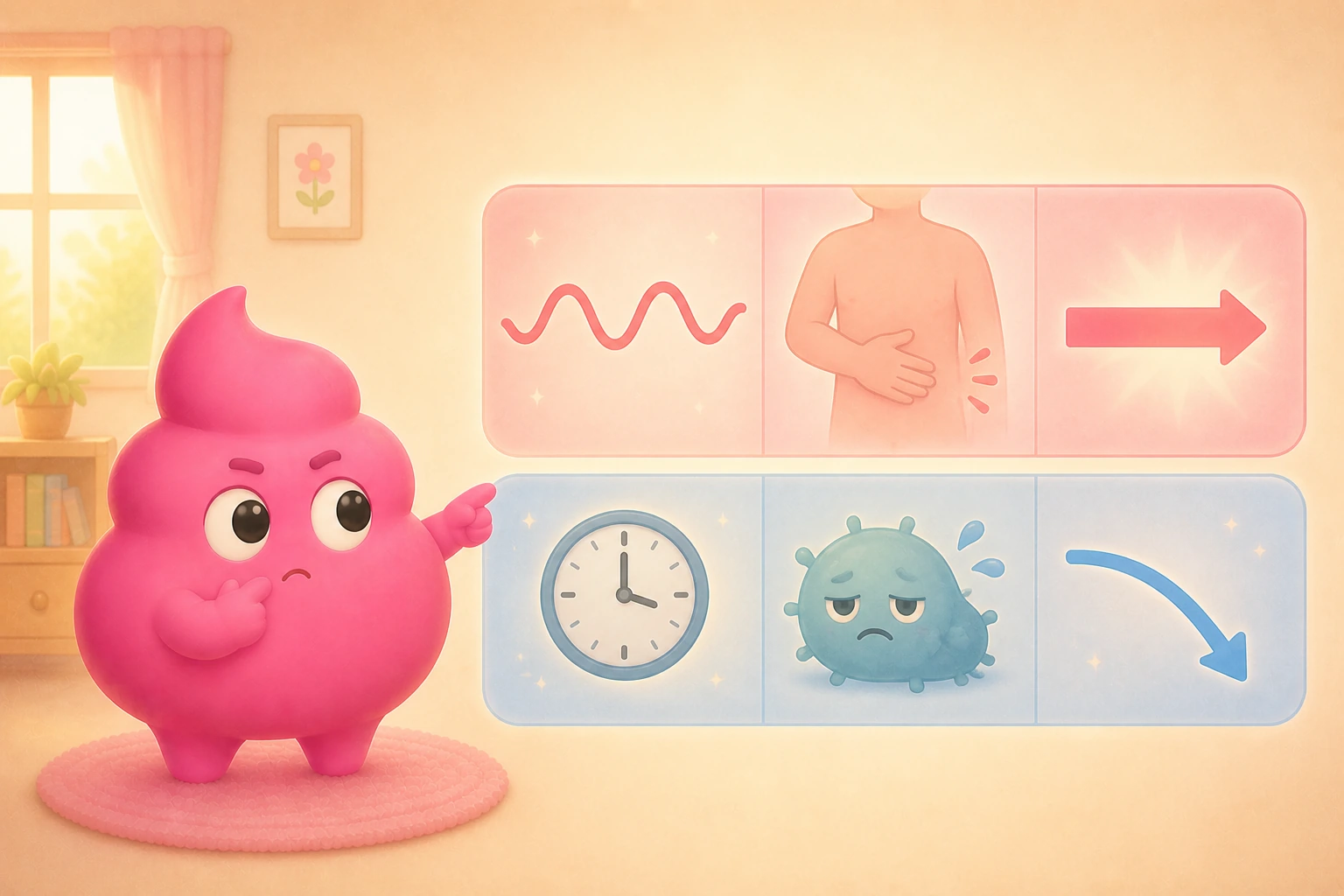
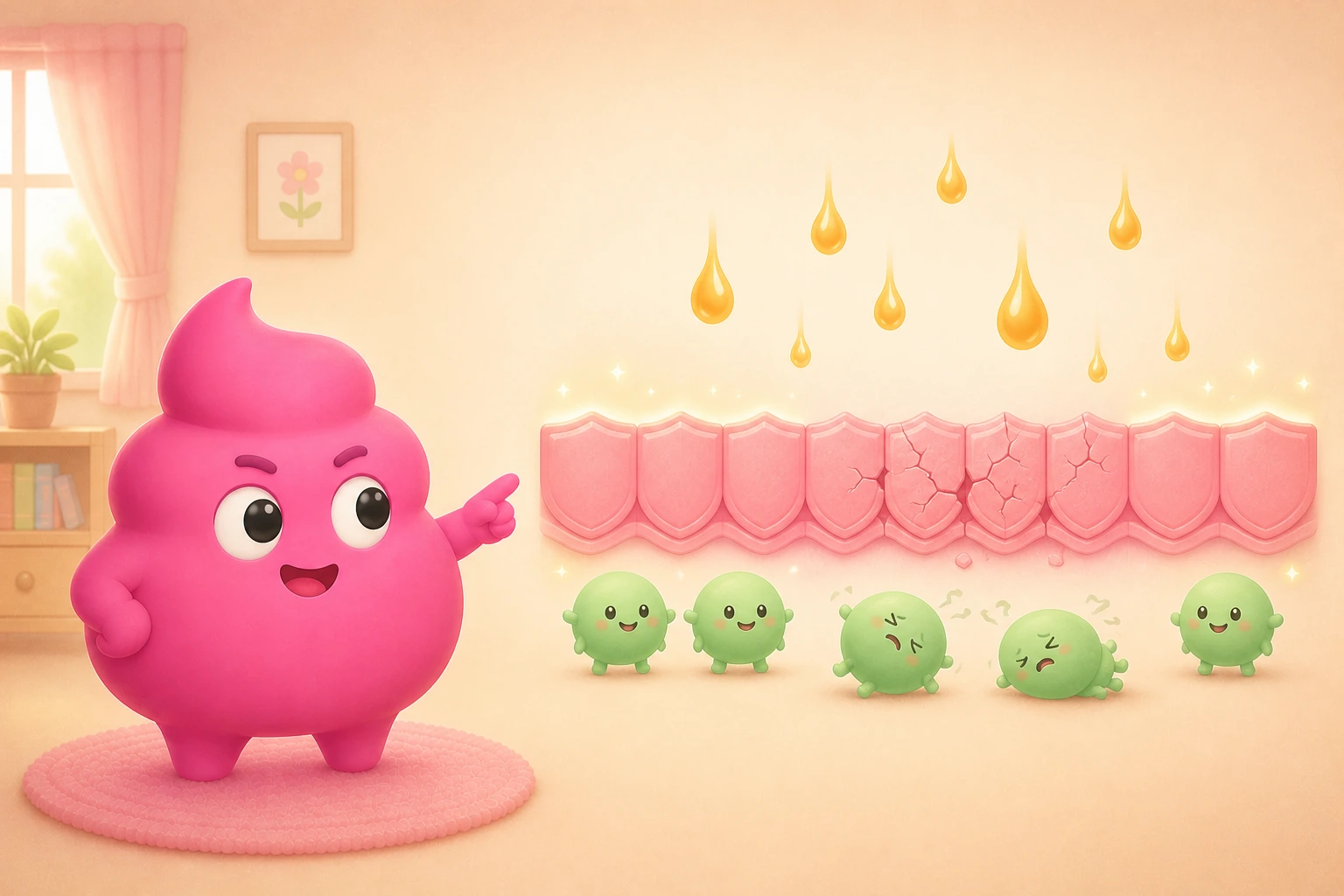
The chronic pattern is quieter. Drinking near-daily over time weakens the gut wall barrier. The barrier normally lets the right things through and blocks the rest. Long-running alcohol creates tiny gaps in that wall. At the same time, good bacteria shrink and opportunistic ones gain ground, which is when gas, smell, and unstable shape start showing up regularly.
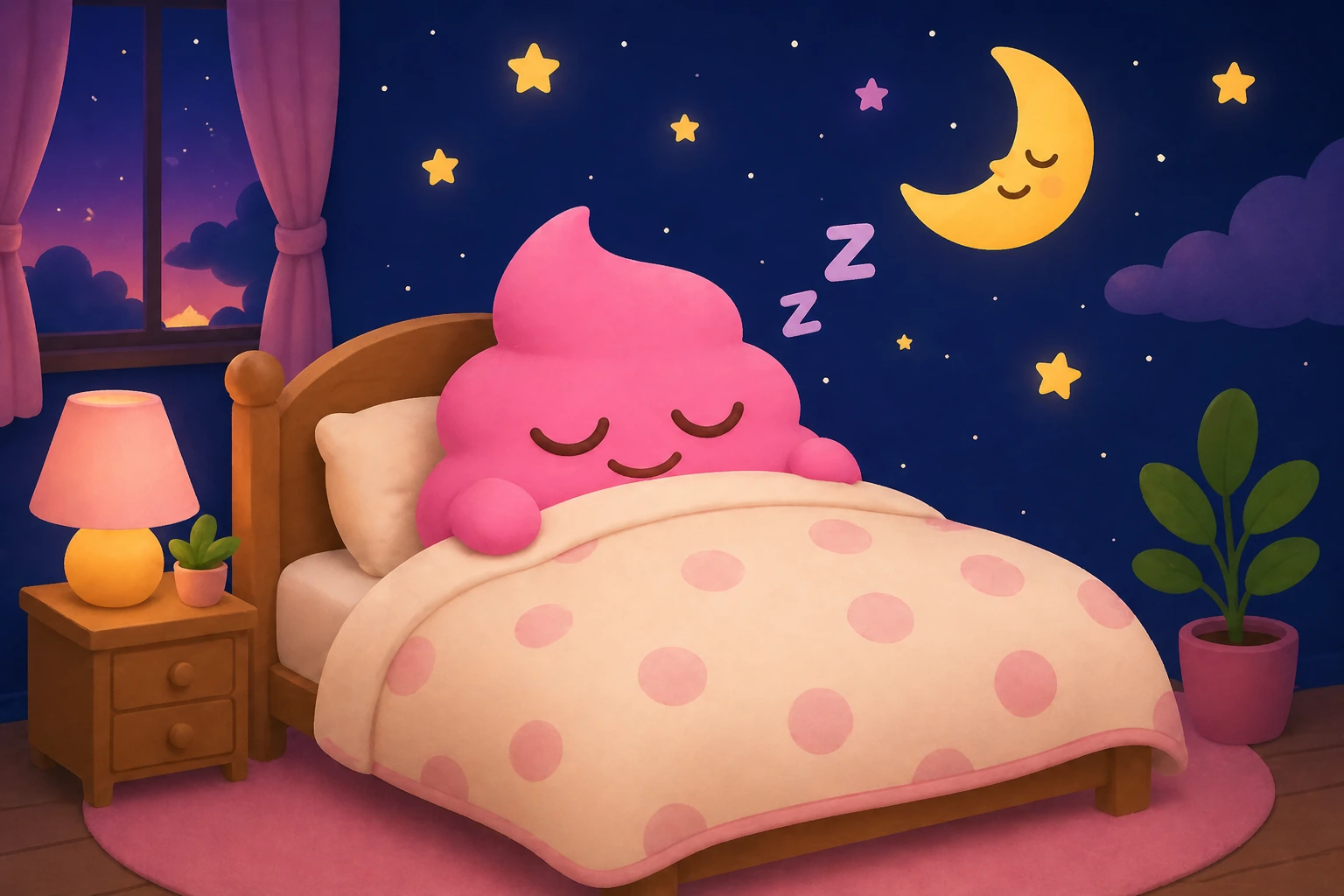
There’s a third layer: alcohol drops the quality of your sleep. You may fall asleep faster, but deep sleep shrinks, and the nighttime gut-cleaning shift (MMC, from cat4-sleep-and-gut) struggles to run. Stress resilience also drops (cat4-stress-and-gut). Brain, gut, and alcohol are all tangled together.
Unchikun’s Take
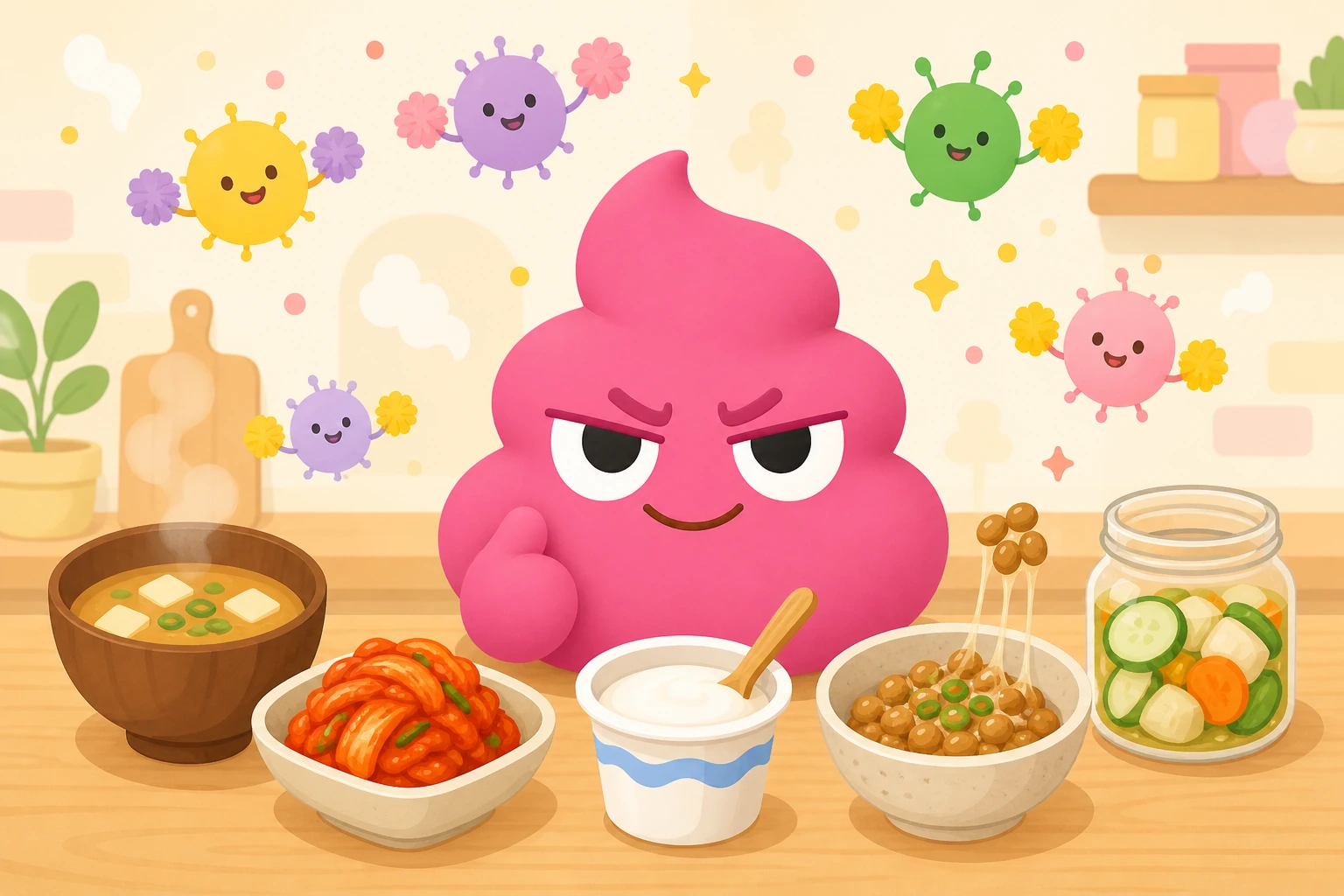
The way I see it, alcohol is a slightly uninvited guest. Welcome once in a while, but if it stays every night, my good-bacteria crew gets exhausted. They’re not strong against alcohol — drink daily and their numbers fall, and the gut tilts toward the opportunistic side.
What I want to land is this: it’s not “don’t drink,” it’s “amount and frequency.” A relaxed glass or two on the weekend, alongside food, and my bacteria team holds up just fine. But once it becomes a daily habit, my condition slowly slides. Constipation, diarrhea, bloating, sharper smell — if any of those have stuck around lately, that’s the signal to look at how often you’re drinking.
The fun part: rest days really work. Even two no-alcohol days a week give your liver and my bacteria crew real recovery time. Pair those with fermented foods (cat3-fermented-foods) and fiber-rich days, and the bounce-back is even faster.
One Thing You Can Do Today
Drink a glass of water alongside every drink. This one shift makes a real difference the morning after.
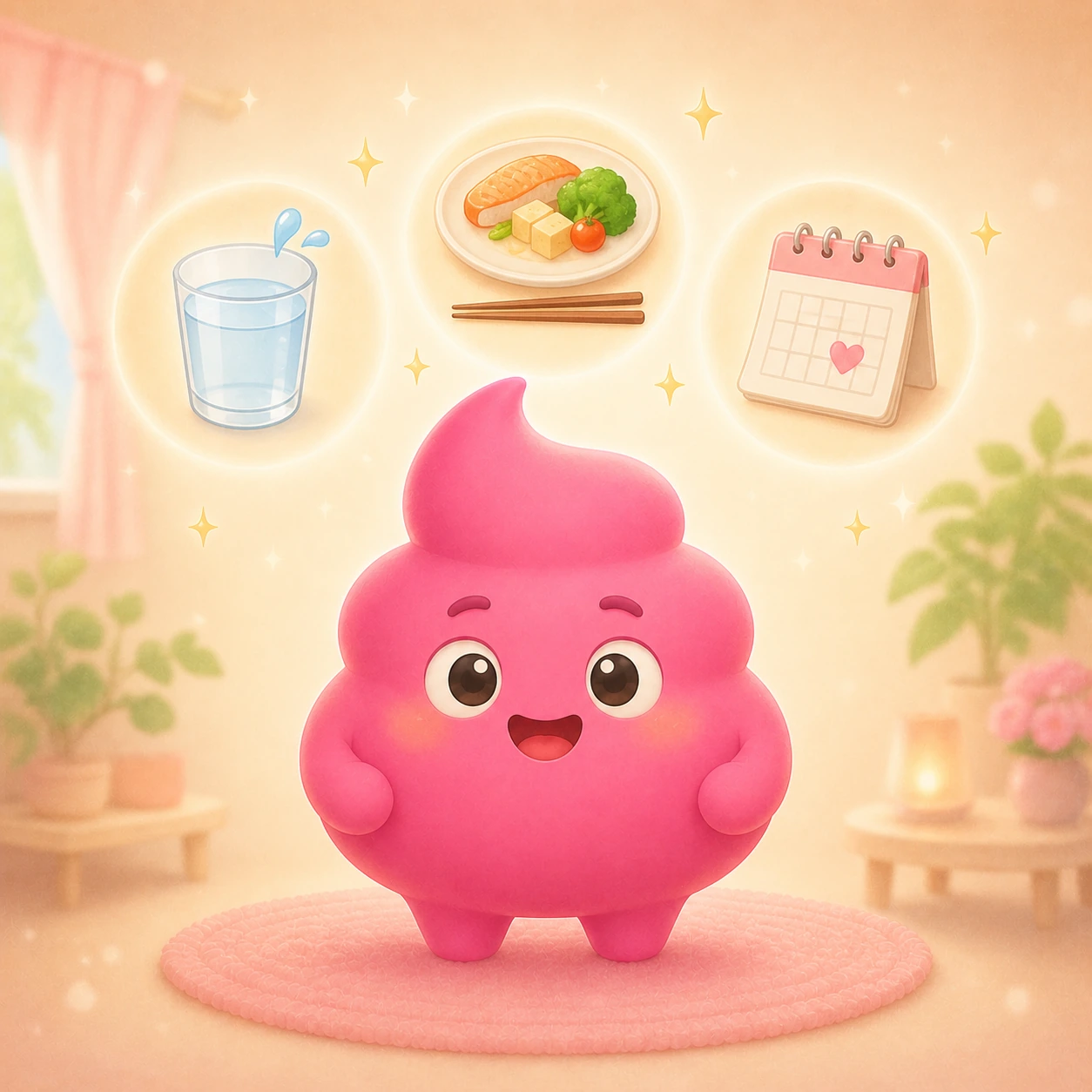
Specifically: one glass of water per drink. That single rule defends against dehydration and softens the next-morning gut trouble. Whisky and shochu? Add water. Beer and wine? Keep a chaser glass nearby. The “alternate water” rhythm also slows your pace, which means less load on the body overall.
Next: don’t drink on an empty stomach. Food in the stomach slows alcohol absorption. Snacks like fermented food (cheese, kimchi, miso soup) or fiber (vegetables, seaweed) actively help my bacteria team. A dinner of only fried snacks, on the other hand, comes back to find me by morning.
Third: two rest days a week. They don’t have to be back-to-back. Spacing them out — say Tuesday and Thursday — works just as well. That alone gives the gut crew a full weekly reset.
Finally, timing. Stop drinking at least 3 hours before bed. Drinking right up to sleep cuts deep sleep and kills the nighttime gut-cleaning shift. Half of why “the morning after” goes poorly comes from this single window.
If you log my visits in the unchikun app, you’ll start to see the pattern in real life: the post-drinking mornings versus the rest-day mornings, side by side. The data from your own body is the most convincing argument there is — far more useful than any general advice on the internet.
Summary
I’m an honest record-keeper for how much and how often you drink. I’m not asking you to stop. Just three things: water alongside, food with it, two rest days a week. With those, alcohol and I can stay friends for a long time. Tonight, if you’re going to drink, set a glass of water beside it first. That’s the whole start.