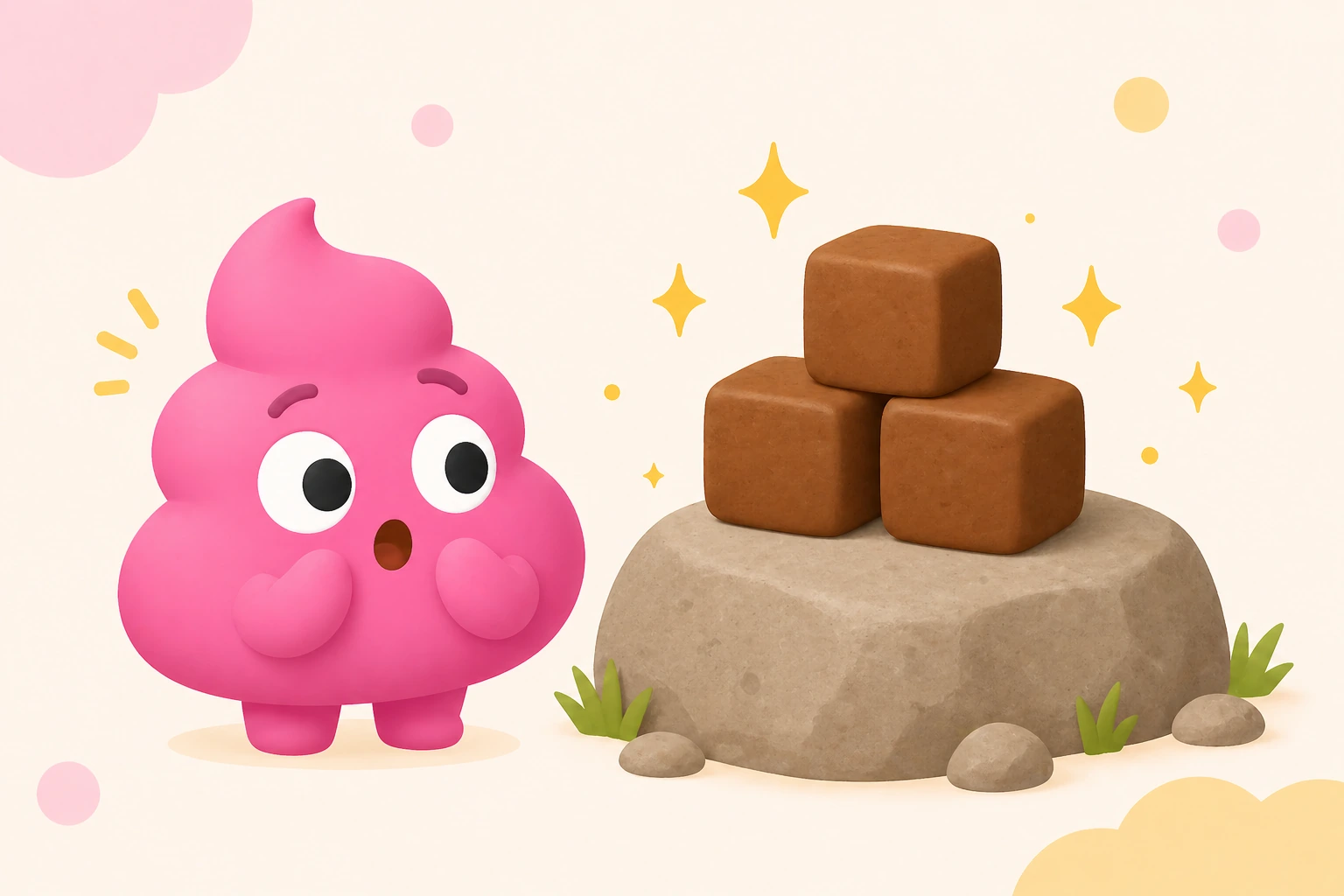
Wild fact incoming. There is exactly one animal on Earth that produces cube-shaped poop. Just one. The Australian wombat — small, fluffy, pouched marsupial — makes eighty to one hundred neat little geometric cubes every single night. Today, let me walk you through how that even works, and what this tiny natural miracle has to teach you about reading your own gut.
The Origin of This Quote
Wombats are pouched marsupials native to Australia, often described as looking like small bears. The cube shape of their poop has been known for ages, but why it comes out cubic was a genuine scientific mystery for decades. People could see the cubes plainly, sitting on rocks across the outback, but no one could explain what was actually happening inside the wombat.
The mystery was solved in 2019 by a research team from the United States and Australia, whose work won an Ig Nobel Prize that year. They dissected wombat intestines and discovered that the colon walls have alternating sections of stiff, evenly-contracting tissue and soft, elastic tissue. In the last meter or so of the colon, this varying-stiffness pattern presses the contents in a way that gradually forms sharp-edged cube shapes, almost like a biological pasta press.
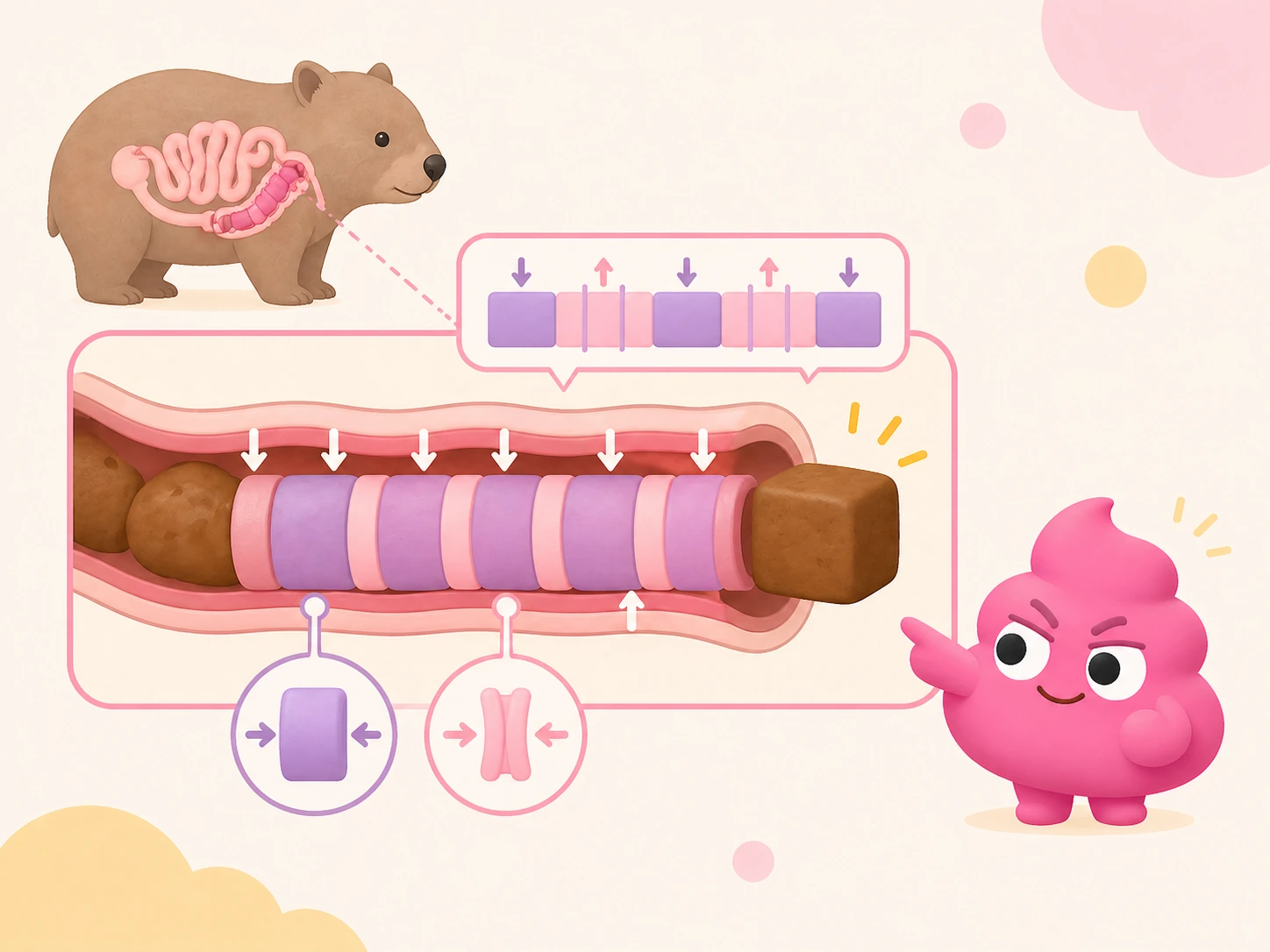
Why cube though? This is where the story gets even better. Wombats have a habit of placing their poop on top of rocks to mark territory. A cube does not roll, which means it stays exactly where it was placed and remains visible to other wombats. The shape is functional — it is literally evolved for territorial marking. Form follows function, in one of the most surprising places in biology.
The Ig Nobel Prize, by the way, is awarded to research that “first makes people laugh, and then makes them think.” It is a parody of the real Nobel Prize. But the underlying research was published in Soft Matter, a peer-reviewed scientific journal, and taken completely seriously by physicists and biologists.
Unchikun’s Take
From my point of view, wombat poop is the ultimate version of “the shape itself is the message.” Banana-shaped me also communicates through shape, but a cube? Honestly, that is a different level entirely. Communicating territorial information through the geometry of a single piece of poop is, frankly, an evolutionary flex few animals have any answer for.
A wombat’s intestines are remarkably long for their body size. It takes the food they eat fourteen to eighteen days to fully digest — one of the slowest transit times among mammals. This long, slow process exists to squeeze out every last drop of water and nutrient, which is essential for surviving in the dry Australian outback. Their gut is a tiny, ultra-efficient nutrient-extraction machine, perfected by millions of years of evolution.
Days of slow drying, then the final meter where muscle action shapes the result, then out comes a near-ninety-percent-water-absorbed solid cube. It does not roll. It stays put on the rock. It serves as the wombat’s overnight letter to other wombats passing through the territory. Form completed by function is exactly what this entire arrangement is.
Human me is much softer, much faster, and much more frequent than wombat me. That is because humans eat much more water-rich food and digest it faster. Every animal’s gut is in genuine harmony with how that animal lives. The gut, viewed across species, is honestly one of the most fascinating organs there is.
One Thing You Can Do Today
Tomorrow morning, when you see me, try this small reframe: “my shape is the answer to how I live.”
The “banana shape is ideal for humans” rule we hear so often is really shorthand for the shape that is optimal given typical human food, water intake, and digestion speed. Too soft, and your transit is probably too fast. Too hard, and your water intake is probably too low. My shape today is a literal output of your food, water, movement, stress, and sleep totals from yesterday and the day before.
Just like wombats evolved cubes to thrive in the dry outback, your me adapts continuously to your modern lifestyle. Today’s shape is a daily report card for how your day before actually went. That framing alone genuinely changes how you look at the toilet bowl, whether you have ever noticed it before or not.
If you log shape and color in the unchikun app every day, your own personal range becomes visible over weeks. Not as dramatic as a cube, of course — but you will start to recognize that your shape has reasons. Observation, in this expanded sense, is just taking the cross-species curiosity that the wombat story sparks, and quietly turning it on yourself.
Summary
Wombat cubes are a tiny natural miracle that evolution produced for a very specific purpose. The shape was never random — it is the answer to how that animal lives. Tomorrow morning, try looking at your own poop as the answer to how you live. It may turn out to be more genuinely interesting than you ever expected.