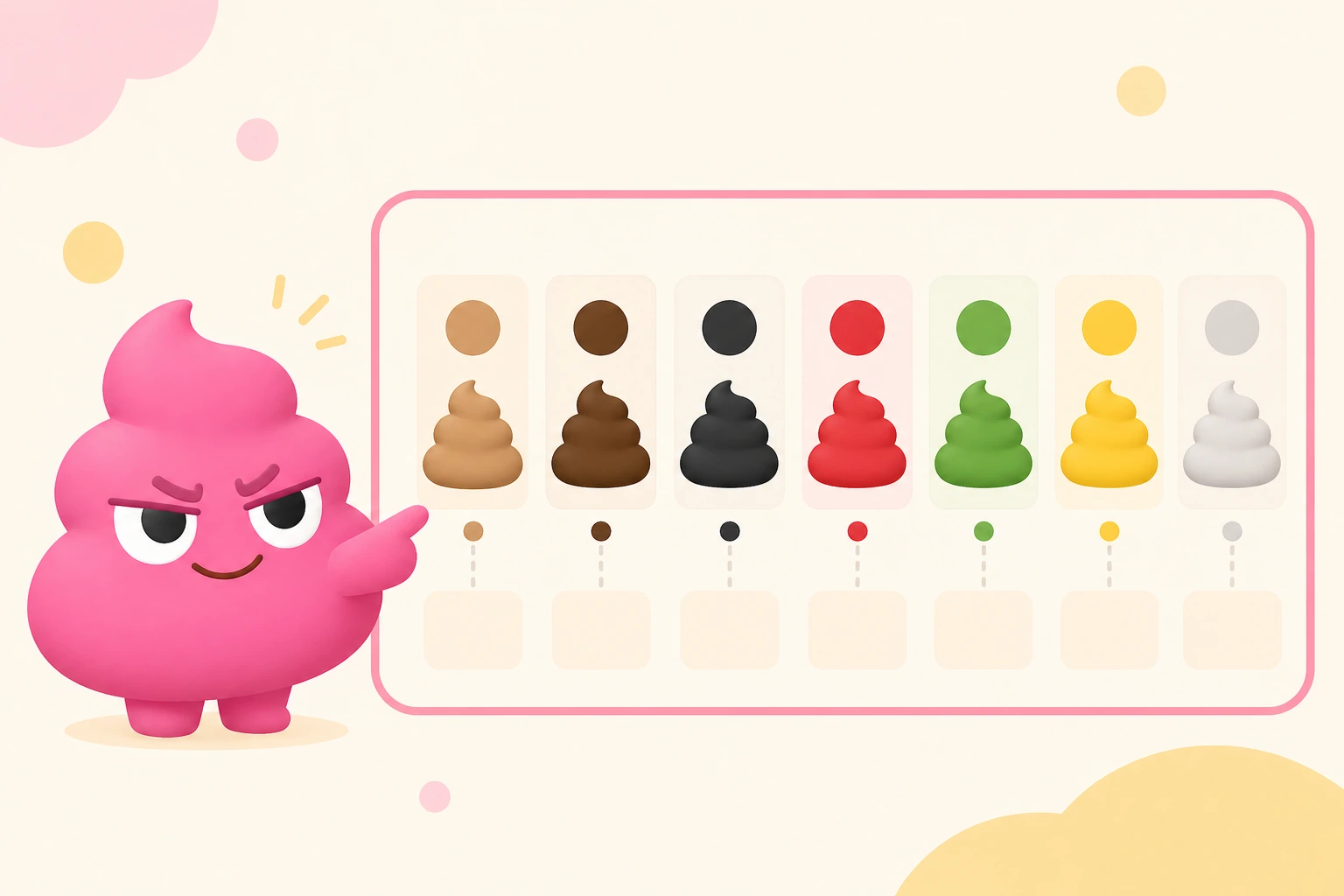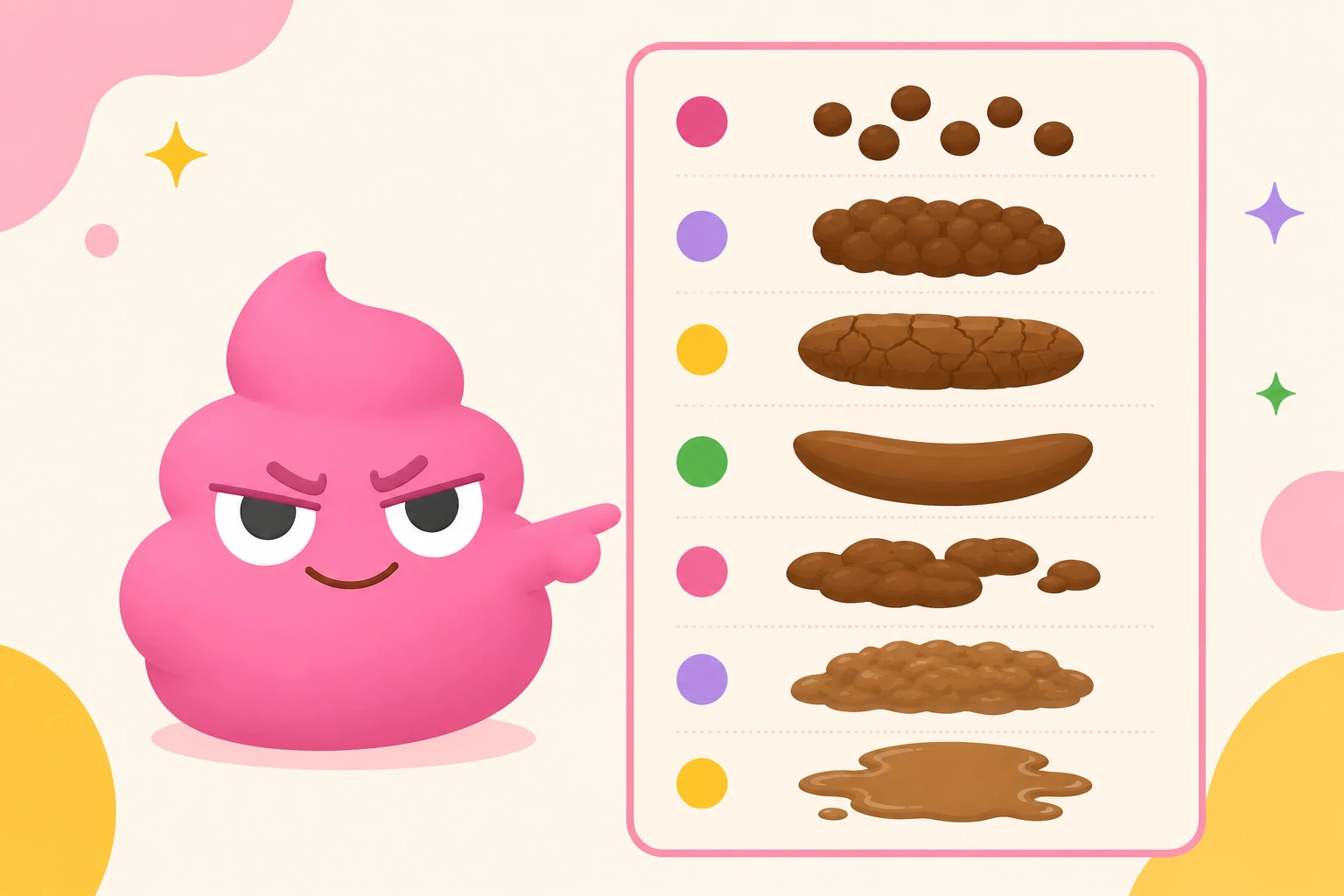
Have you ever looked into the toilet bowl and thought “is this too pebbly, or is this too soft”? The shape of your poop is read worldwide by a seven-step ruler called the Bristol Stool Scale, and a quick glance at it tells you a surprising amount about how your gut has been moving lately. Today, let me walk you through all seven types and how to tell them apart.
How to Observe
The Bristol Stool Scale was put together back in 1997 by Heaton and colleagues at Bristol Royal Infirmary in the UK. It is the standard reference clinicians around the world reach for when they want a shared vocabulary for talking about my shape — basically the universal ruler for poop.
What decides my shape comes down to three things: water content, fiber, and transit time. The longer I stay in the colon, the more water gets absorbed and the harder I get. Shorter time, more water stays, and I come out softer. Fiber is the material that holds me together, so when fiber runs low I tend to crumble or develop surface cracks. Those three forces show up directly in the shape you see.

The seven types run from dry and pebbly at the top to watery at the bottom. Types 1 and 2 mean I sat in the colon too long. Types 6 and 7 mean I moved through too fast. The middle band — types 3, 4, and 5 — is the “your gut is moving at a healthy pace” zone. Type 4, the smooth banana, is the textbook ideal, but anything drifting between 3 and 5 is genuinely a healthy range.
Just like color and smell, the rule is to compare today’s shape to your usual shape, not to chase a single perfect day. One day at type 2 and back to 4 the next is a meal-and-water story. Three to five days stuck on the same off-pattern is when the signal becomes worth taking seriously.
The Common Patterns
Here are the seven types in order, with what each one tends to suggest.
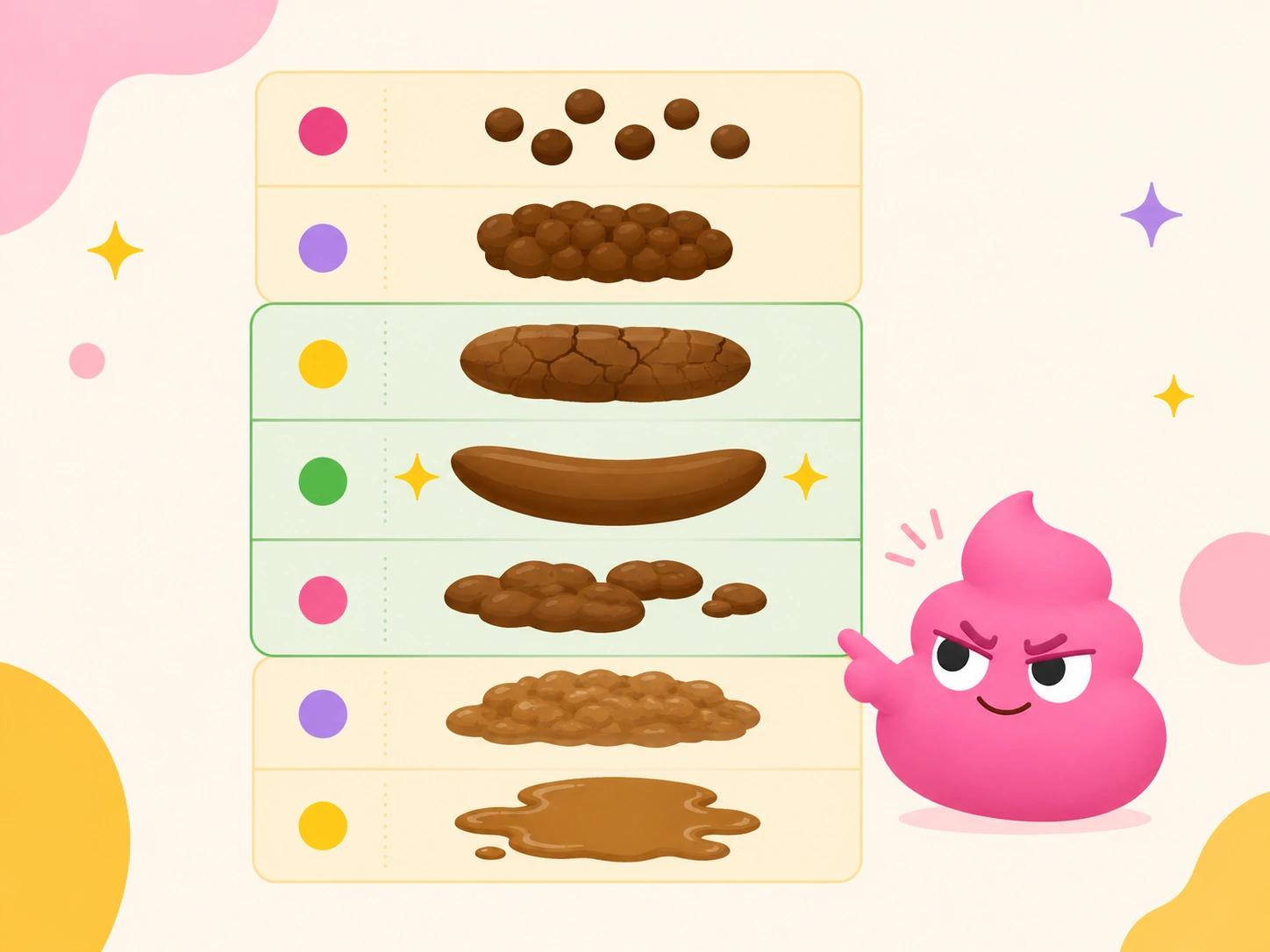
Type 1 (hard pebbles): Small, hard, separate lumps like rabbit droppings. A clear sign I sat in the colon too long and lost too much water. Often shows up when water, fiber, or movement has been low for a while.
Type 2 (lumpy sausage): A single hard, lumpy sausage shape — basically type 1 fused into one. Slow transit and not enough water again. If pushing takes real effort, this is the type you are looking at.
Type 3 (cracked sausage): A sausage shape with small surface cracks. The entry door of the healthy zone — slightly firm, but well within range. A little more fiber and water nudges you toward the smoother type 4.
Type 4 (smooth banana, the ideal): A smooth, banana-thick log, similar to a regular convenience-store banana. Water, fiber, and transit time are all in sync. Comes out cleanly, with that quiet sense of accomplishment afterward.
Type 5 (soft blobs): Several soft blobs with clearly defined edges. Still inside the healthy zone, common after a meal that ran lighter on fiber. Tends to release quickly once the urge shows up.
Type 6 (fluffy mush): A fluffy, porridge-like mass with no clear edges. Transit was too fast for water to be absorbed properly. Common when your stomach is cold, when stress has been high, or after an oily meal the day before.
Type 7 (watery): Almost no solid form — pretty much liquid. The diarrhea state, often from a chilled gut or food that did not agree with you. One or two episodes that settle with rest and hydration are usually fine. If it lasts more than a full day, please check in with a healthcare provider.
Observation Tips for Today
Tomorrow morning, before you flush, take three seconds to look at me and quietly decide in your head: “which of types 1 through 7 was that?”
Being unsure is fine. “Somewhere between 3 and 4” is plenty for the first week. With practice, the read becomes near-instant. The point is not precision — it is learning the range your usual shape lives in. After a week or two, you start to recognize patterns like “I usually float around 3 to 4” as your personal baseline.
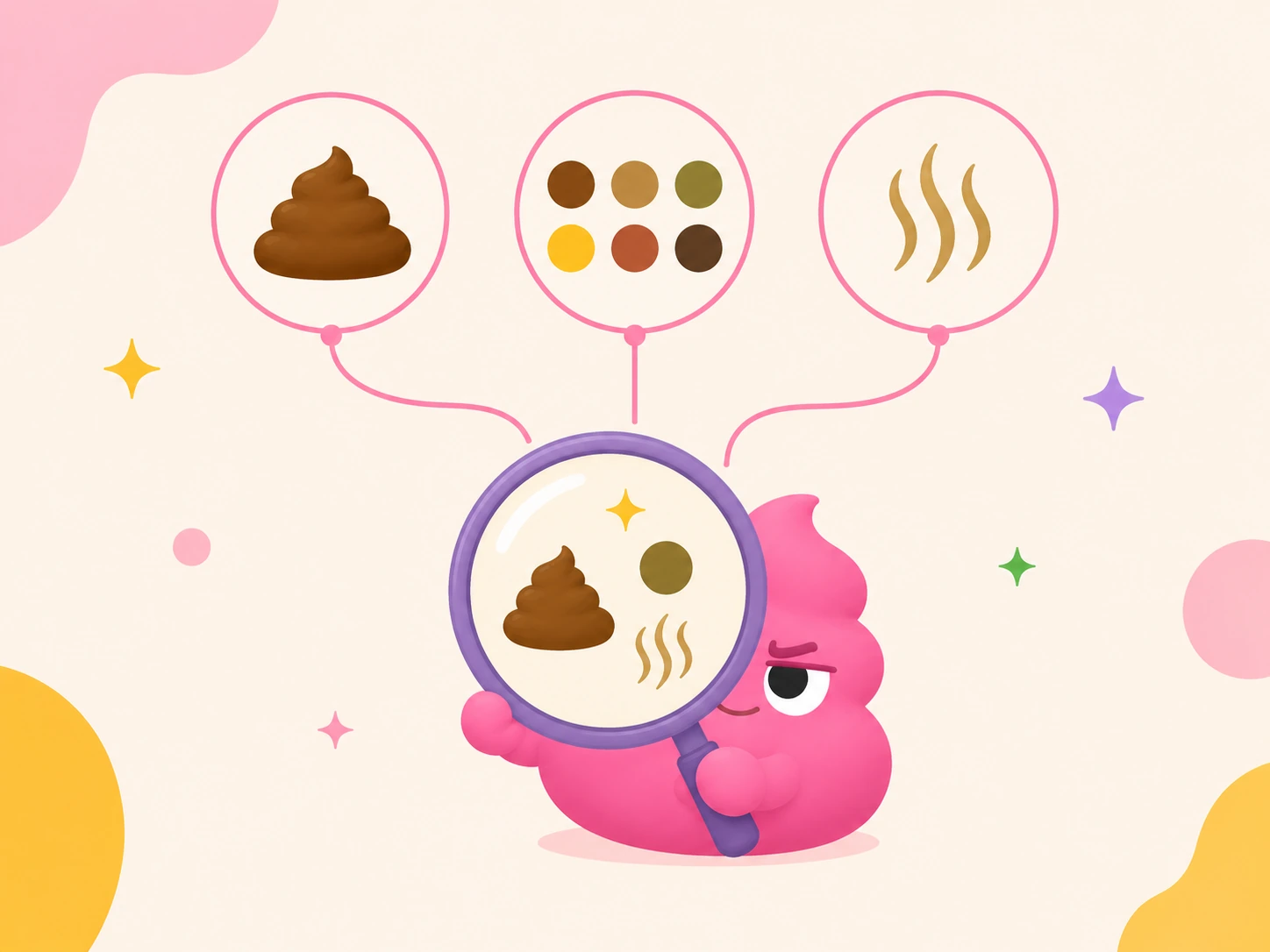
Combining shape with color and smell sharpens the picture even more. Type 4 every day but suddenly type 2 with a darker brown? That is a water-and-fiber story. Stuck on type 6 for three days plus a sour smell creeping in? That is your gut asking for a real rest day. Read shape, color, and smell together, and what your gut is asking for becomes clearly visible.
Logging your shape every day in the unchikun app turns the daily glance into a real graph. “Last week I was mostly at 4, this week leaning toward 2” is exactly the kind of early signal a single morning never shows you. The goal is not to hit a perfect banana every single day — it is to notice, calmly and early, when you have drifted out of your own usual range.
Summary
Poop shape is the clearest, simplest ruler for how your gut has been moving. The aim is not “type 4 every day” — it is to know your own usual type well enough that genuine drift gets noticed. Tomorrow morning, before you flush, take three seconds and quietly guess which of the seven types I am today.