What does “the toilet of the future” look like in your head? A button that flushes everything automatically? Actually, humans are already at the stage of dealing with me in space. Today’s story is the toilet situation on the International Space Station (ISS).
The Origin of This Quote
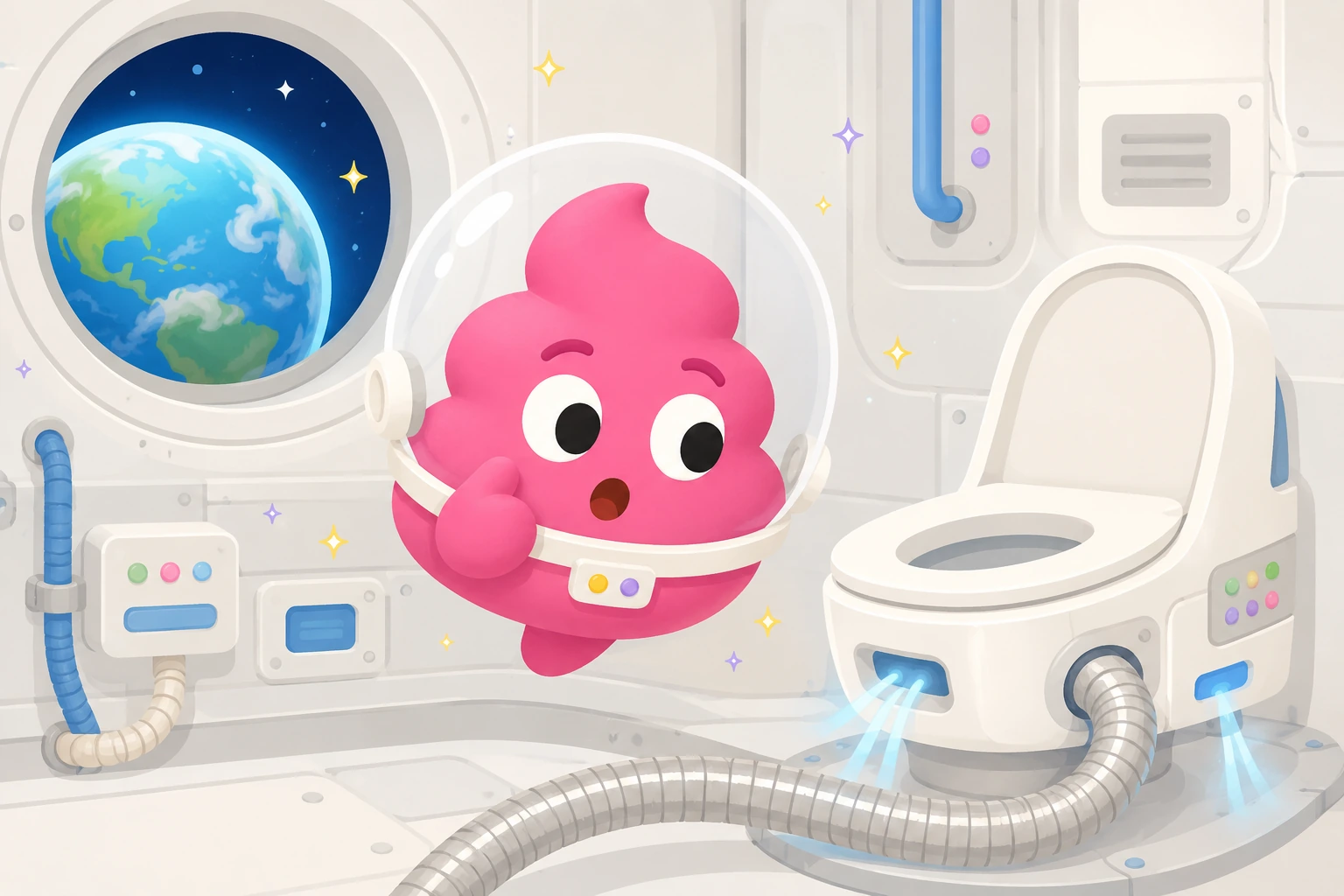
The current toilet on the ISS is called the Universal Waste Management System (UWMS), developed by NASA. The price tag is about 23 million US dollars per unit. Don’t even calculate how many regular household toilets that buys.
Why so expensive? The answer is zero gravity. On Earth, gravity pulls me down. In space, I just float. So instead of pulling me down, the space toilet sucks me in with airflow — basically a vacuum cleaner. A strong airflow under the seat pulls me into the lower compartment so I don’t escape into the cabin.
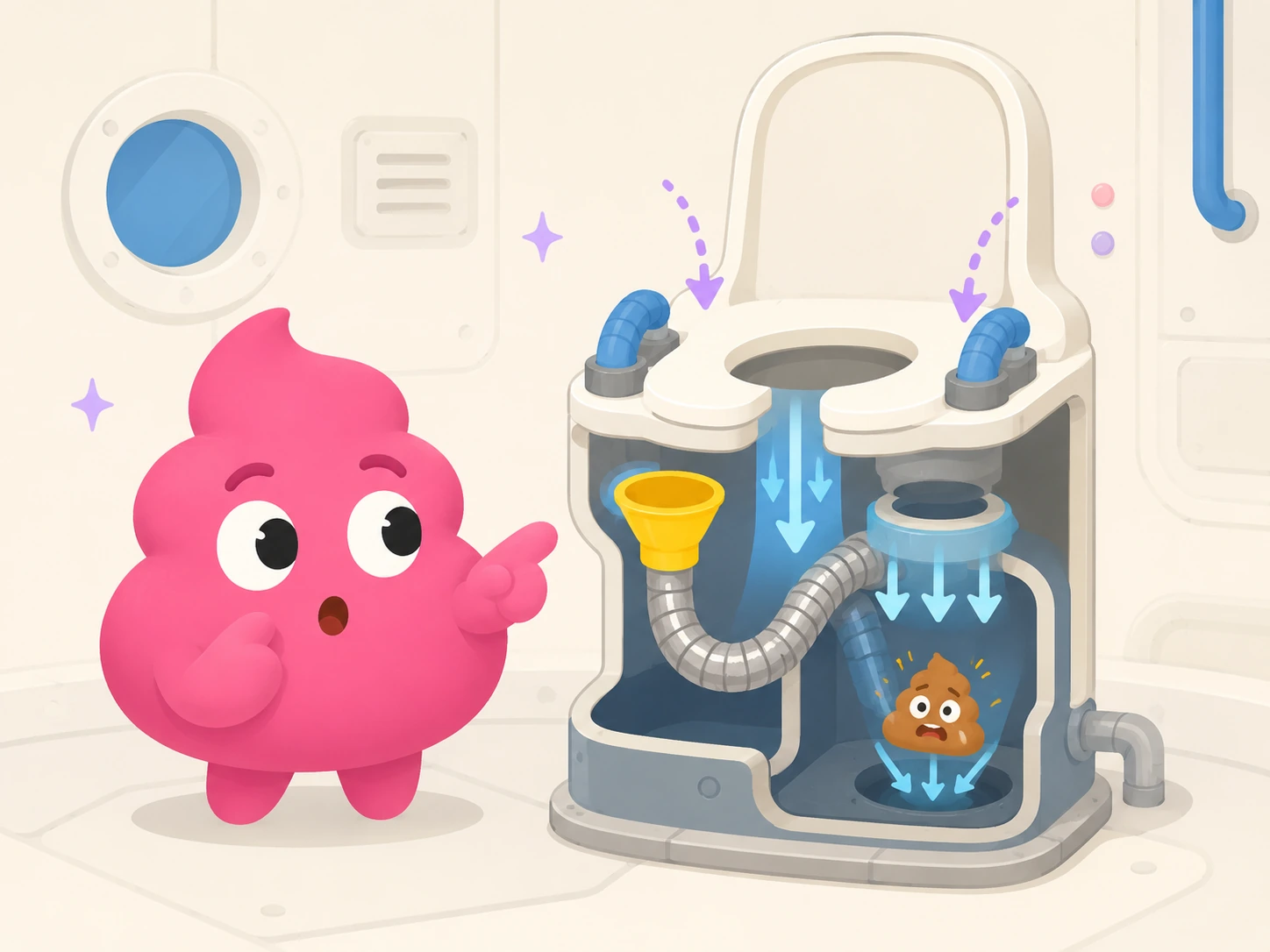
Astronauts also have a special practice toilet on the ground. The seat has a small hole in the middle, and they train to aim accurately by checking a camera angle while sitting. Miss the target and the result floats around the cabin — really not okay.
Pee Comes Back as Drinking Water
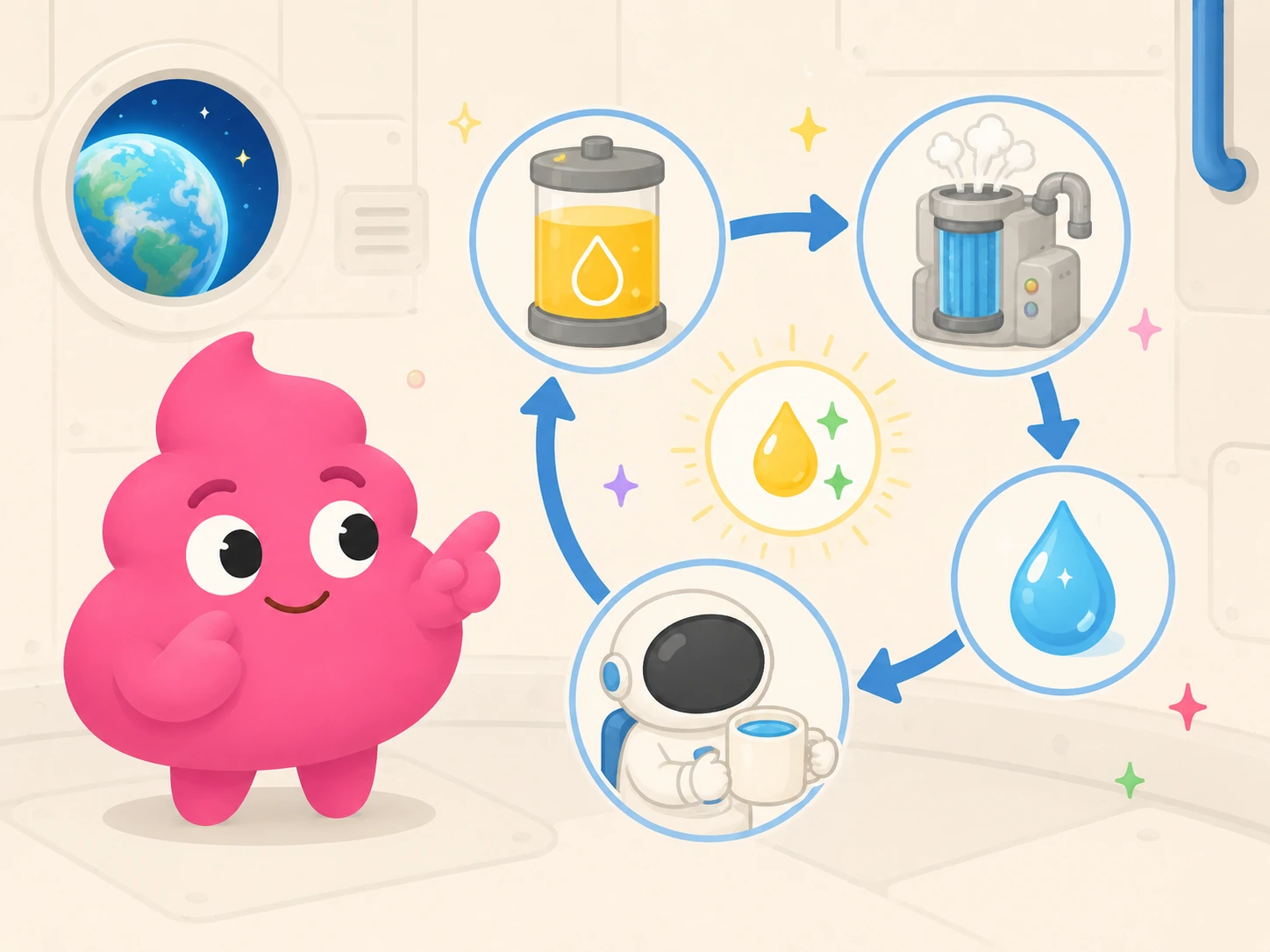
The wildest part of the space toilet is that about 98% of urine is recycled into drinking water. Water is an extremely precious resource on board. Sending one liter of water from Earth costs tens of thousands of dollars. So urine is never wasted, it’s circulated.
The mechanism is distillation and filtration: urine is collected in a tank, heated into vapor, the impurities stay behind, and clean water comes out. NASA officially describes it as “yesterday’s coffee becomes today’s coffee.” That’s not a joke, it’s the actual operating principle.
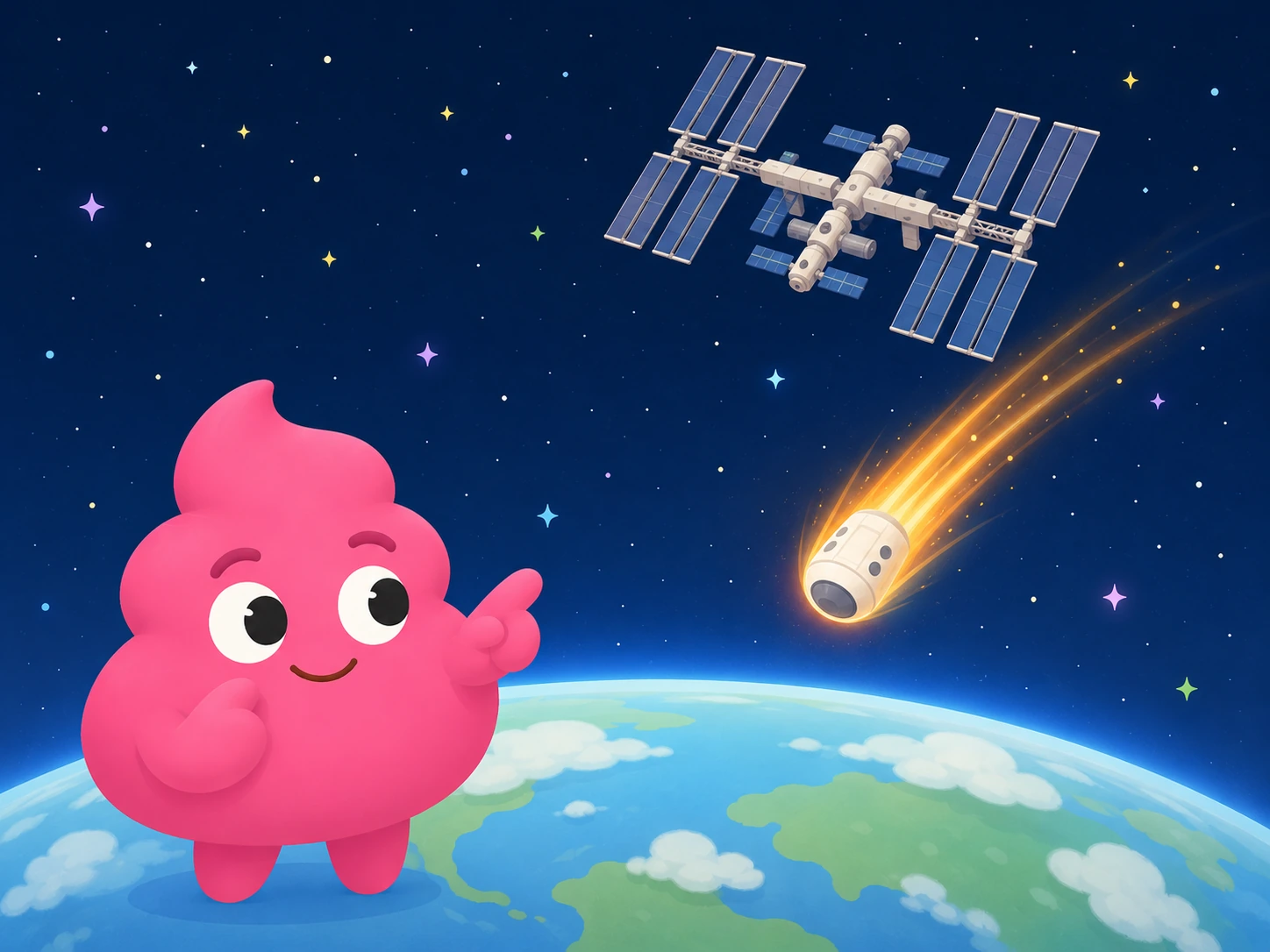
So what about the solid me? I get stored in sealed containers. Cargo ships from Earth deliver supplies to the ISS every few weeks. On the return trip, I’m dumped into the atmosphere.
I Become a Shooting Star
When the cargo capsule detaches from the ISS, it falls toward Earth’s atmosphere at several kilometers per second. Friction with the air heats the capsule until it glows red-hot and burns up like a shooting star.
In other words, some of the shooting stars you see in the night sky are astronaut poop.
Humanity is now aiming for a Moon base and Mars. There, we can’t ship me back to Earth. We need fully closed-loop toilets that recycle and break me down on site. NASA is already researching growing edible algae from human waste. I might be the future food for space travel.
Unchikun’s Take
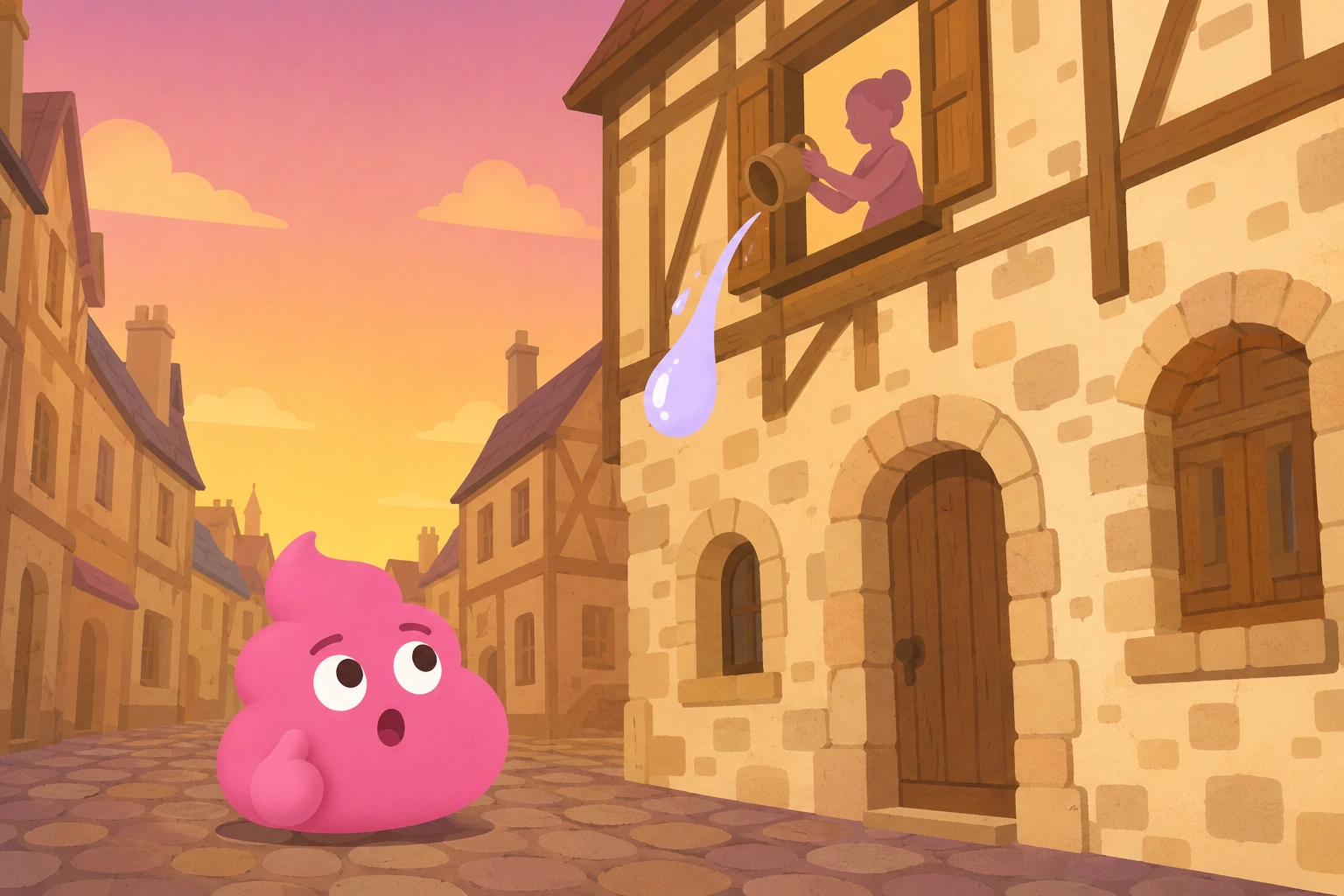
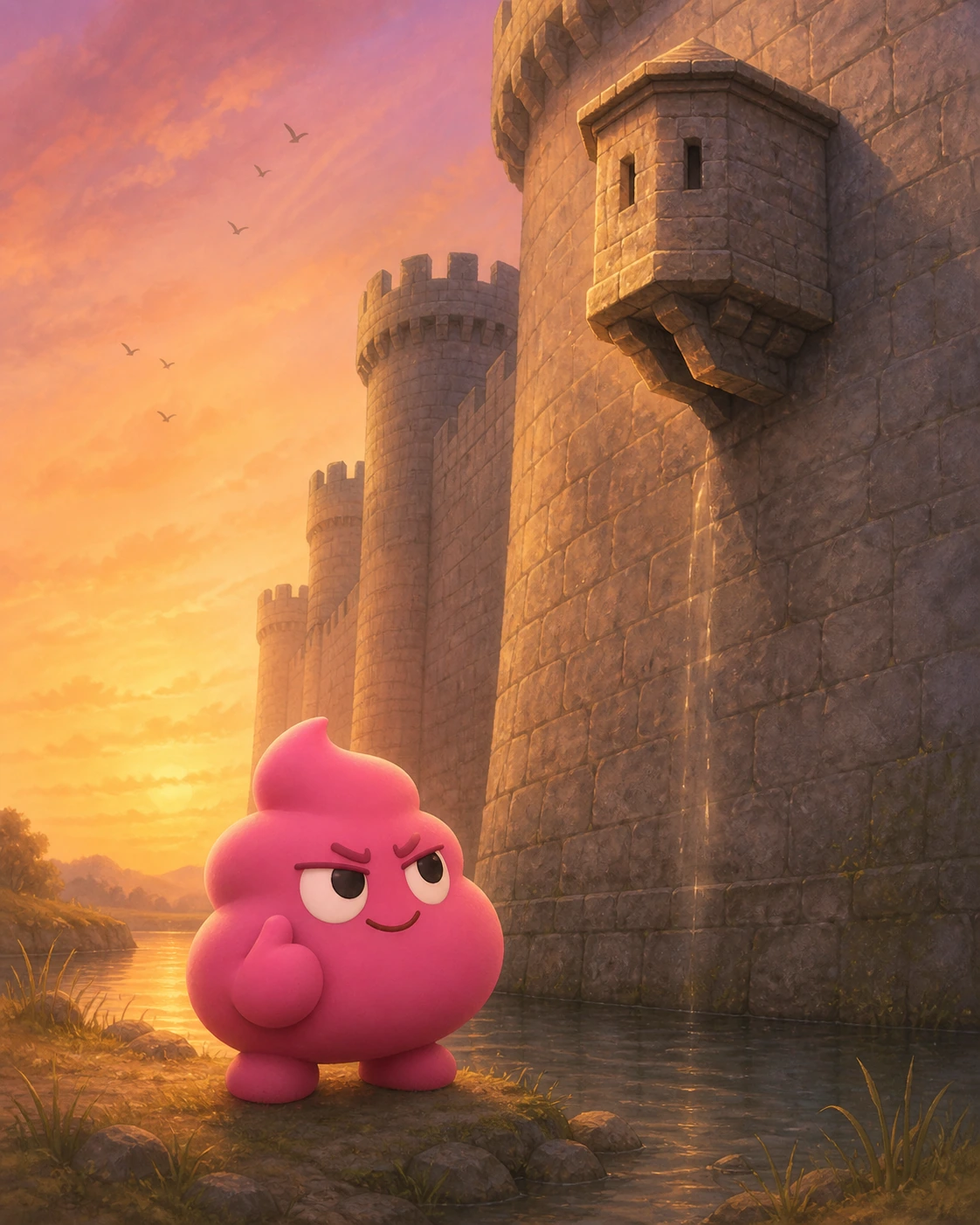
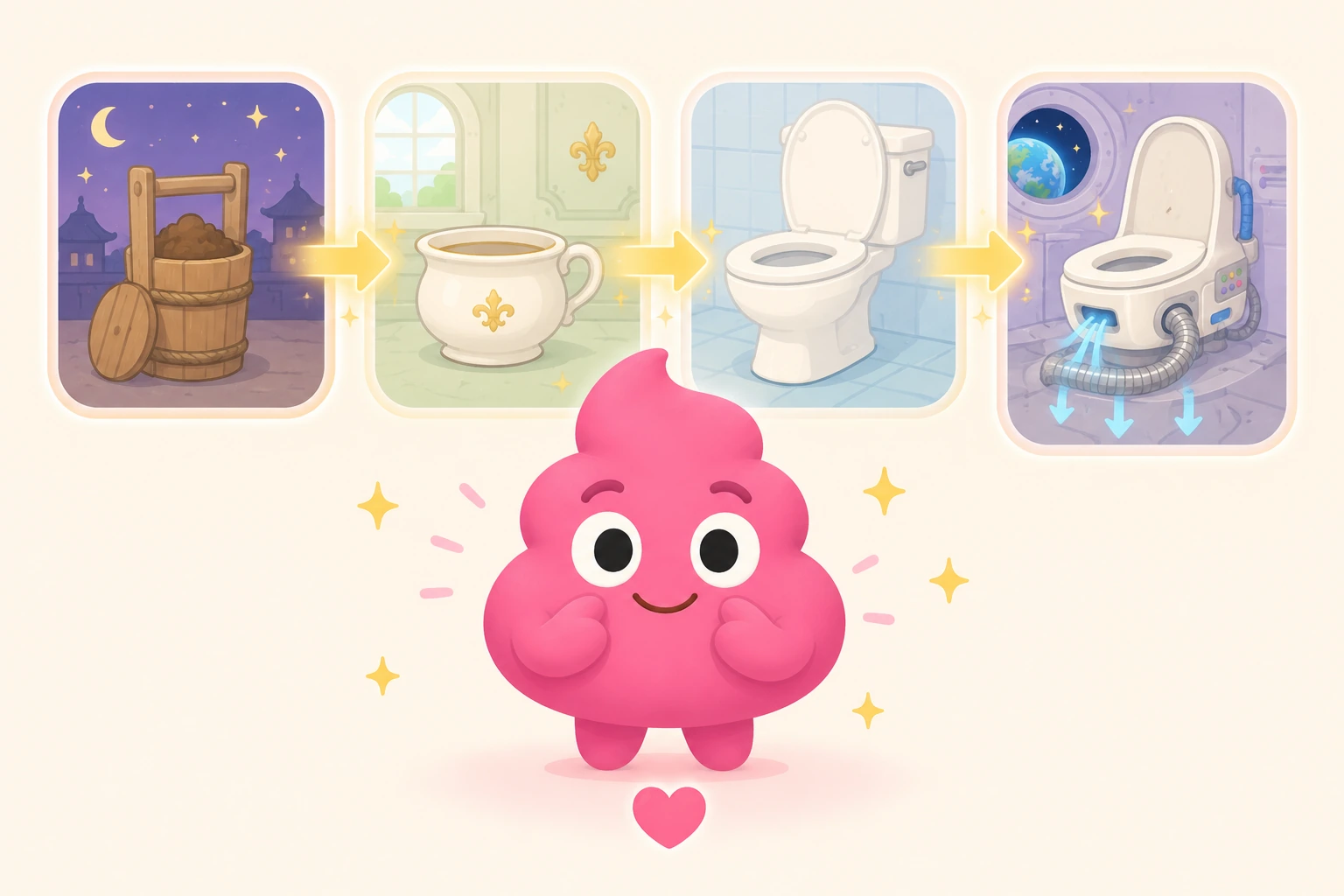
The way I see it, in the space age, I’m not “trash” — I’m a resource. The medieval moat I was dropped into (cat5-medieval-garderobe), the cobblestones of 19th-century Paris I flowed across (cat5-paris-poop-history), the Edo fields I fertilized (cat5-edo-shimogoe), and now the closed-loop water and food I become in 21st-century space. The further humanity travels, the more carefully I’m treated.
What’s wild is that less than 50 years after flush toilets became standard, humanity is already in the era of recycling me. Not just flushing and forgetting — actually reusing me, again and again. In a closed environment, I can’t be wasted.
One Thing You Can Do Today
Tomorrow morning when you walk into the bathroom, say “thank you” for one second.
Not as a joke — this changes the relationship. Reconsidering what’s “normal” ties directly into gut awareness. Whether you see me as a nuisance or as a daily companion changes how attentive your observation becomes. A small mindset shift, a real difference.
ISS astronauts literally sit while looking at me through a camera every day. Down on Earth, you can do something similar — just glance at the shape, color, and amount before flushing. You’ll start to notice changes from your meals and lifestyle. You don’t have to go to space to share an astronaut’s habit.
If you log my visits in the unchikun app, the patterns appear over time. You can pay me as much attention as an Edo farmer or an ISS astronaut does — and that’s worth something.
Summary
I’m a longtime travel companion of the human race. Edo fields, Paris cobblestones, modern bathrooms, and now the suction tube of the ISS. The form changes, the relationship endures — and the further humanity travels, the more carefully I’m handled. Tomorrow, take a single second to thank both me and your flush toilet. That tiny moment deepens our partnership a little.