“I wake up but never feel quite refreshed.” “My morning routine is hit-or-miss.” If that’s you, here’s a 5-minute fix you can start tomorrow: catch some morning light right after you wake up. That alone changes how I behave for the rest of your day.
The Origin of This Quote
Your body has a built-in internal clock, run by a tiny region of the brain called the suprachiasmatic nucleus. It sets your roughly 24-hour rhythm. The catch is, this clock drifts a little every day if you don’t reset it. The reset signal is morning sunlight.
When light enters through your retina, the suprachiasmatic nucleus gets the message: “It’s morning now.” From there, your body starts producing serotonin, a neurotransmitter. As I mentioned in another piece (cat1-second-brain), about 90% of your serotonin is actually made in the gut. So when morning light flips that switch in your brain, it kicks off chemistry that I, down here in the gut, ride too.
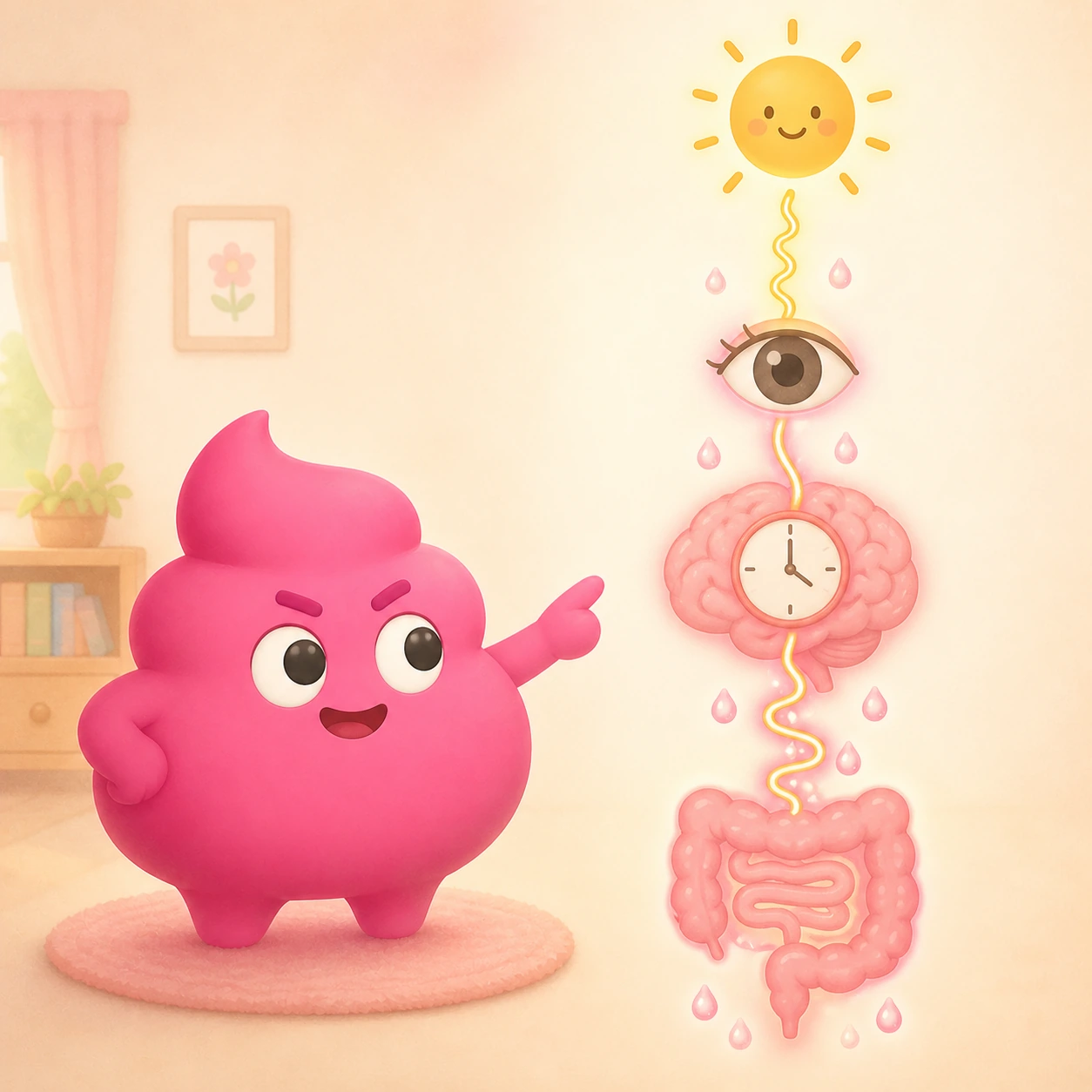
Even more interesting: the serotonin you make in the morning gets converted into melatonin about 14 hours later. Melatonin is the hormone that brings on natural sleepiness. So morning light = better sleep that same night. The whole sleep-and-gut story (cat4-sleep-and-gut) really starts here, with light hitting your eyes after you wake up.
Without that morning light, the body clock stays unsynced. The handoff to the parasympathetic system gets sloppy, my movement (peristalsis) becomes irregular, and bathroom timing drifts. If your routine has been off lately, ask yourself: are blackout curtains or late nights blocking your morning sun?
Unchikun’s Take
The way I see it, morning sun is the “we’re open for business” bell. Without that light, my body thinks it’s still nighttime, and I stay in low-power mode. With light, the autonomic nervous system locks in, and I switch into work mode.
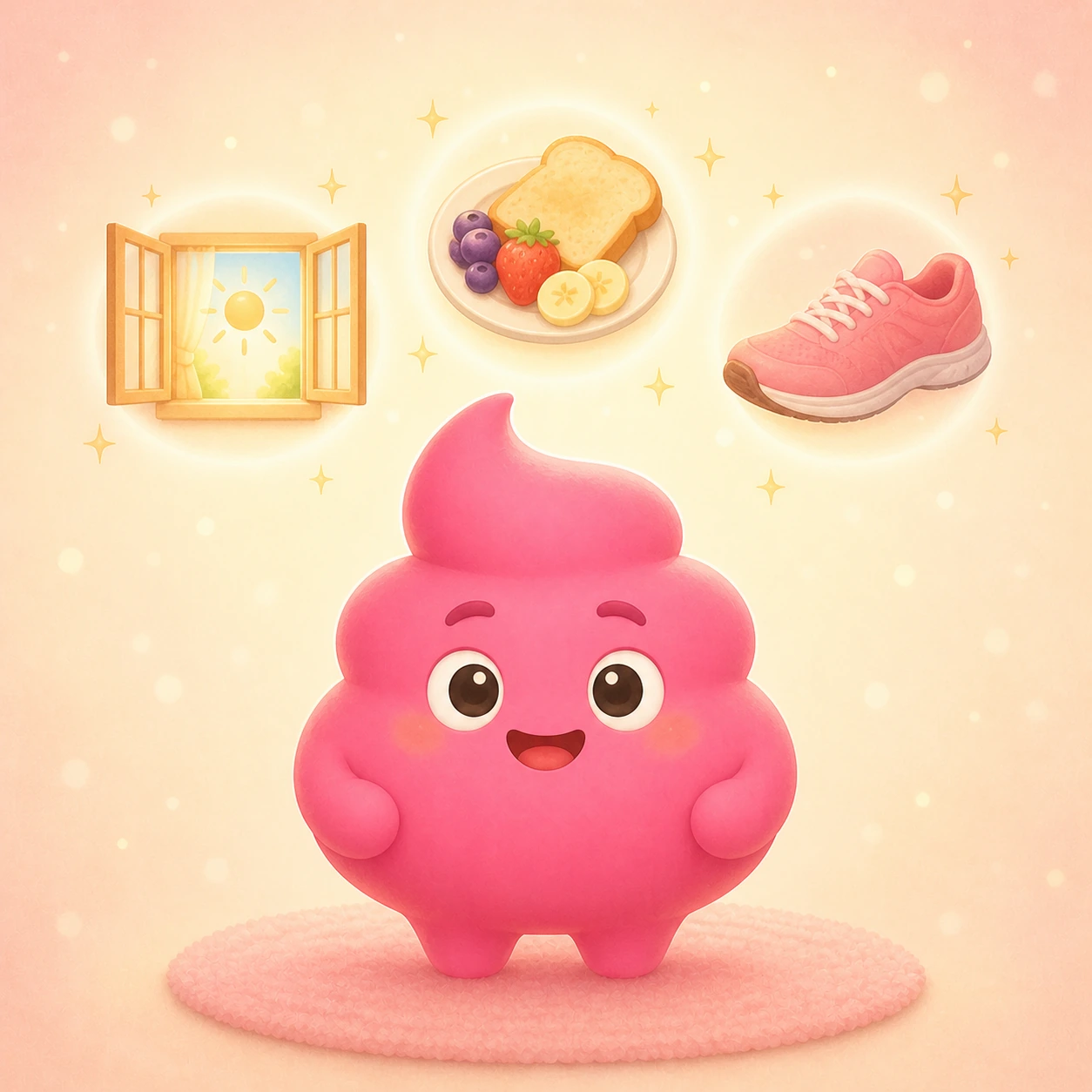
What I find fun is that morning sun + breakfast + light movement is the holy trinity. Sunlight starts serotonin. A glass of warm water or breakfast triggers the gastrocolic reflex (cat2-morning-water). And a short walk pushes peristalsis along (cat2-exercise-and-gut). When all three line up, I show up at the same time every morning like clockwork.
Too busy for all three? Sunlight is the priority. Breakfast and movement take time. Sunlight just means opening your curtains and standing near the window. Per minute, it’s the highest return on effort.
One Thing You Can Do Today
Starting tomorrow, get 5 to 15 minutes of sunlight within the first hour of waking up.
The how is dead simple: ① open the curtains all the way ② step out onto a balcony or just outside the door if you can ③ even on a cloudy day, standing by the window is enough. Outdoor light, even overcast, is far brighter than any indoor lighting. Under bright sky, even a minute outside beats hours indoors.
The window for the reset is within an hour of waking. The bigger the contrast from the night before, the stronger the signal. And no, blue light from your phone doesn’t substitute. It can wake your brain, but it doesn’t sync your internal clock.
After morning light, layer in a glass of warm water and a short walk or gentle stretch. That’s the full morning gut-care routine. You don’t need all three every day, but on the days you can stack them, I really show up.
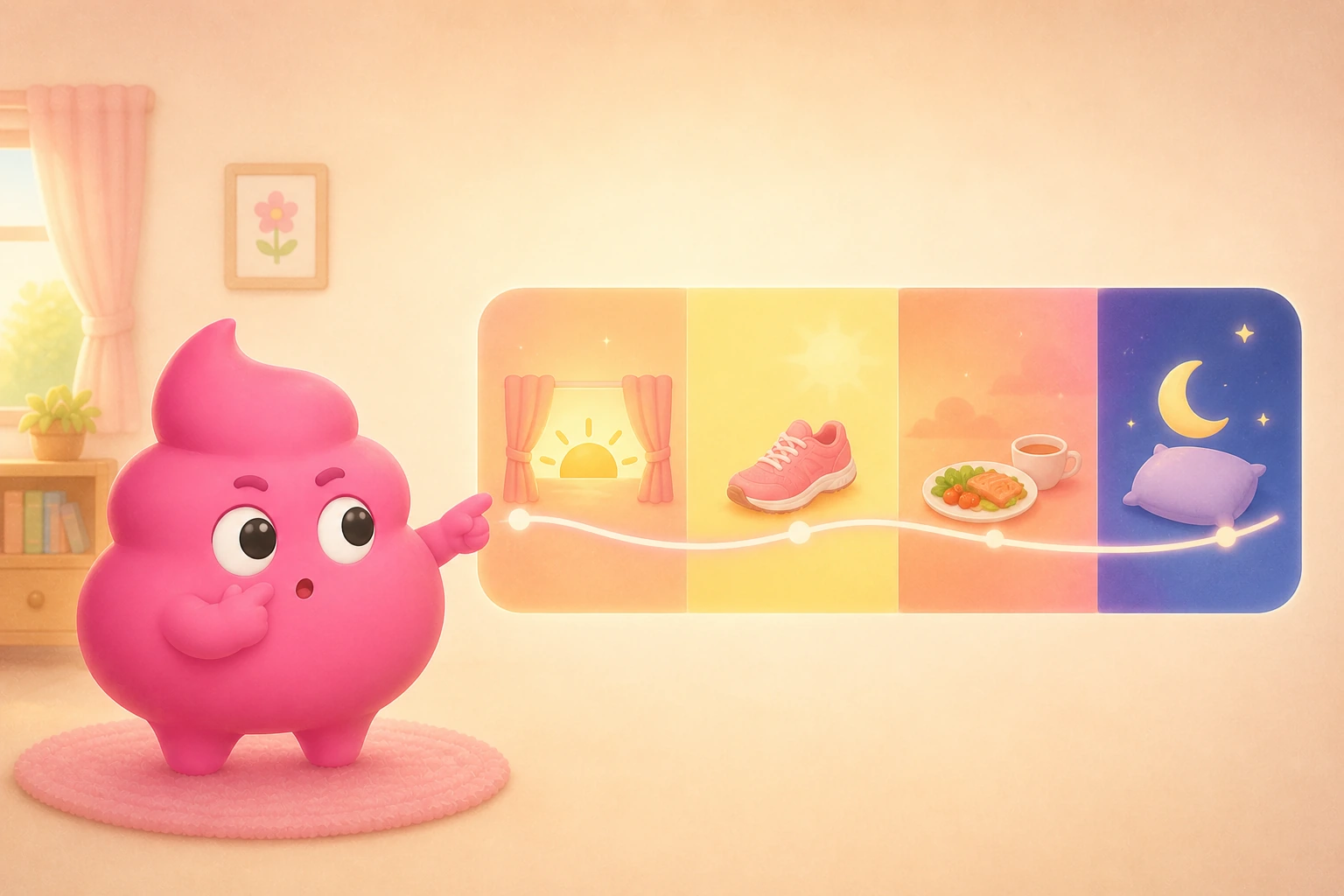
The flip side: avoid strong light at night. Phones and TVs right before bed suppress melatonin, lighten your sleep, and weaken the nighttime gut cleaning shift (MMC). “Bright in the morning, dim at night” — that’s the rhythm that puts your body clock and me on the same team.
If you log my morning visits in the unchikun app, you’ll start to see the pattern: steadier mornings on days when the curtains were open early, and drift on days you slept in pure darkness. It becomes a small, visible experiment with your own body. Most people see a clear week-over-week improvement once they make morning light a non-negotiable habit. The data lives on your phone, and the proof shows up in how I behave.
Summary
I move with your brain. When morning light resets your clock, I start moving too. Make opening the curtains your first move tomorrow. Within a week, my schedule will look noticeably steadier — and so will the rest of your day.