People say “exercise is good for constipation,” but you don’t actually need a gym membership or a 10-kilometer run for it to work. The honest version is: my start button gets pressed by your one casual walk. Today, let me walk you through why exercise wakes the gut up, and the realistic, no-gym-needed habit anyone can start today.
The Origin of This Quote
Exercise affects the gut through three distinct mechanisms.
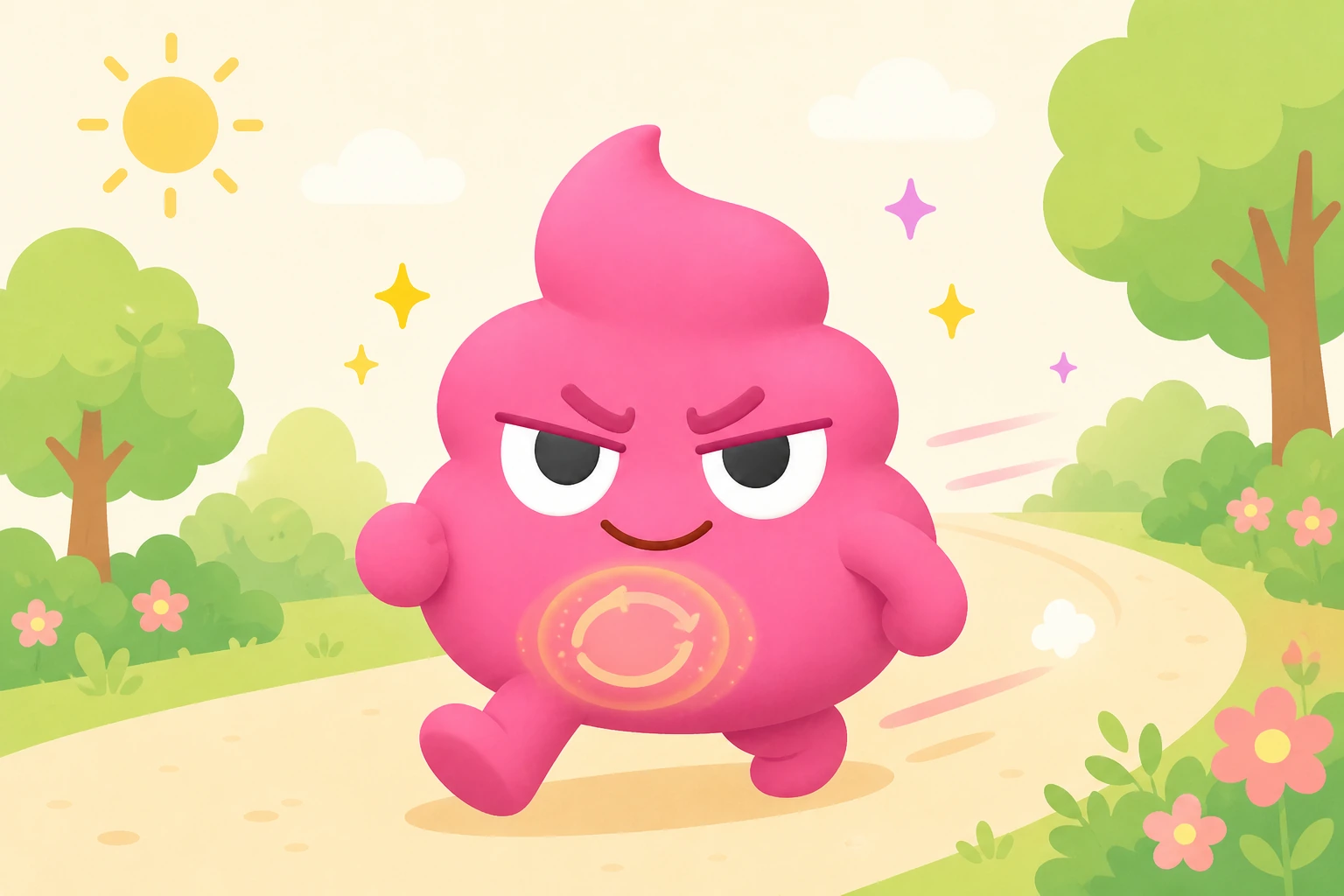
The first is physical stimulation. When you walk or jog, the organs inside the belly bounce gently up and down, and the gut moves with them. That mechanical jostle is a real trigger for peristalsis. People who sit at a desk all day with literally zero steps get constipated partly because there is zero physical trigger reaching the gut.
The second is balancing the autonomic nervous system. Moderate exercise lowers cortisol (the stress hormone), which makes it easier for the parasympathetic branch to take over. As we covered earlier, the gut moves best when the parasympathetic side is in charge. That is why “I want to use the bathroom right after a walk” is a real phenomenon — the relaxation switch just flipped.
The third is the microbiome. Recent research shows that people with regular exercise habits tend to have higher gut microbiome diversity, especially more short-chain fatty acid–producing good bacteria. Studies comparing athletes and the general population back this up. Movement isn’t just about your muscles; it ripples down into the bacterial community living in your gut.
But here is the catch: exercise that is too intense can backfire. Some marathon runners get diarrhea right after races because extreme exertion temporarily reduces blood flow to the gut and stresses the gut wall. The sweet spot for the gut is “moderate intensity” — somewhere around brisk walking to a light jog.
Unchikun’s Take
The way I see it, exercise is my start button. A gut that just woke up, or that has been sitting in a chair for hours, is basically idling. It needs a small nudge to actually start moving — and that nudge is just the act of walking.
Some people sign up for the gym thinking “I need to run for my constipation.” Honestly, from my point of view? You don’t need the gym. Brisk-walking to the station instead of dawdling, taking the stairs instead of the elevator, doing a 10-minute walk on your lunch break — that “everyday-mixed-in” kind of movement is way better, because it’s the kind you can actually keep doing. Intense workouts demand willpower; light ones become habits. Sustainability is the real gift for me, not intensity.
Timing matters too. The golden window is 30 to 60 minutes after breakfast. The gastrocolic reflex (the “eat → colon wakes up” reflex we covered) and the physical jostle of walking hit at the same time, and I get a clear, full push. That feeling of “oh, I’m going” right after a relaxed weekend brunch walk? That’s exactly this combo firing.
The opposite case: a hard workout right before bed is a bother for me. The sympathetic system fires up too late at night, and the gut’s nighttime cleaning shift can’t get going. Aim to finish exercise by late afternoon, ideally after a meal.
One Thing You Can Do Today
Take a 10-minute light walk today. That is it. After breakfast is ideal, but any time of day is fine if mornings are tight.
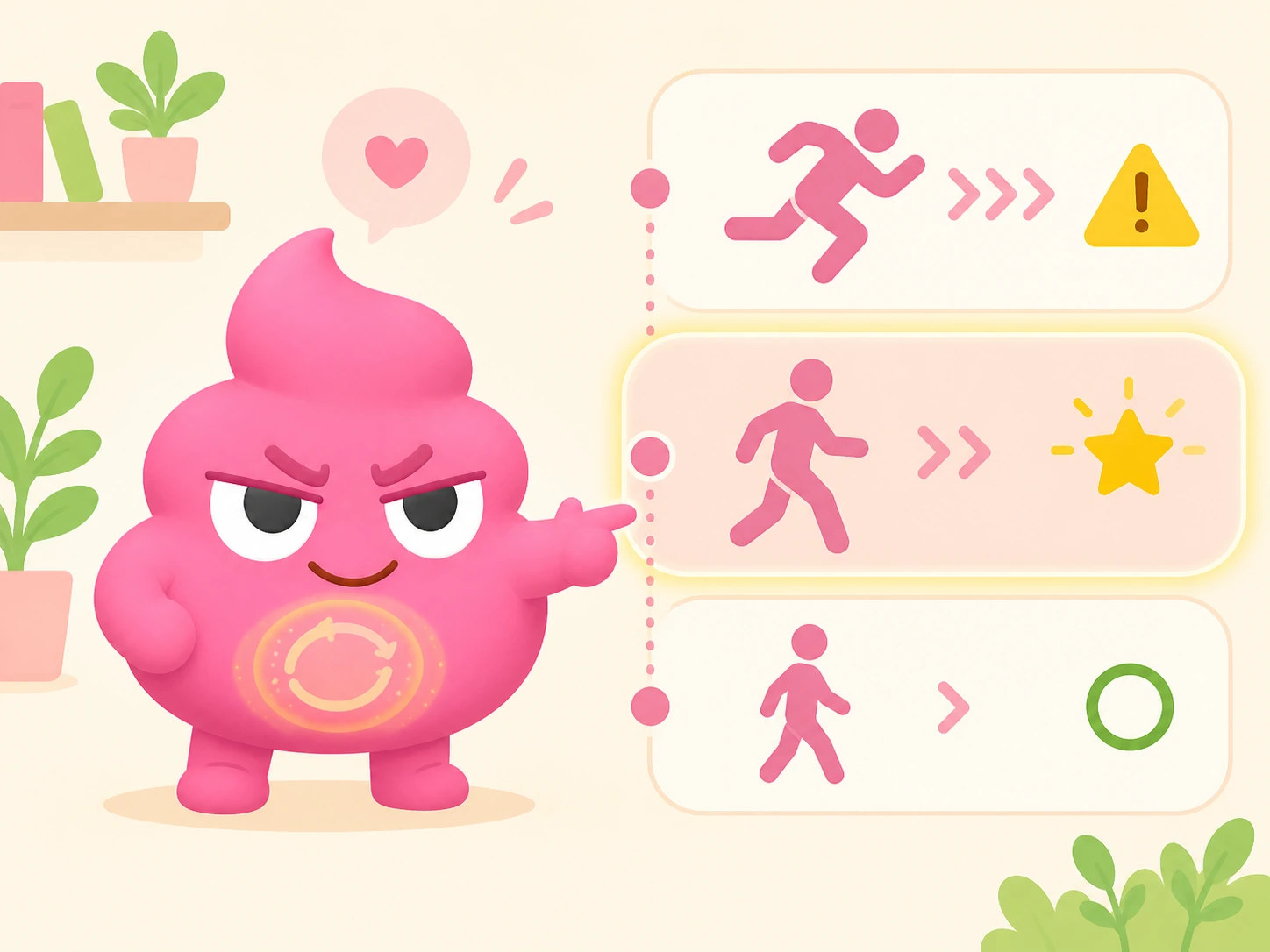
Set the bar absurdly low. If you put your shoes on and walk out the door, you’ve already won 90% of the battle. Don’t worry about distance or duration at first. Just walking from your home to the convenience store at maybe 1.2× your usual pace is enough to start me moving.
The recommended combo: a 10–15 minute stroll right after breakfast. The gastrocolic reflex and the walking align, and that’s the strongest combo. Rainy or cold days? Five minutes of marching in place inside does the same job. Watch TV while doing it. Drop the perfectionism — keeping it going is what counts most.
At work, even small interruptions help: stand up for 30 seconds every 30 minutes, take the stairs, walk the long way to the convenience store. Three small tricks a day add up to surprisingly real “movement.”
If you log my daily appearance in the unchikun app, the difference between “walked-this-week” and “sat-all-week” shows up in the numbers. That visible feedback is what often turns a small habit into a permanent one.
Summary
I’m not asking for intense workouts. A 10-minute brisk walk a day is enough — and that alone gets your gut moving today. Tomorrow morning, lace up your shoes and head out the door at a slightly faster pace than usual. I’ll probably call you not long after.