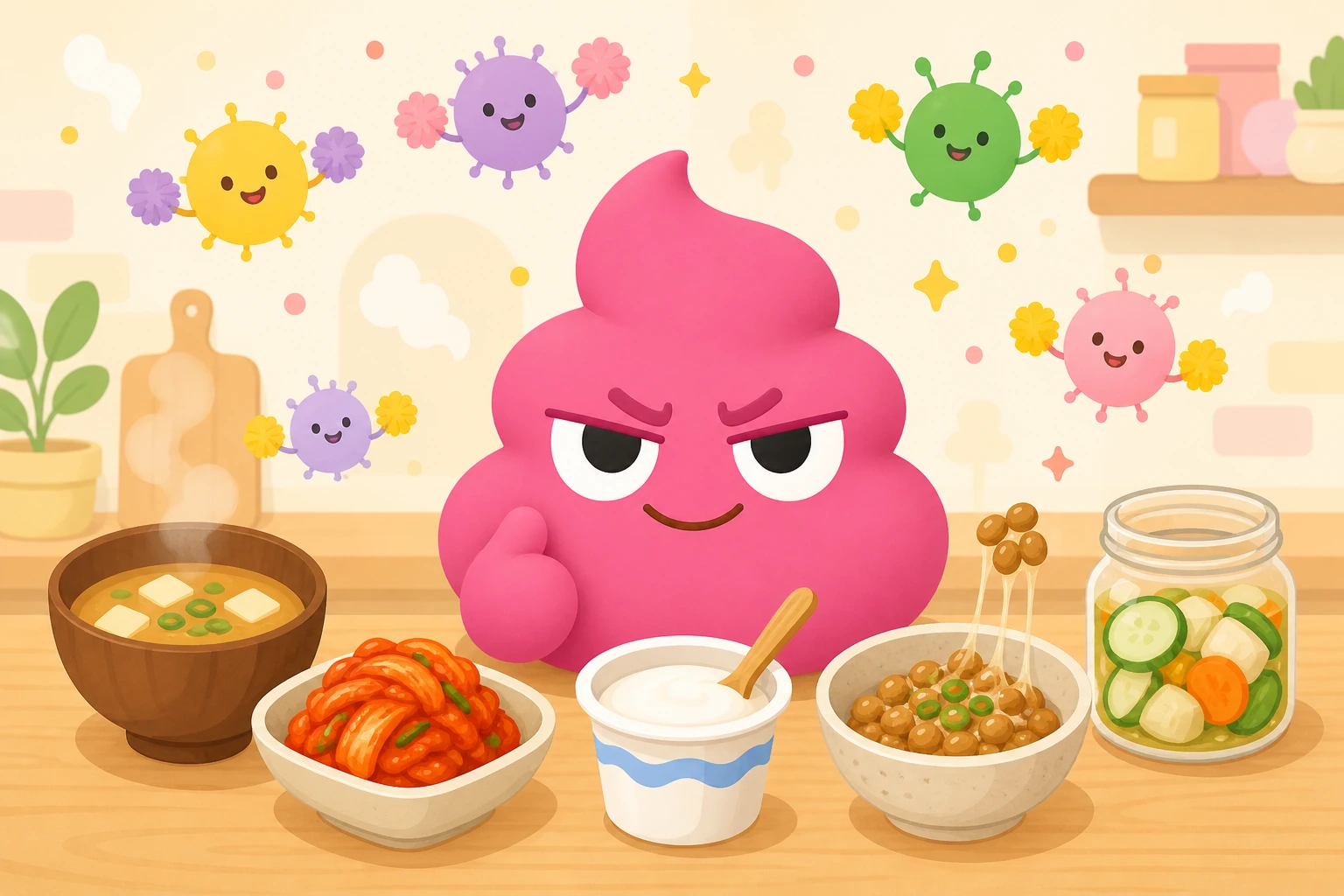
People say “fermented foods are good for the gut” all the time, but very few can actually explain why. The truth is simple: fermented foods are a cheering squad for the bacteria already living inside me. Today, let me walk you through how that actually works, and a realistic one-item-a-day habit anyone can start today.
The Origin of This Quote
Inside your gut and mine, around 100 trillion bacteria live together. Their combined weight comes out to roughly one to two kilograms. This whole bacterial community has a name: the gut microbiome — sometimes called the “gut flora” because, like a flower garden, many different species grow side by side in delicate balance.
There are two main ways to nudge this garden from the outside.
The first is probiotics: literally feeding the gut “live good bacteria” through food. Fermented foods do exactly that — yogurt and kimchi (lactic acid bacteria), yogurt again (bifidobacteria), natto (Bacillus subtilis natto), miso, sweet sake and shio-koji (koji mold), vinegar and kombucha (acetic acid bacteria). The image is: new bacteria arriving into your existing flora as visitors.
The second is prebiotics: feeding the food that the good bacteria already living there love to eat. Dietary fiber (which we covered last time) and oligosaccharides are the classic examples. The image: nourishing the residents you already have.
When you eat both at the same time, that combination is called synbiotics — sending in new bacteria and feeding the existing ones in the same meal. Modern gut-care science considers synbiotics the most effective combination, not either approach alone.
There is also growing evidence that dead bacteria — the ones killed by heat — still influence the gut environment in beneficial ways. So that bowl of miso soup, even after boiling, is doing real work. The bacteria do not need to be alive at the moment of arrival to be useful. That is a relief, honestly.
Unchikun’s Take
The way I see it, the gut is a giant shared house for me and the bacteria. About 100 trillion residents. More than 1,000 different species. Friendly roommates (good bacteria), rough roommates (bad bacteria), and a third group that picks a side based on whoever is winning that day. Everyone is living together, all the time.
When you eat fermented food, from my point of view, it is like a moving truck pulling up outside. The bacteria that step out of the truck stay for a while, leave a positive influence, and most of them eventually move on. Very few stay permanently. That is exactly why doing it every day matters. One bowl of kimchi does not give you a permanent kimchi roommate. The point is the steady stream of small visits.
Each kind of bacteria also has its own specialty. Lactic acid bacteria produce lactic acid that keeps the gut slightly acidic, which makes life harder for the bad guys. Natto bacteria are tough enough to survive stomach acid and reach the colon alive. Koji mold is a digestive-enzyme expert. So mixing types matters more than picking one favorite. A diverse cheering squad is way more effective than a single chant.
If you have been eating yogurt every morning and not feeling much difference, the species are probably too narrow. Add miso soup, kimchi, natto, or pickles on rotation and you will likely feel my shape change. Diversity is the foundation of a healthy flora.
One Thing You Can Do Today
Starting today, add one fermented item to your meals each day. Just one. You don’t have to nail it perfectly, and changing the type day-by-day is even better, but not required.
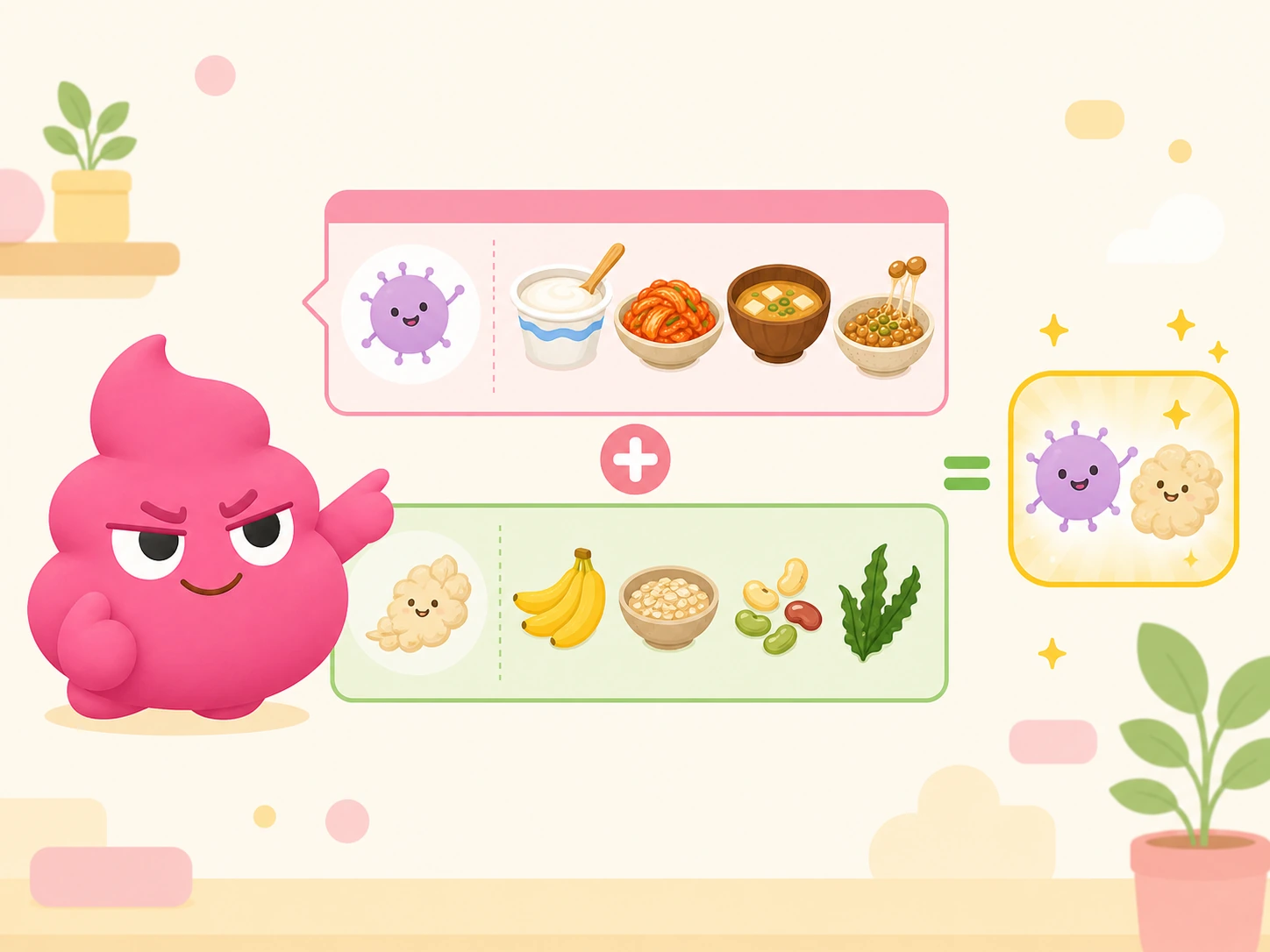
Yogurt or natto rice in the morning, miso soup at lunch, kimchi or pickles at dinner — that single template gets three different fermented foods into your day naturally. Convenience-store eaters: a natto roll, a small kimchi pack, a yogurt cup, or an instant miso soup are all easy adds, no cooking required.
Combining fermented foods with the fiber from last article turns the meal into synbiotics — the multiplier effect. Natto rice (natto bacteria + natto fiber). Kimchi (lactic acid bacteria + cabbage fiber). Miso soup with seaweed (koji mold + seaweed fiber). Memorizing one or two of these “both-in-one” combos makes the habit much easier to keep.
Drop the perfectionism. Days where only yogurt fits in are fine. Days where eating out wipes out the whole plan are also fine. Consistency is the real gift for the bacteria, not perfection. Give it a month and my shape and color will likely shift, gently but unmistakably.
If you log my daily appearance in the unchikun app, you will start to see the difference between “fermented-food weeks” and “I forgot weeks.” It becomes a small experiment with your own body, which is often what turns a plan into a habit.
Summary
Fermented food is, in my view, a daily care package for the bacteria living in the gut. One serving will not change much overnight, but a steady stream over weeks transforms the whole shared house into a healthier place. Tonight’s table needs just one fermented item — miso soup, kimchi, natto, anything you actually like. That alone makes me happy today.