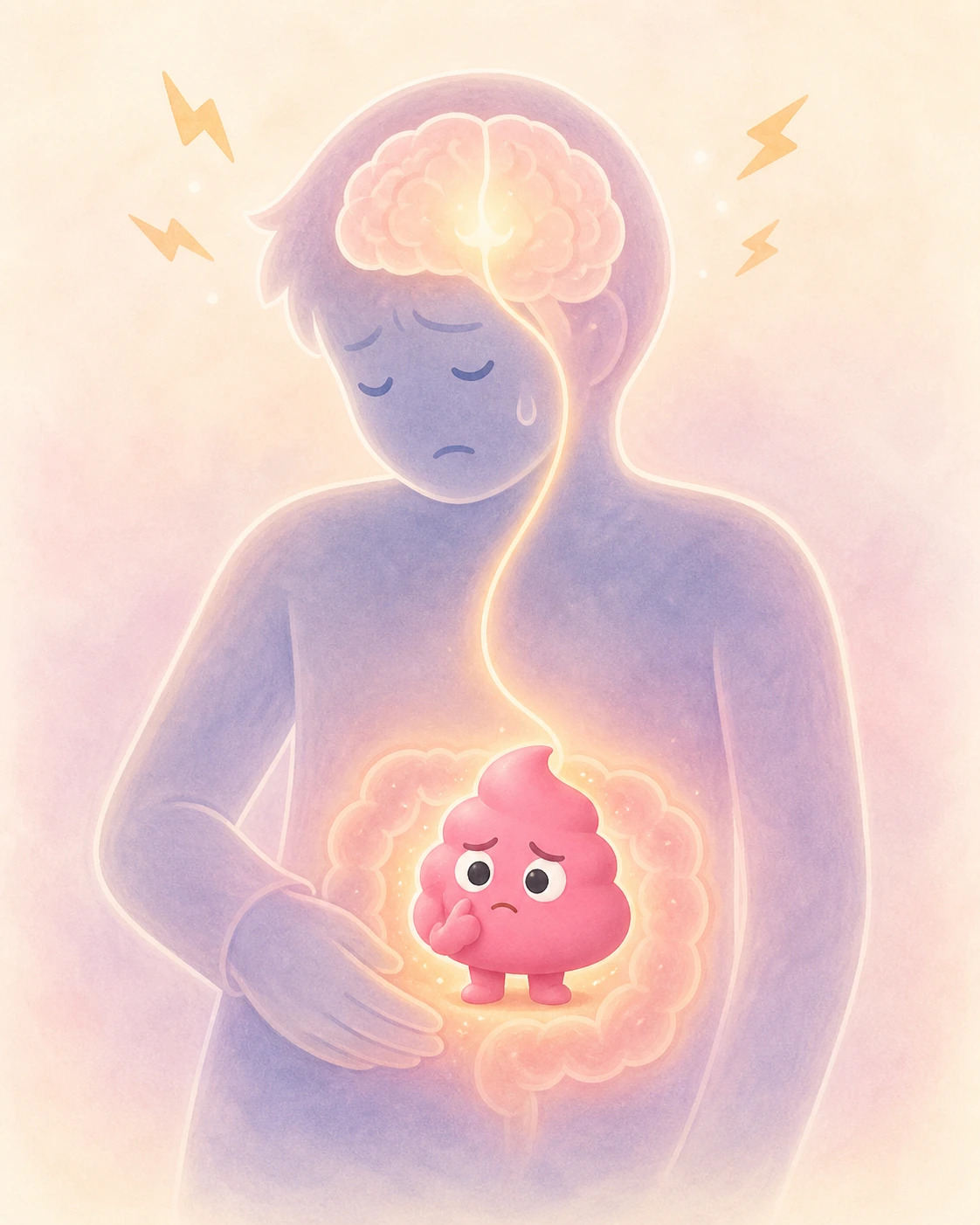
“I always rush to the bathroom right before a meeting.” “Tension gives me diarrhea.” “When I’m worried for too long, I get constipated.” Those are not random glitches — they are signs that I’m doing my job. Whatever stress your brain feels, I’m the first to catch it. Today, let me walk you through the brain-to-gut direction of the gut-brain axis, and a few small things you can start doing today.
The Origin of This Quote
Your gut and your brain are wired together by the vagus nerve and the autonomic nervous system, and the signals travel both ways. Last time I talked about the gut-to-brain direction (cat1-second-brain). This time, it’s the opposite. Whatever your brain feels — emotion, stress, anxiety — reaches your gut in just a few seconds.
Under stress, your body shifts into sympathetic mode — the classic fight-or-flight setting. Heart rate climbs, blood rushes to muscles. And the gut? It gets paused. My movement (peristalsis) becomes irregular, which can show up as sudden constipation, or, just as often, sudden diarrhea. The pre-meeting bathroom dash and the pre-exam stomachache are both textbook examples of acute stress hitting the gut.
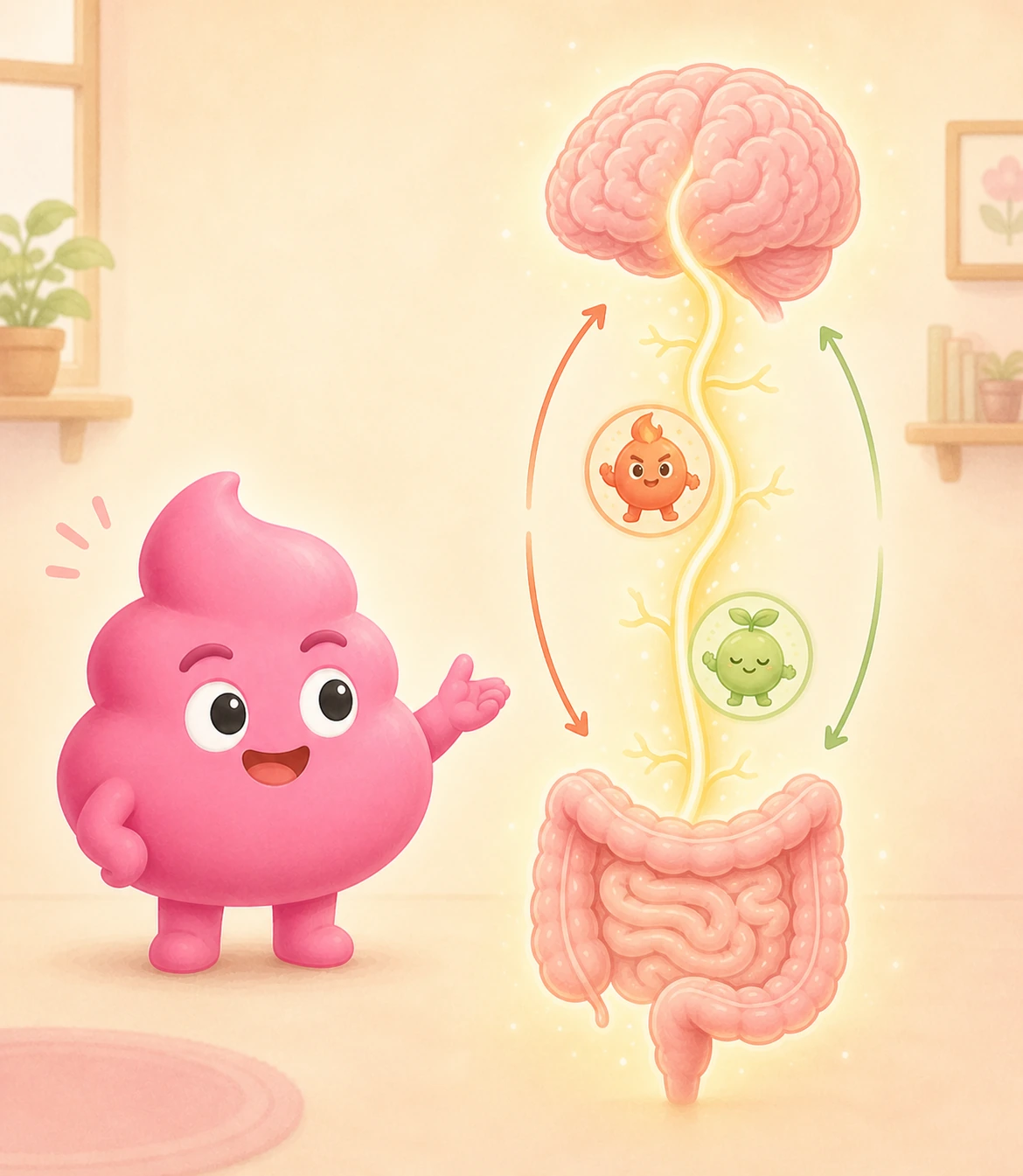
The other big one is chronic stress. Work pressure, relationship strain, long-running anxiety. That kind of stress keeps a hormone called cortisol flowing through your body. A little is fine — useful, even — but week after week, sustained cortisol tilts the gut microbiome off balance. Good bacteria shrink, opportunistic ones gain ground, and the gut’s barrier function weakens. People with long-running gut troubles or persistently unstable shape and color often have chronic stress sitting underneath.
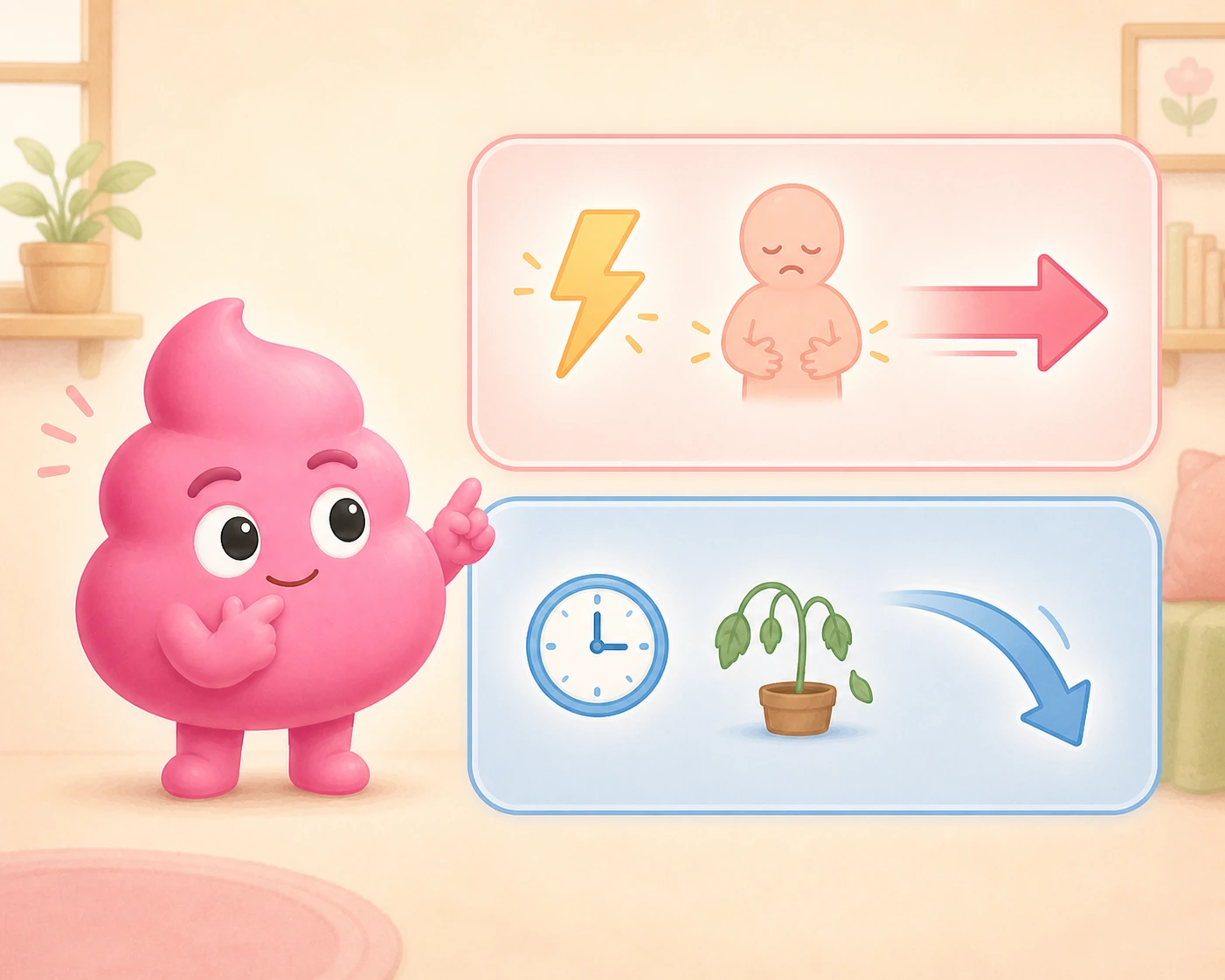
Here’s the part I find fascinating: the state of the gut feeds back to the brain too. When the microbiome breaks down, serotonin (the mood chemical) production falls, and your mood drops. A lower mood makes you more vulnerable to stress, which then re-disrupts the gut. A negative loop starts spinning. To break it, you have to step in on both ends — the brain side and the gut side.
Unchikun’s Take
The way I see it, the brain and the gut are a paired pair of co-captains. Most of the time, I’m running things on my own down here, making my own calls. But when the brain shouts “danger!”, I drop what I’m doing. In those moments, the gut puts the brain’s orders first. When my shape goes weird, or my timing is off, that is often a sign that your brain is fighting something somewhere.
Short bursts of stress are actually fine — that’s a normal response. The real problem is when stress becomes chronic. When the brain gets stuck in danger-mode, I get stuck in not-quite-right mode. If my condition has been off for a long time, that might be a cue to check in on your mind, not just your meals. Gut care has a mental door, not just a kitchen door.
The flip side is the good news: when you actually relax, I’m at my best. Smooth weekend mornings after a slow Saturday? That’s the parasympathetic system winning. A few deep breaths and a short walk are enough to dramatically loosen me up. Before you go shopping for fancy gut supplements, try carving out a quiet hour. Honestly, that is one of the highest-ROI gut care moves available.
One Thing You Can Do Today
Whenever you feel tense or angry, do one minute of slow breathing. That’s it.
The how is simple: inhale for 4 seconds, exhale for 6. Repeat 6 to 8 times. Inhale through the nose, exhale through the mouth — and if you can do it as belly breathing (stomach rises on the inhale, falls on the exhale), even better. Just one minute is enough to nudge the parasympathetic system back into the lead, slow your heart rate, and gently restart my movement.
The trick is making the exhale longer than the inhale. That ratio works like a switch that nudges your body into rest mode. Try it before meetings, before exams, before bed — whenever I’m about to act up.
Two more easy moves: a short walk (10 minutes is plenty) and warming the belly (a hot pack, a belly band, or some warm water). Building on the exercise article from before, gentle movement and warmth are two of the strongest ways to flip the parasympathetic switch back on. They cost nothing, and you can do them anywhere.
For people dealing with chronic stress, also pay attention to meal timing and sleep duration. The sleep article, the exercise article, the fiber and fermented foods articles — they all connect. Gut care and stress care are the same thing, looked at from two different angles.
If you log me daily in the unchikun app, you’ll start to see the difference between high-stress weeks and calm ones in shape and frequency. As an objective indicator of how your mind has been doing, I’m honestly pretty reliable.
Summary
Think of me as a kind of weather report for your mind. When my shape stays off for several days in a row, that is a quiet “hey, maybe slow down a bit” from your body. Breathe slowly, take a short walk, warm up your belly. One minute is enough to flip the parasympathetic switch — and I’ll be ready to do my job tomorrow morning.