Ever wondered how ancient Romans actually went to the bathroom? Honestly, the answer is wilder than most people imagine: my Roman ancestors were sent out from a 20-to-80-seat marble bench, alongside total strangers, and carried by a giant sewer all the way to the Tiber River. Today, let me walk you through ancient Roman toilet life and what it tells us about the slow climb of hygiene.
The Origin of This Quote
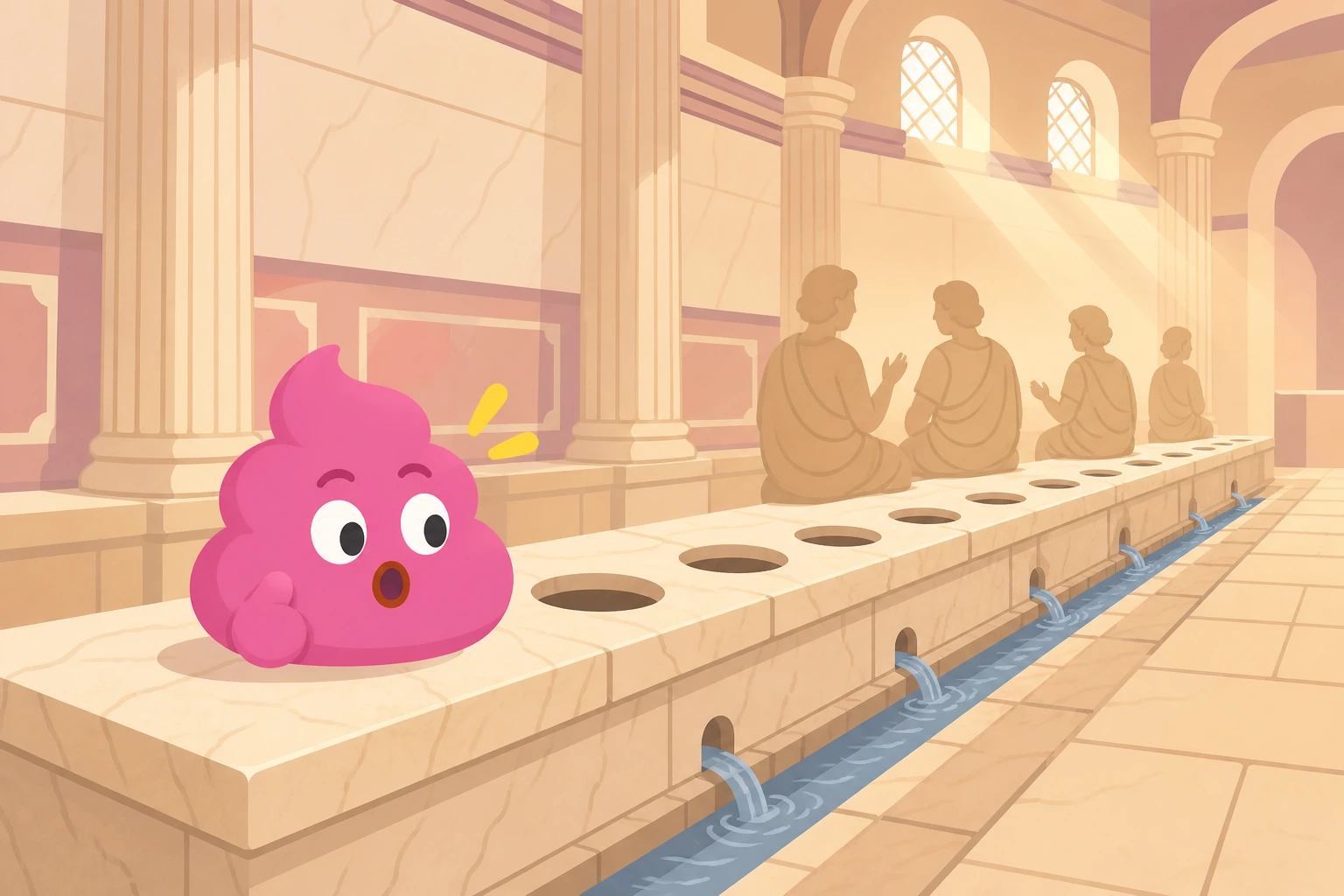
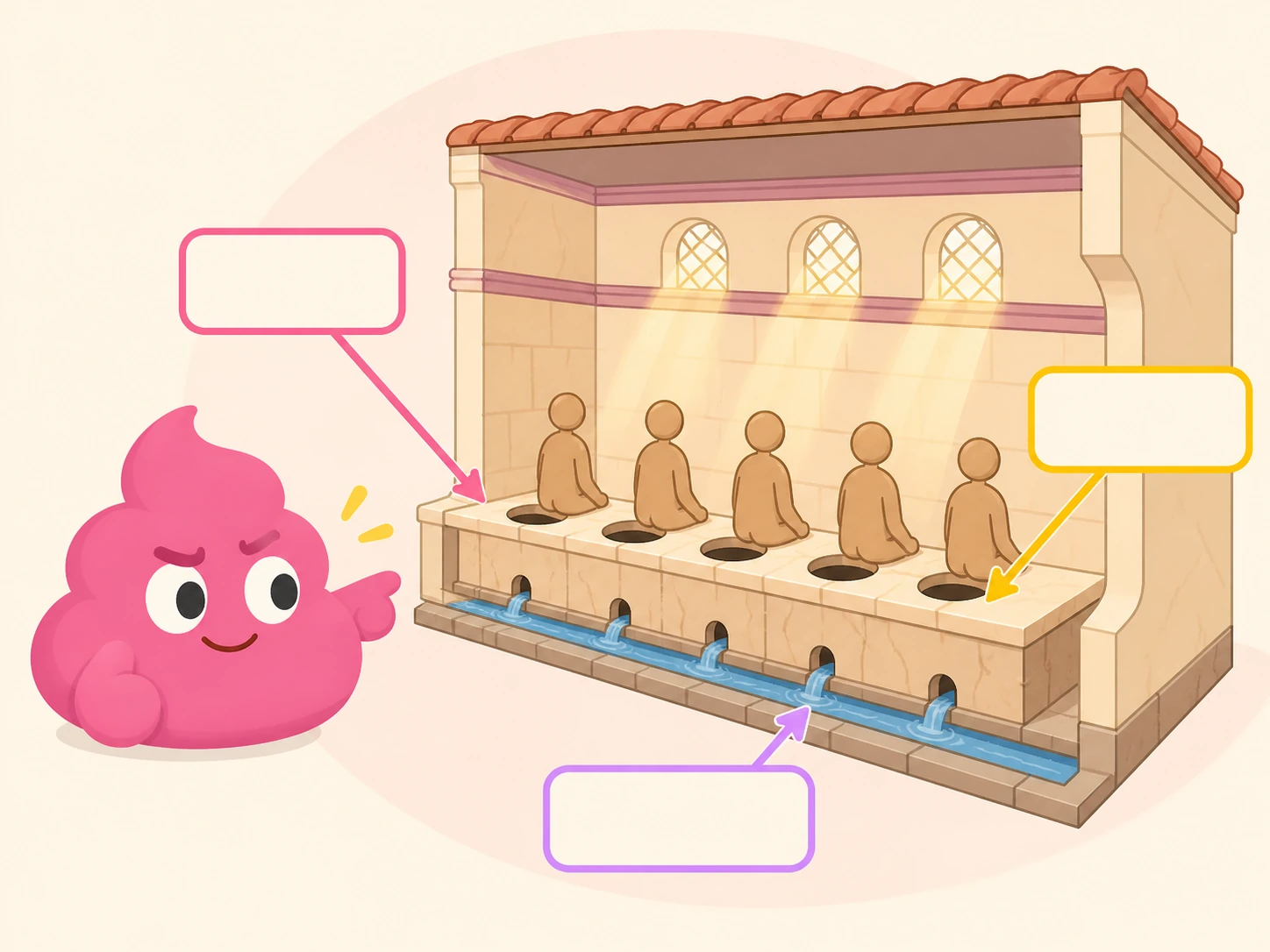
Ancient Roman cities were dotted with public toilets called forica. By the 4th century, the city of Rome alone had over 144 of them on record. The big ones were marble, with seats for 20–80 people simultaneously. Privacy partitions? None. The very concept of toilet privacy did not exist back then.
The structure was simple: a long marble bench with round holes carved at regular intervals. A small water channel ran along the floor, constantly flowing. Whatever dropped through the hole was swept away by the water, and from there it joined the city’s sewer network — eventually reaching the Cloaca Maxima, Rome’s giant main sewer.
The Cloaca Maxima was first built around the 6th century BC — over 2,600 years ago — and parts of it are still in use today. It runs about 800 meters long, up to 3 meters wide and 4 meters tall at its largest. It collected drainage from across the city and dumped it all into the Tiber River. The civil engineering of ancient Rome is genuinely staggering.
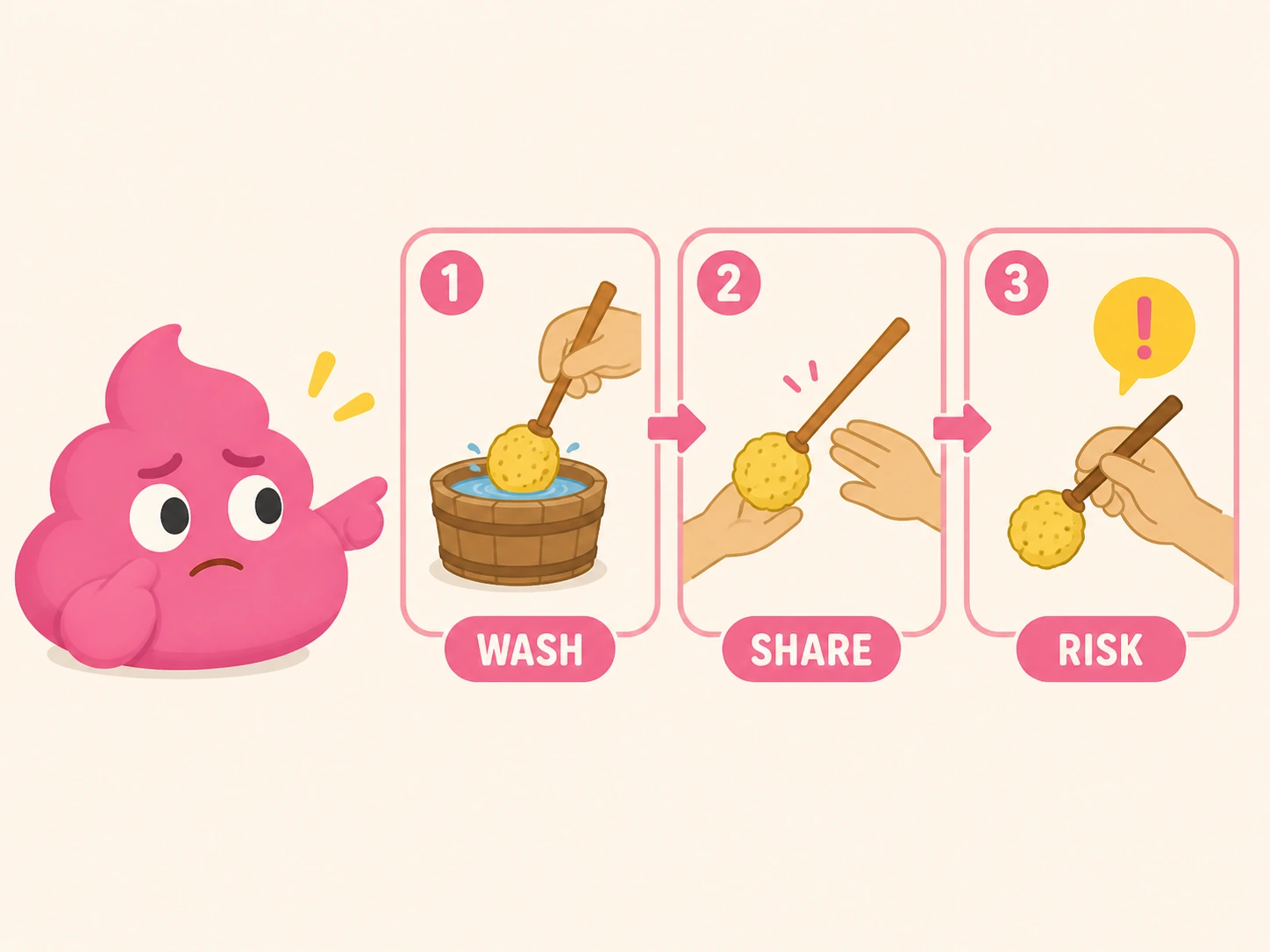
Now for the part that makes modern people wince. To wipe, Romans used a tersorium — a wooden stick with a sea sponge attached to one end. After use, it was rinsed in a small bucket of saltwater or vinegar and passed to the next person. Yes, shared. Today this sounds insane, but back then it was simply normal. There is even a theory that the English idiom “got the wrong end of the stick” traces back to grabbing the wrong end of a tersorium.
Unchikun’s Take
The way I see it, a Roman toilet was basically my social debut hall. The footsteps of the Roman next door, the cough from across the bench, someone’s cheerful humming — all echoing through a marble chamber. I dropped through my hole, joined the water channel with my neighbor’s poop, met up with the Cloaca Maxima underground, and finally surfaced into the Tiber. A fully shared experience, start to finish.
Hygiene, honestly, was rough. Sharing a sponge stick spread gut infections fast. On nights when the water flow was weak, the smell built up. Rats showed up too. Even so, for the people of that era, “my poop doesn’t pile up inside my house anymore” was a revolutionary upgrade. After Rome fell, medieval Europe largely lost this technology — people went back to throwing waste out the window into the street. History does not move in a straight line. That part still amazes me.
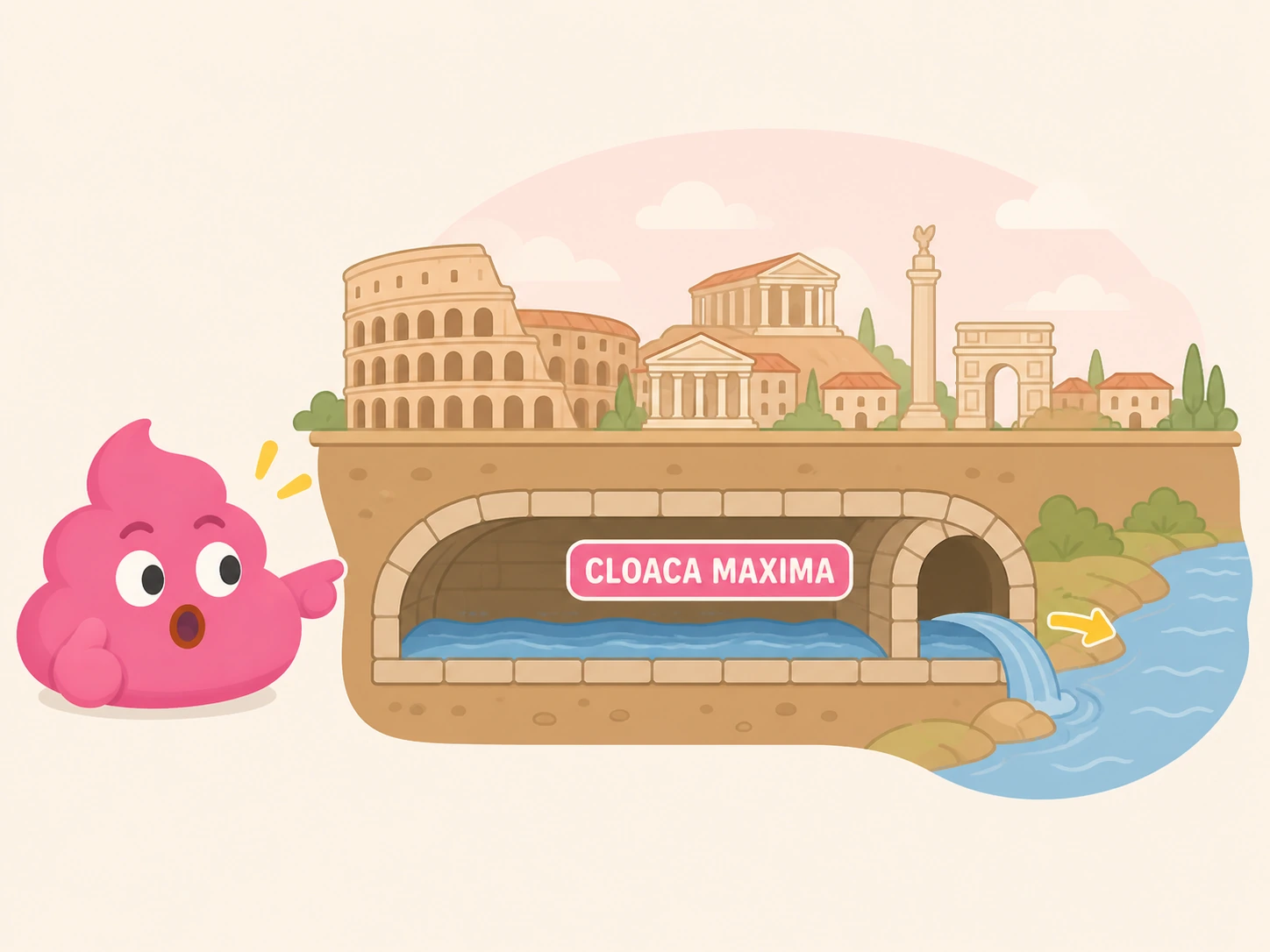
The Cloaca Maxima still runs under modern Rome. Sections of it are still in active use. A 2,600-year-old poop tunnel is still alive. As a poop, that is genuinely a flex. The Romans did not see me as just waste — they built me into the city’s design from day one. Edo Japan saw me as fertilizer for the fields; Rome saw me as something to flow into the river. Opposite philosophies, but both integrated me into a working civic system.
It’s easy to take modern toilets for granted, but that flush-handle convenience is the result of 2,600 years of slowly stacked sanitation engineering. Try remembering that miracle now and then.
One Thing You Can Do Today
Next time you flush, just take one second to feel a quiet “thank you” as the water spirals down. That’s it.
Look at the alternatives history offered me. Ancient Rome: I came out next to a stranger, got wiped with a shared sponge, traveled an underground tunnel, and was discharged into the Tiber. Medieval Europe: out the window onto the street. Edo Japan: scooped into fertilizer buckets and sold to farms. A flush-handle that erases me with one motion has only been the default for about 150 years.
Logging me daily in the unchikun app is, in a way, a piece of cultural progress that even the Romans never had — actually paying attention to me as a signal. No Roman ever wondered “how many times did I go today, and what did it look like?” Watching your own gut in data is the kind of care only the modern era could offer.
Summary
Two thousand years ago in Rome, I was born on a 20-seat bench, wiped with a shared sponge, traveled a giant sewer, and ended up in the river. And that was state-of-the-art for its time. The everyday toilet you use right now is the final form of 2,600 years of slow progress. Today, just for one quiet second at the flush — feel that miracle.